Institute of Biology and Ecology, Faculty of Science, Pavol Jozef Šafárik University, Košice, Slovakia.
Epigenetics Group, International Agency for Research on Cancer (IARC), 150 Cours Albert Thomas, 69008 Lyon, France.
Clin Epigenetics. 2017 Jun 8;9:62. doi: 10.1186/s13148-017-0359-x. eCollection 2017.
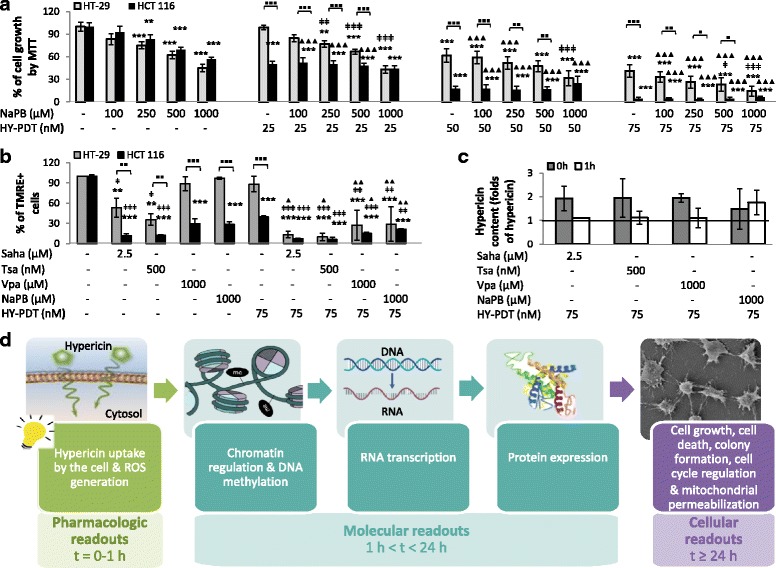
Hypericin-mediated photodynamic therapy (HY-PDT) has recently captured increased attention as an alternative minimally invasive anticancer treatment, although cancer cells may acquire resistance. Therefore, combination treatments may be necessary to enhance HY-PDT efficacy. Histone deacetylase inhibitors (HDACis) are often used in combination treatments due to their non-genotoxic properties and epigenetic potential to sensitize cells to external stimuli. Therefore, this study attempts for the first time to investigate the therapeutic effects of HDACis in combination with visible light-mediated PDT against cancer. Specifically, the colorectal cancer cell model was used due to its known resistance to HY-PDT.
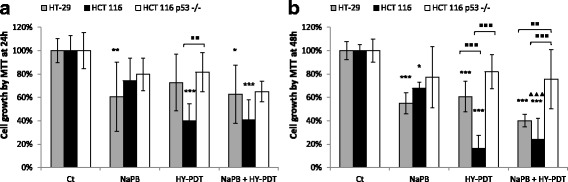
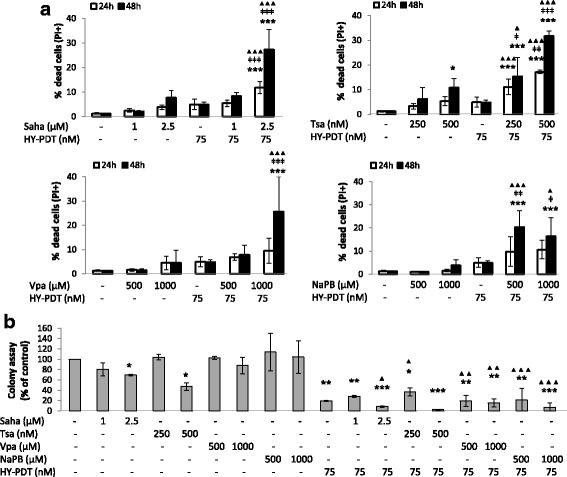
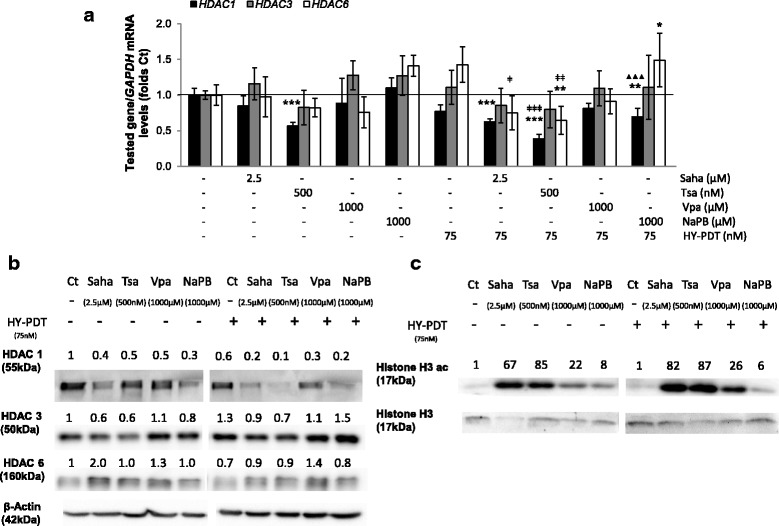
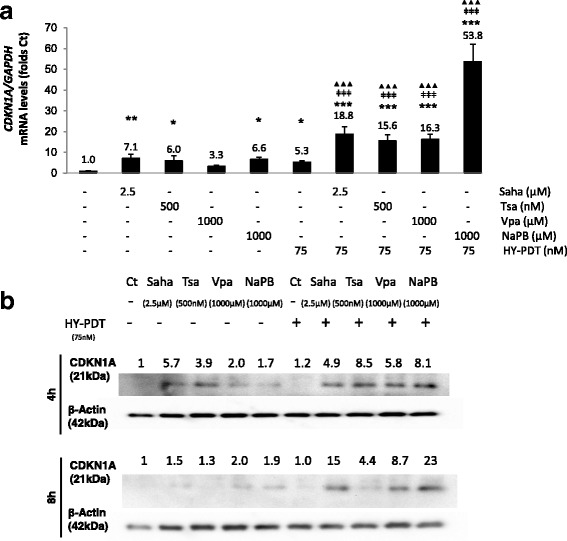
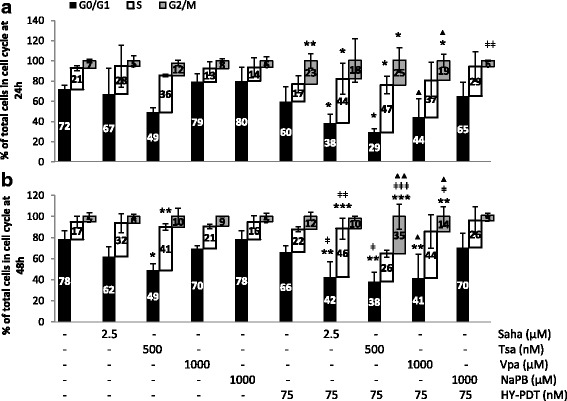
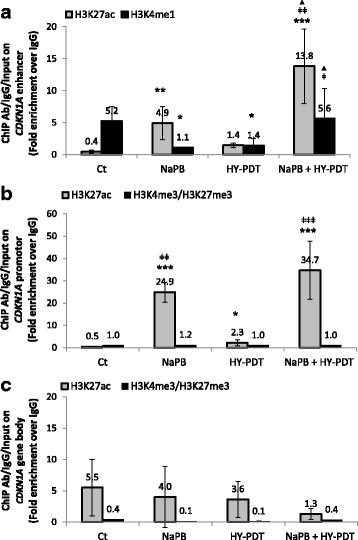
Two chemical groups of HDACis were tested in combination with HY-PDT: the hydroxamic acids Saha and Trichostatin A, and the short-chain fatty acids valproic acid and sodium phenylbutyrate (NaPB), as inhibitors of all-class versus nuclear HDACs, respectively. The selected HDACis manifest a favorable clinical toxicity profile and showed similar potencies and mechanisms in intragroup comparisons but different biological effects in intergroup analyses. HDACi combination with HY-PDT significantly attenuated cancer cell resistance to treatment and caused the two HDACi groups to become similarly potent. However, the short-chain fatty acids, in combination with HY-PDT, showed increased selectivity towards inhibition of HDACs versus other key epigenetic enzymes, and NaPB induced the strongest expression of the otherwise silenced tumor suppressor , a hallmark gene for HDACi-mediated chromatin modulation. Epigenetic regulation of by NaPB was associated with histone acetylation at enhancer and promoter elements rather than histone or DNA methylation at those or other regulatory regions of this gene. Moreover, NaPB, compared to the other HDACis, caused milder effects on global histone acetylation, suggesting a more specific effect on chromatin architecture relative to global chromatin structure. The mechanism of NaPB + HY-PDT was -dependent and likely driven by the HY-PDT rather than the NaPB constituent.
Our results show that HDACis potentiate the antitumor efficacy of HY-PDT in colorectal cancer cells, overcoming their resistance to this drug and epigenetically reactivating the expression of . Besides their therapeutic potential, hypericin and these HDACis are non-genotoxic constituents of dietary agents, hence, represent interesting targets for investigating mechanisms of dietary-based cancer prevention.
作为一种替代微创抗癌治疗方法,金丝桃素介导的光动力疗法(HY-PDT)最近受到了越来越多的关注,尽管癌细胞可能会产生耐药性。因此,可能需要联合治疗来增强 HY-PDT 的疗效。由于组蛋白去乙酰化酶抑制剂(HDACi)具有非遗传毒性和表观遗传潜力,可以使细胞对外界刺激敏感,因此它们经常被用于联合治疗。因此,本研究首次尝试研究 HDACi 与可见光介导的 PDT 联合治疗癌症的治疗效果。具体来说,由于已知该细胞模型对 HY-PDT 具有耐药性,因此使用结直肠癌细胞模型。
本研究测试了两种化学基团的 HDACi 与 HY-PDT 联合使用:组蛋白去乙酰化酶抑制剂 Saha 和 Trichostatin A,短链脂肪酸丙戊酸和苯丁酸钠(NaPB),分别为所有类别和核 HDACs 的抑制剂。所选的 HDACi 具有良好的临床毒性特征,在组内比较中显示出相似的效力和机制,但在组间分析中具有不同的生物学效应。HDACi 与 HY-PDT 联合使用可显著减轻癌细胞对治疗的耐药性,并使两组 HDACi 同样有效。然而,与 HY-PDT 联合使用的短链脂肪酸对抑制 HDACs 相对于其他关键表观遗传酶具有更高的选择性,并且 NaPB 诱导了 otherwise silenced tumor suppressor 的最强表达,这是 HDACi 介导的染色质调节的标志性基因。NaPB 对 的表观遗传调节与增强子和启动子元件处的组蛋白乙酰化有关,而不是与该基因或其他调节区域处的组蛋白或 DNA 甲基化有关。此外,与其他 HDACi 相比,NaPB 对全局组蛋白乙酰化的影响较小,这表明其对 染色质结构的影响相对于全局染色质结构更为特异。NaPB+HY-PDT 的作用机制是依赖于 的,并且可能是由 HY-PDT 而不是 NaPB 组成部分驱动的。
本研究结果表明,HDACi 增强了 HY-PDT 在结直肠癌细胞中的抗肿瘤疗效,克服了其对该药物的耐药性,并在表观遗传水平上重新激活了 的表达。除了它们的治疗潜力外,金丝桃素和这些 HDACi 是非遗传毒性的膳食成分,因此,它们是研究基于饮食的癌症预防机制的有趣靶点。