Kamaraj Nagalakshmi, Rajaguru Pooja Yashwanthi, Issac Praveen Kumar, Sundaresan Sujatha
Department of Biotechnology, School of Bioengineering, SRM University, Kattankulathur 603203, India.
Asian J Pharm Sci. 2017 Jul;12(4):353-362. doi: 10.1016/j.ajps.2017.02.003. Epub 2017 Feb 27.
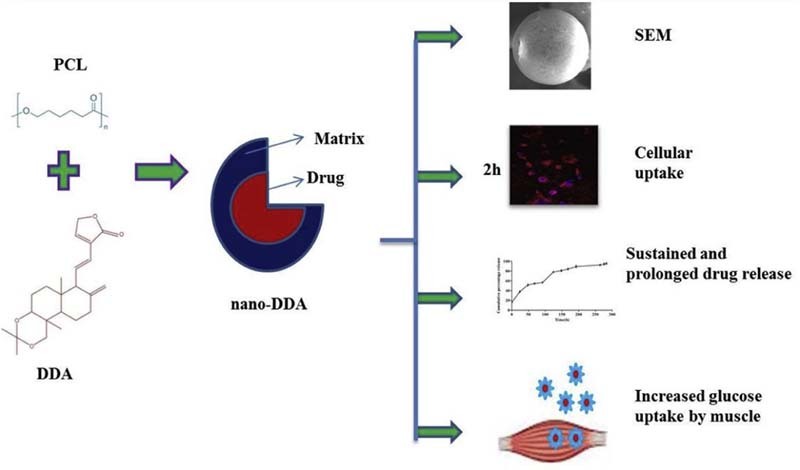
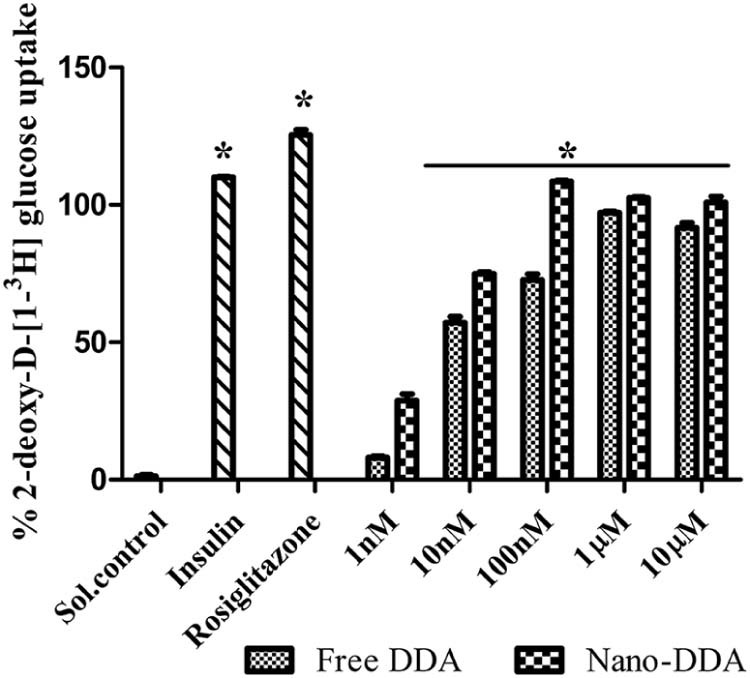
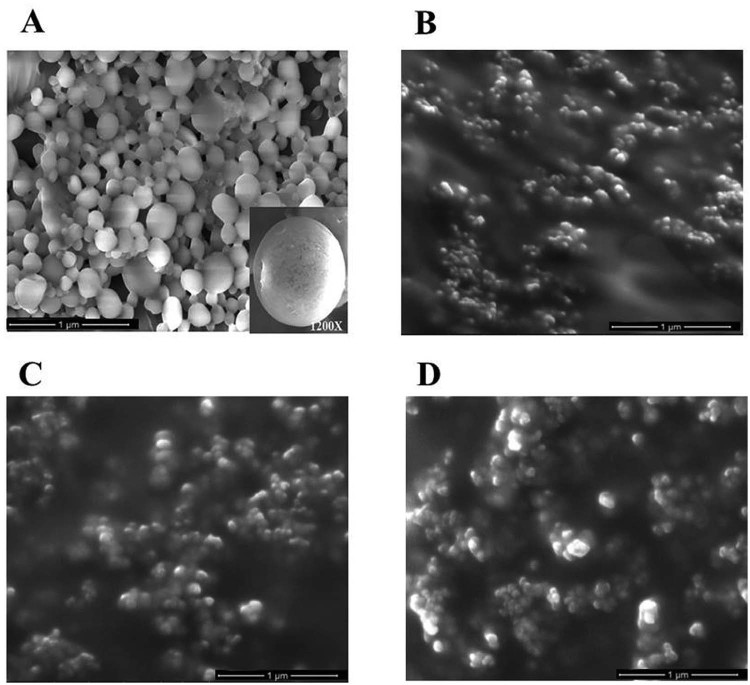
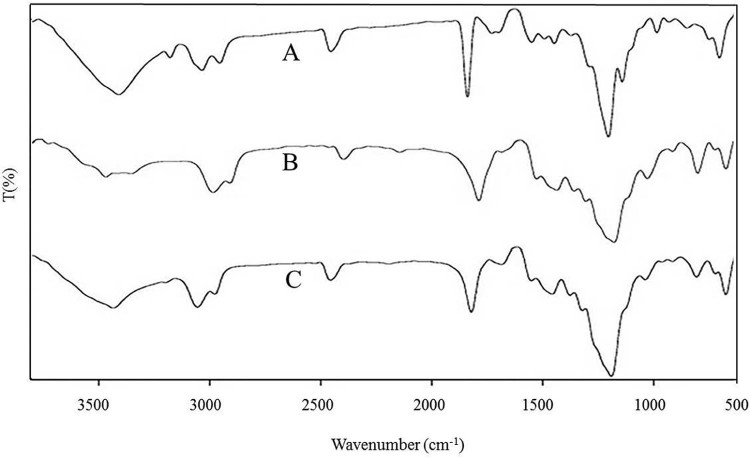
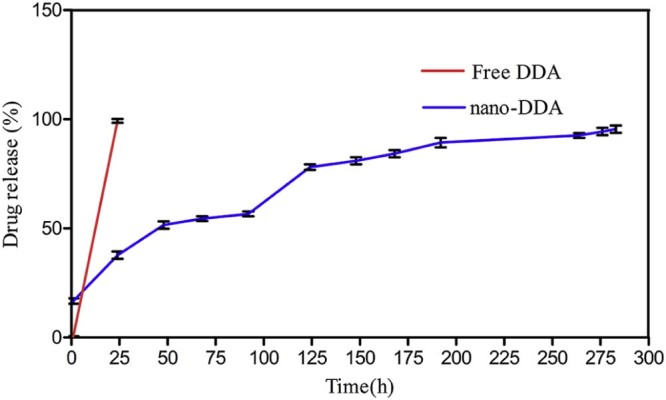
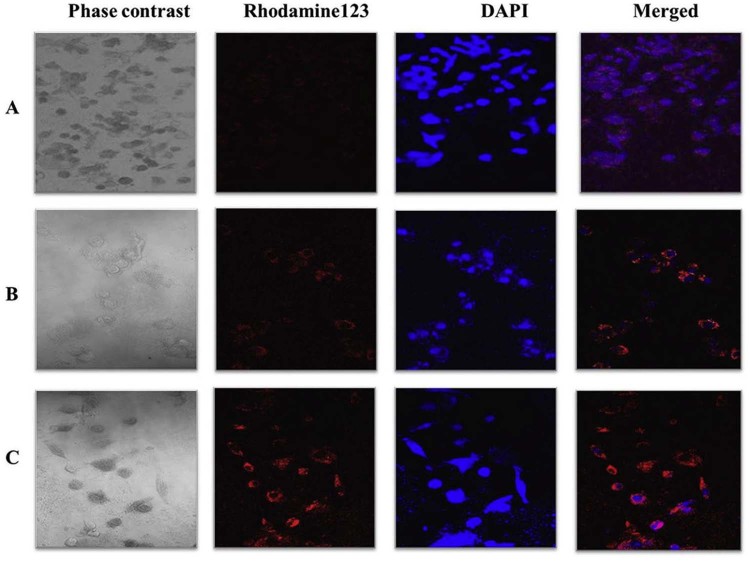
Biodegradable polymer based novel drug delivery systems brought a considerable attention in enhancing the therapeutic efficacy and bioavailability of various drugs. 14-deoxy 11, 12-didehydro andrographolide (poorly water soluble compound) loaded polycaprolactone (nano-DDA) was synthesized using the solvent evaporation technique. Nano-DDA was characterized by scanning electron microscopy (SEM) and dynamic light scattering (DLS) studies. Fourier Transform InfraRed Spectroscopy (FTIR) was used to investigate the structural interaction between the drug and the polymer. Functional characterization of the formulation was determined using drug content, cellular uptake and drug release. 2-deoxy-D-[1-H] glucose uptake assay was carried out to assess the antidiabetic potential of nano-DDA in L6 myotubes. The nano-DDA displayed spherical shape with a smooth surface (252.898 nm diameter), zeta potential, encapsulation and loading efficiencies of -38.9 mV, 91.98 ± 0.13% and 15.09 ± 0.18% respectively. No structural alteration between the drug and the polymer was evidenced (FTIR analysis). Confocal microscopy studies with rhodamine 123 loaded polycaprolactone nanoparticles (Rh123-PCL NPs) revealed the internalization of Rh123-PCL NPs in a time dependent manner in L6 myoblasts. A dose dependent increase in glucose uptake was observed for nano-DDA with a maximal uptake of 108.54 ± 1.42% at 100 nM on L6 myotubes, thereby proving its anti-diabetic efficacy. A biphasic pattern of drug release demonstrated an initial burst release at 24 h followed by a sustained release for up to 11 days. To conclude, our results revealed that nano-DDA formulation can be a potent candidate for antidiabetic drug delivery.
基于可生物降解聚合物的新型药物递送系统在提高各种药物的治疗效果和生物利用度方面引起了广泛关注。采用溶剂蒸发技术合成了负载14-去氧-11,12-二脱氢穿心莲内酯(难溶性化合物)的聚己内酯(纳米-DDA)。通过扫描电子显微镜(SEM)和动态光散射(DLS)研究对纳米-DDA进行了表征。利用傅里叶变换红外光谱(FTIR)研究药物与聚合物之间的结构相互作用。通过药物含量、细胞摄取和药物释放来确定制剂的功能特性。进行2-脱氧-D-[1-H]葡萄糖摄取试验以评估纳米-DDA在L6肌管中的抗糖尿病潜力。纳米-DDA呈球形,表面光滑(直径252.898nm),zeta电位为-38.9mV,包封率和载药率分别为91.98±0.13%和15.09±0.18%。(FTIR分析)未证明药物与聚合物之间存在结构改变。用罗丹明123负载的聚己内酯纳米颗粒(Rh123-PCL NPs)进行的共聚焦显微镜研究表明,Rh123-PCL NPs在L6成肌细胞中以时间依赖性方式内化。在L6肌管上,纳米-DDA的葡萄糖摄取呈剂量依赖性增加,在100 nM时最大摄取量为108.54±1.42%,从而证明了其抗糖尿病功效。药物释放的双相模式显示在24小时有初始突释,随后持续释放长达11天。总之,我们的结果表明纳米-DDA制剂可能是抗糖尿病药物递送的有力候选者。