Lakkaraju Aparna, Umapathy Ankita, Tan Li Xuan, Daniele Lauren, Philp Nancy J, Boesze-Battaglia Kathleen, Williams David S
Department of Ophthalmology, University of California, San Francisco, San Francisco, CA, USA.
Department of Ophthalmology and Stein Eye Institute, David Geffen School of Medicine at UCLA, Los Angeles, CA, USA; Department of Neurobiology, David Geffen School of Medicine at UCLA, Los Angeles, CA, USA.
Prog Retin Eye Res. 2020 Feb 24:100846. doi: 10.1016/j.preteyeres.2020.100846.
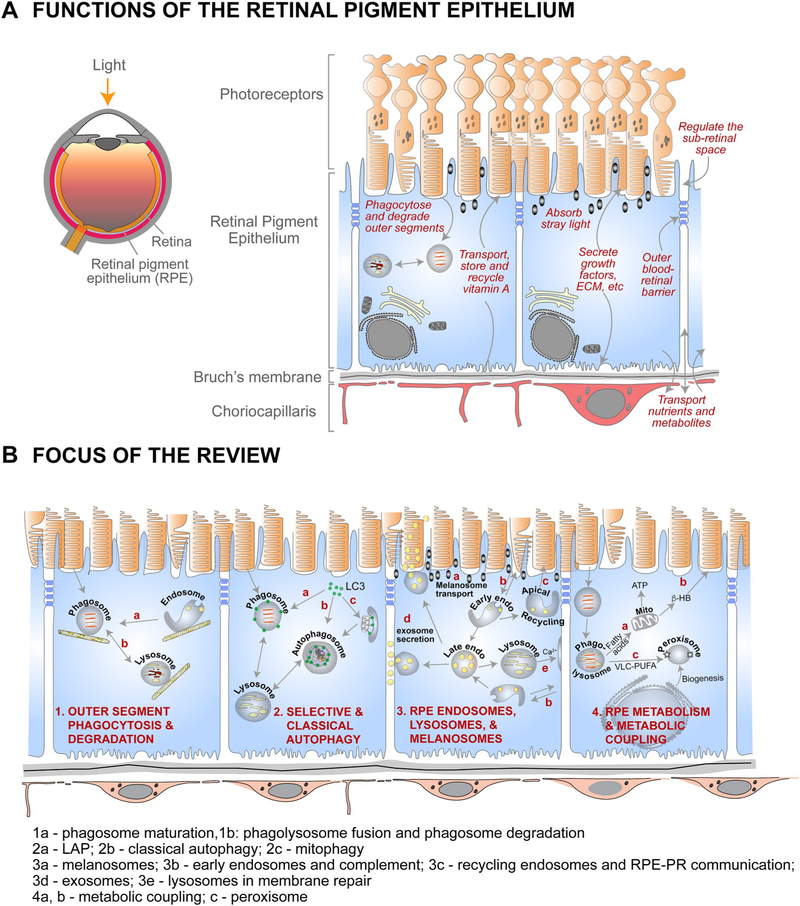
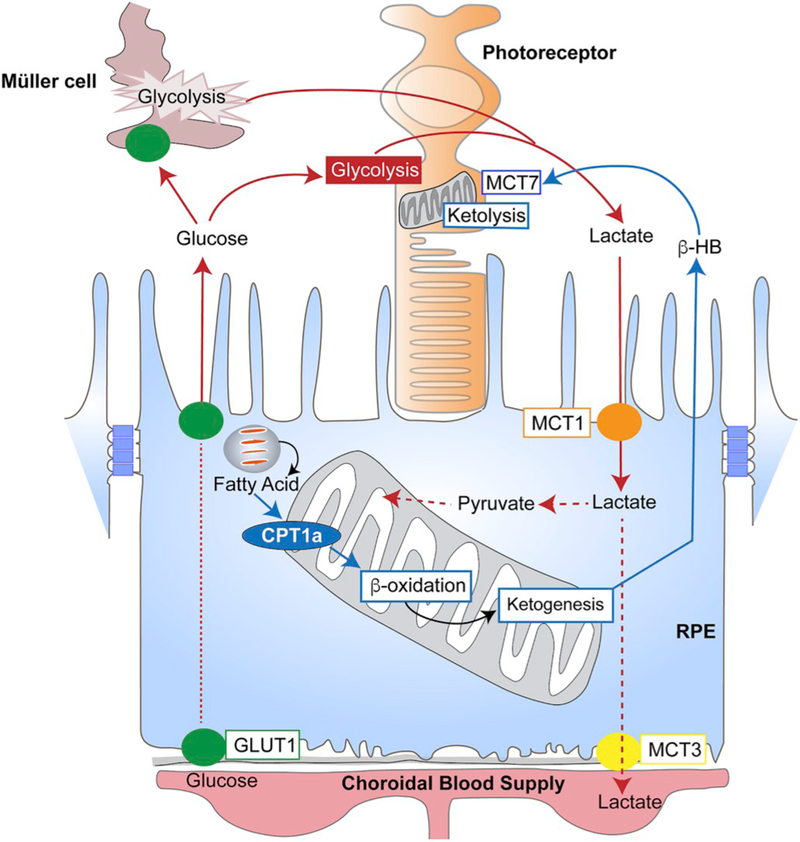
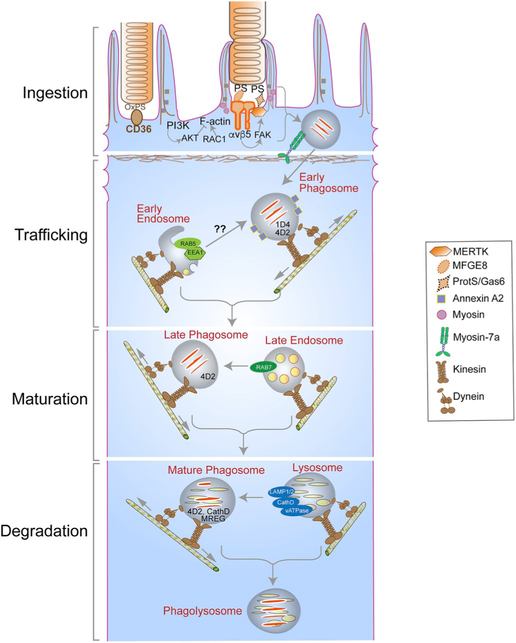
The retinal pigment epithelium (RPE), a monolayer of post-mitotic polarized epithelial cells, strategically situated between the photoreceptors and the choroid, is the primary caretaker of photoreceptor health and function. Dysfunction of the RPE underlies many inherited and acquired diseases that cause permanent blindness. Decades of research have yielded valuable insight into the cell biology of the RPE. In recent years, new technologies such as live-cell imaging have resulted in major advancement in our understanding of areas such as the daily phagocytosis and clearance of photoreceptor outer segment tips, autophagy, endolysosome function, and the metabolic interplay between the RPE and photoreceptors. In this review, we aim to integrate these studies with an emphasis on appropriate models and techniques to investigate RPE cell biology and metabolism, and discuss how RPE cell biology informs our understanding of retinal disease.
视网膜色素上皮(RPE)是一层处于有丝分裂后极化状态的上皮细胞,位于光感受器和脉络膜之间,在战略位置上对光感受器的健康和功能起着主要的维护作用。RPE功能障碍是许多导致永久性失明的遗传性和获得性疾病的基础。数十年来的研究为RPE的细胞生物学提供了宝贵的见解。近年来,诸如活细胞成像等新技术使我们在理解诸如光感受器外段末梢的每日吞噬和清除、自噬、内溶酶体功能以及RPE与光感受器之间的代谢相互作用等领域取得了重大进展。在本综述中,我们旨在整合这些研究,重点关注研究RPE细胞生物学和代谢的适当模型和技术,并讨论RPE细胞生物学如何增进我们对视网膜疾病的理解。