Monoclonal Antibodies Core Unit, CNIO, Madrid, Spain.
Department of Pathology, MD Anderson Cancer Center Madrid, Madrid, Spain.
PLoS One. 2020 Feb 27;15(2):e0229743. doi: 10.1371/journal.pone.0229743. eCollection 2020.
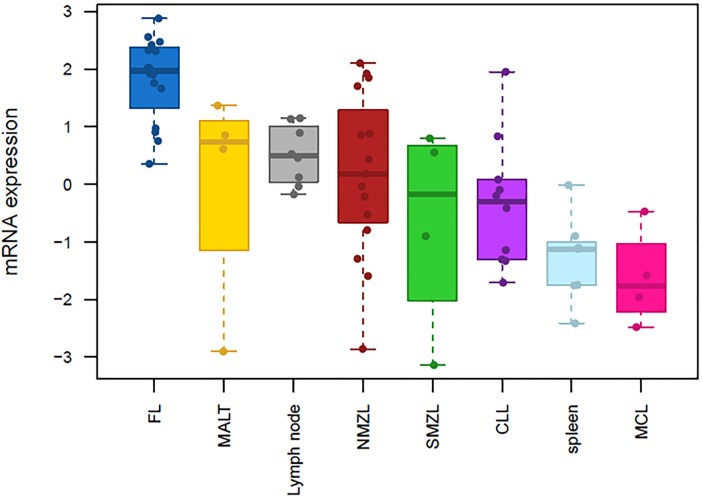
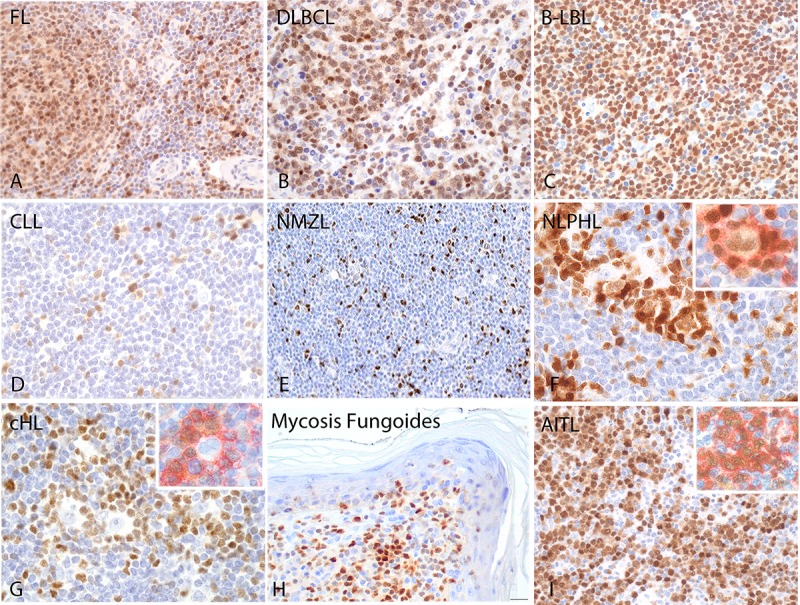
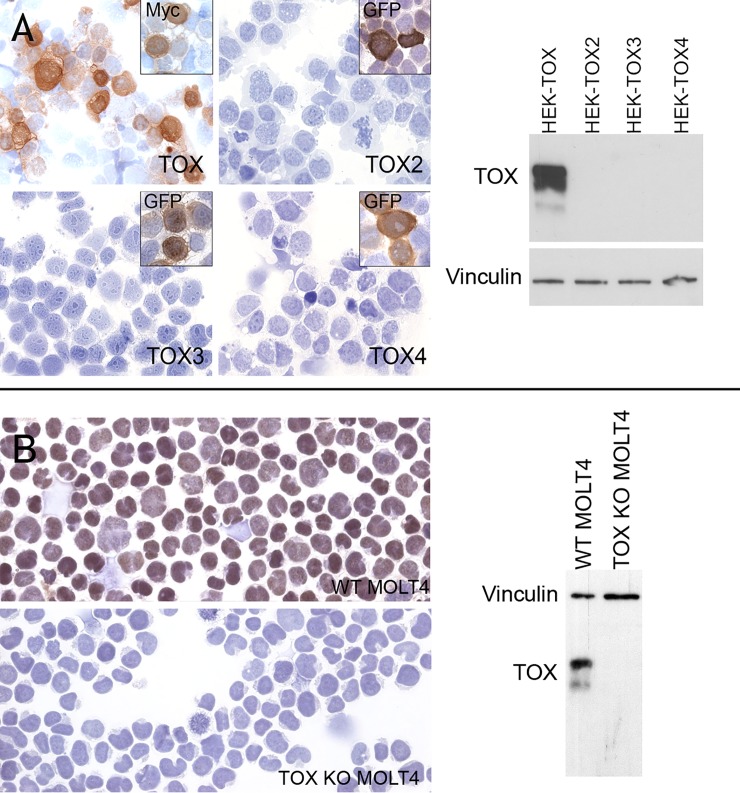
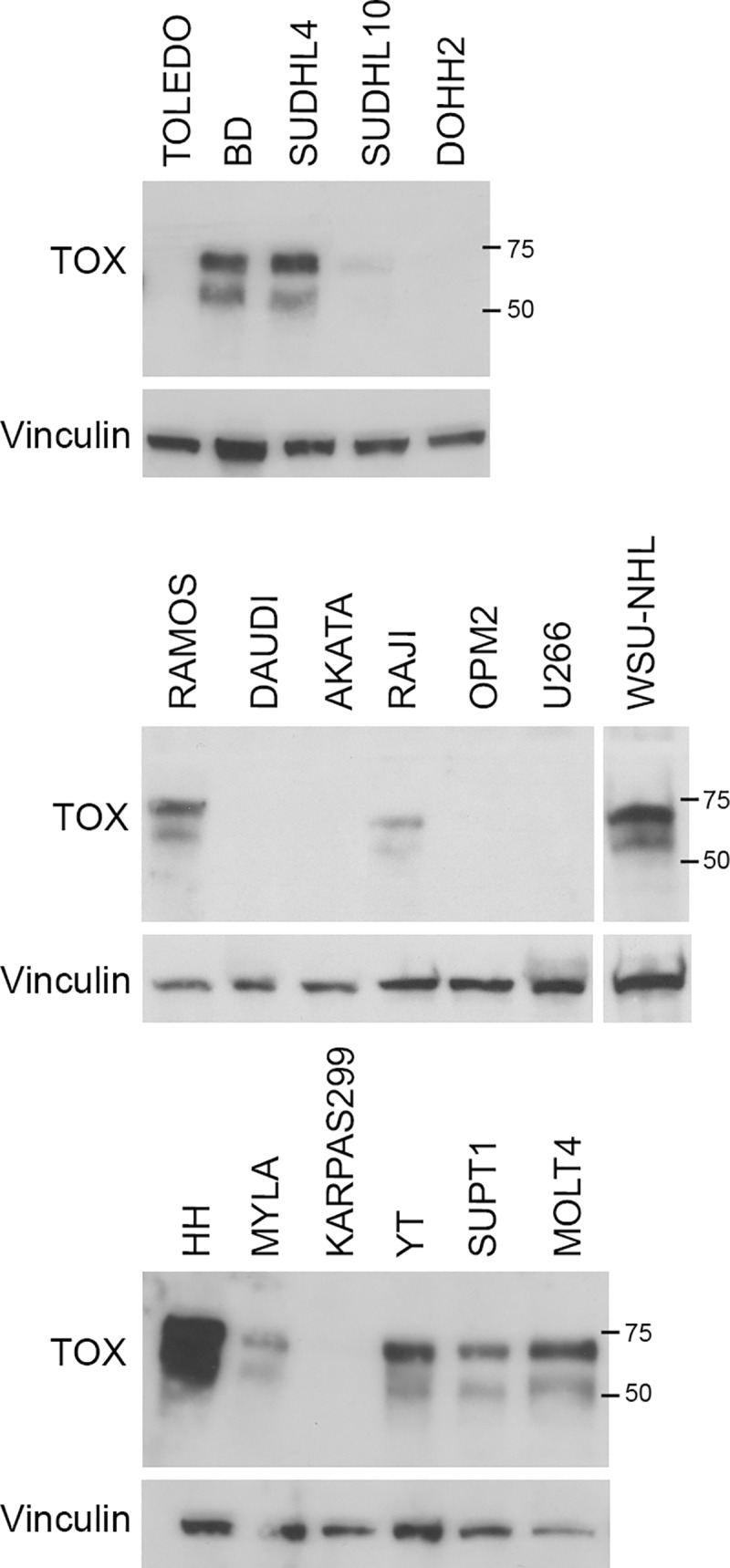
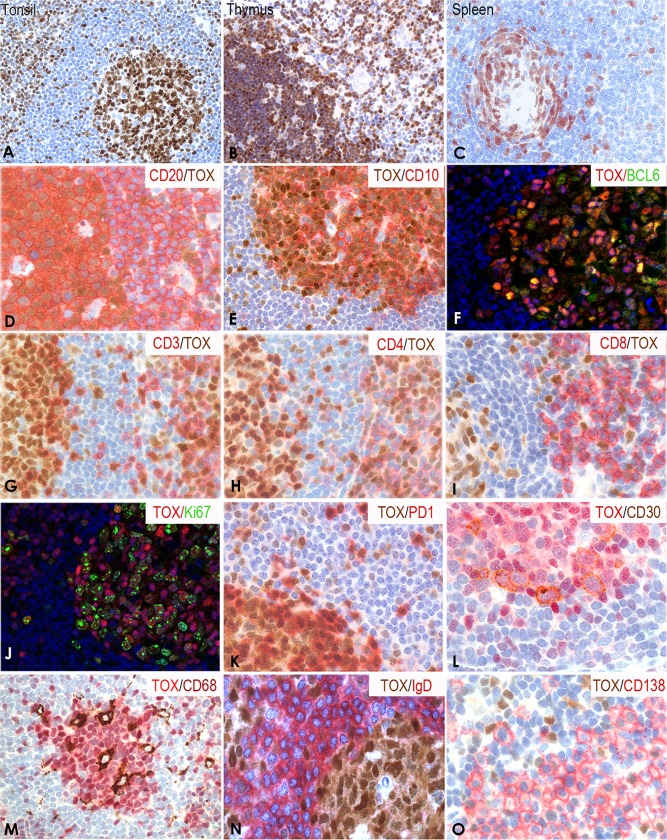
Thymocyte selection-associated high-mobility group box (TOX) is a DNA-binding factor that is able to regulate transcription by modifying local chromatin structure and modulating the formation of multi-protein complexes. TOX has multiple roles in the development of the adaptive immune system including development of CD4 T cells, NK cells and lymph node organogenesis. However very few antibodies recognizing this molecule have been reported and no extensive study of the expression of TOX in reactive and neoplastic lymphoid tissue has been performed to date. In the present study, we have investigated TOX expression in normal and neoplastic lymphoid tissues using a novel rat monoclonal antibody that recognizes its target molecule in paraffin-embedded tissue sections. A large series of normal tissues and B- and T-cell lymphomas was studied, using whole sections and tissue microarrays. We found that the majority of precursor B/T lymphoblastic, follicular and diffuse large B-cell lymphomas, nodular lymphocyte-predominant Hodgkin lymphomas and angioimmunoblastic T-cell lymphomas strongly expressed the TOX protein. Burkitt and mantle cell lymphomas showed TOX expression in a small percentage of cases. TOX was not found in the majority of chronic lymphocytic leukemia, myelomas, marginal zone lymphomas and classical Hodgkin lymphomas. In conclusion, we describe for the first time the expression of TOX in normal and neoplastic lymphoid tissues. The co-expression of TOX and PD-1 identified in normal and neoplastic T cells is consistent with recent studies identifying TOX as a critical regulator of T-cell exhaustion and a potential immunotherapy target. Its differential expression may be of diagnostic relevance in the differential diagnosis of follicular lymphoma, the identification of the phenotype of diffuse large B-cell lymphoma and the recognition of peripheral T-cell lymphoma with a follicular helper T phenotype.
胸腺细胞选择相关高迁移率族框 (TOX) 是一种 DNA 结合因子,能够通过改变局部染色质结构和调节多蛋白复合物的形成来调节转录。TOX 在适应性免疫系统的发育中具有多种作用,包括 CD4 T 细胞、NK 细胞和淋巴结发生的发育。然而,目前已经报道的能够识别该分子的抗体很少,并且迄今为止,尚未对反应性和肿瘤性淋巴组织中 TOX 的表达进行广泛研究。在本研究中,我们使用一种能够识别石蜡包埋组织切片中靶分子的新型大鼠单克隆抗体,研究了正常和肿瘤性淋巴组织中的 TOX 表达。我们研究了大量的正常组织和 B 细胞和 T 细胞淋巴瘤,使用了全切片和组织微阵列。我们发现,大多数前体 B/T 淋巴母细胞性、滤泡性和弥漫性大 B 细胞淋巴瘤、结节性淋巴细胞为主型霍奇金淋巴瘤和血管免疫母细胞性 T 细胞淋巴瘤强烈表达 TOX 蛋白。Burkitt 和套细胞淋巴瘤显示出 TOX 表达的小比例病例。大多数慢性淋巴细胞白血病、骨髓瘤、边缘区淋巴瘤和经典霍奇金淋巴瘤均未发现 TOX。总之,我们首次描述了 TOX 在正常和肿瘤性淋巴组织中的表达。在正常和肿瘤性 T 细胞中共同表达的 TOX 和 PD-1 与最近的研究一致,该研究表明 TOX 是 T 细胞耗竭的关键调节因子,也是潜在的免疫治疗靶点。其差异表达可能与滤泡性淋巴瘤的鉴别诊断、弥漫性大 B 细胞淋巴瘤的表型鉴定以及具有滤泡辅助 T 表型的外周 T 细胞淋巴瘤的识别具有诊断相关性。