Emre Ismet Emrah, Cingi Cemal, Bayar Muluk Nuray, Nogueira João Flávio
Doctor Faculty Member in Acıbadem University, Faculty of Medicine, Department of Otorhinolaryngology, Istanbul, Turkey.
Eskisehir Osmangazi University, Faculty of Medicine, Department of Otorhinolaryngology, Eskisehir, Turkey.
J Otol. 2020 Mar;15(1):27-32. doi: 10.1016/j.joto.2019.11.004. Epub 2019 Dec 2.
This article reviews the advantages and disadvantages of endoscopic ear surgery (EES).
Pubmed, Google and the Proquest Central Database at Kırıkkale University were queried using the keywords "endoscopic ear surgery", "ear surgery" and "endoscopy" to identify the literature needed for the review.
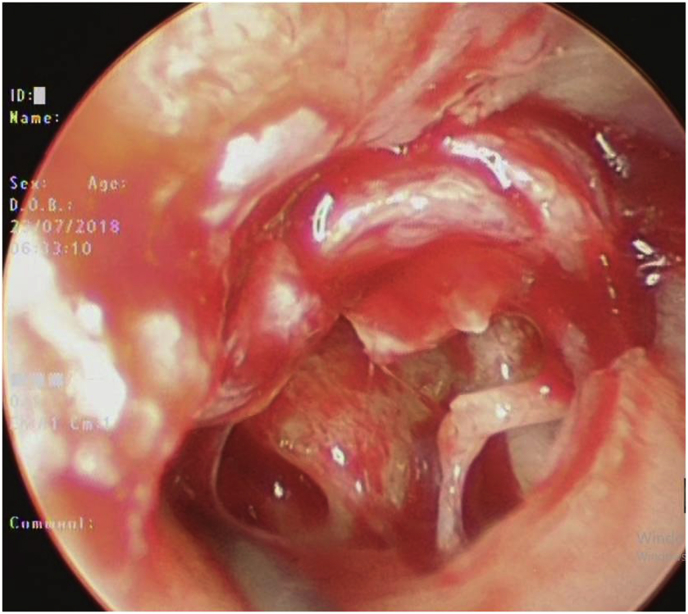
Endoscopes allow for enhanced surgical visualisation. The distal part of the apparatus is illuminated and contains lenses angled to allow a wider view of the operative area. Transcanal endoscopic techniques have transformed the external ear canal (EAC) into an operative gateway. The benefits EES can offer include wider views, enhanced imaging capabilities and increased magnification, and ways to see otherwise poorly visualisable portions of the middle ear. EES permits surgeons to operate using minimally invasive otological techniques. When compared with microscope-assisted surgery, endoscopic tympanoplasty has been shown to require a shorter operating time in some instances. There are a number of drawbacks to EES, however, which include the fact that it is a single-handed technique, that the light source may produce thermal injury and that visualisation using the endoscope is severely curtailed if bleeding is profuse.
EES is a safe and effective technique. The current literature supports the idea that the results achieved by endoscopic methods are usually comparably beneficial to results obtained using conventional microscopic methods.
本文综述了耳内镜手术(EES)的优缺点。
使用关键词“耳内镜手术”“耳部手术”和“内镜检查”对PubMed、谷歌以及基尔卡莱大学的Proquest Central数据库进行检索,以确定综述所需的文献。
内镜可增强手术视野。设备的远端有照明装置,且包含有一定角度的透镜,以便更广泛地观察手术区域。经耳道内镜技术已将外耳道(EAC)转变为手术通道。耳内镜手术的优势包括视野更宽、成像能力增强、放大倍数增加,以及能观察到中耳其他难以看清的部位。耳内镜手术允许外科医生采用微创耳科技术进行操作。与显微镜辅助手术相比,内镜鼓膜成形术在某些情况下已被证明手术时间更短。然而,耳内镜手术也存在一些缺点,包括它是一种单手操作技术、光源可能产生热损伤,以及如果出血过多,使用内镜的视野会严重受限。
耳内镜手术是一种安全有效的技术。当前文献支持这样的观点,即内镜方法所取得的结果通常与传统显微镜方法所获得的结果具有相当的益处。