Xing Feilong, Jeon Jaewan, Toyao Takashi, Shimizu Ken-Ichi, Furukawa Shinya
Institute for Catalysis , Hokkaido University , N-21, W-10 , Sapporo 001-0021 , Japan . Email:
Elements Strategy Initiative for Catalysts and Batteries , Kyoto University , Katsura , Kyoto 615-8520 , Japan.
Chem Sci. 2019 Aug 5;10(36):8292-8298. doi: 10.1039/c9sc03172c. eCollection 2019 Sep 28.
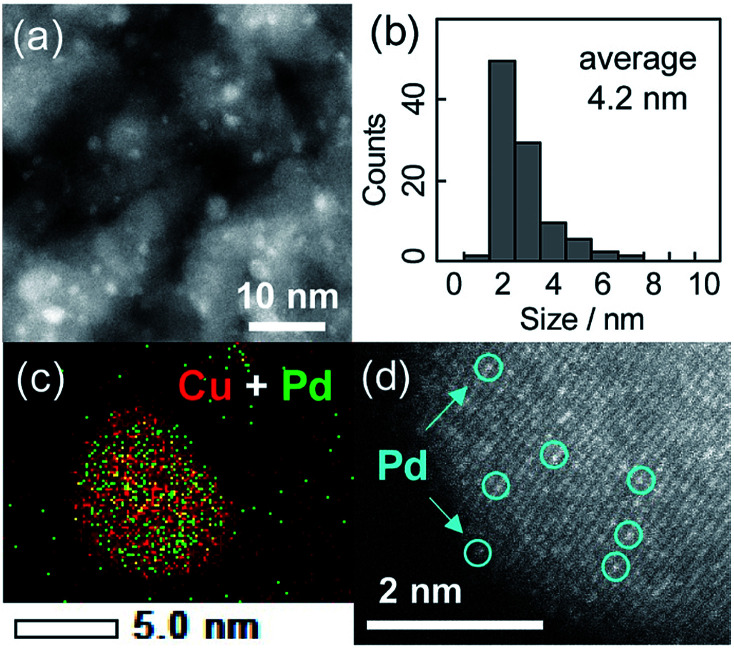
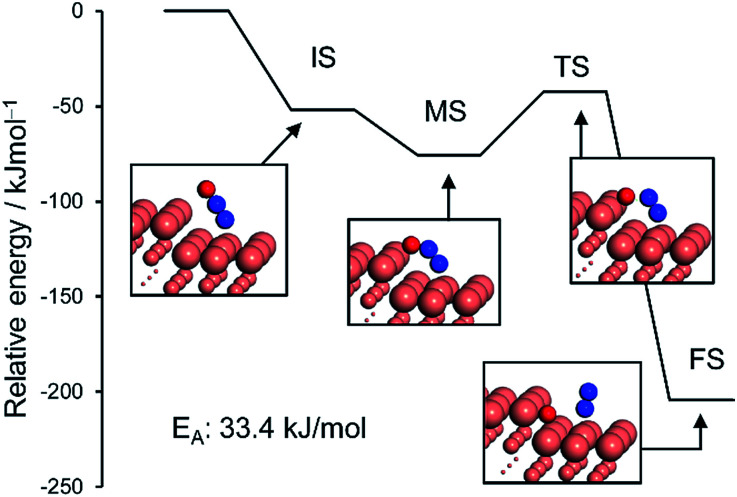
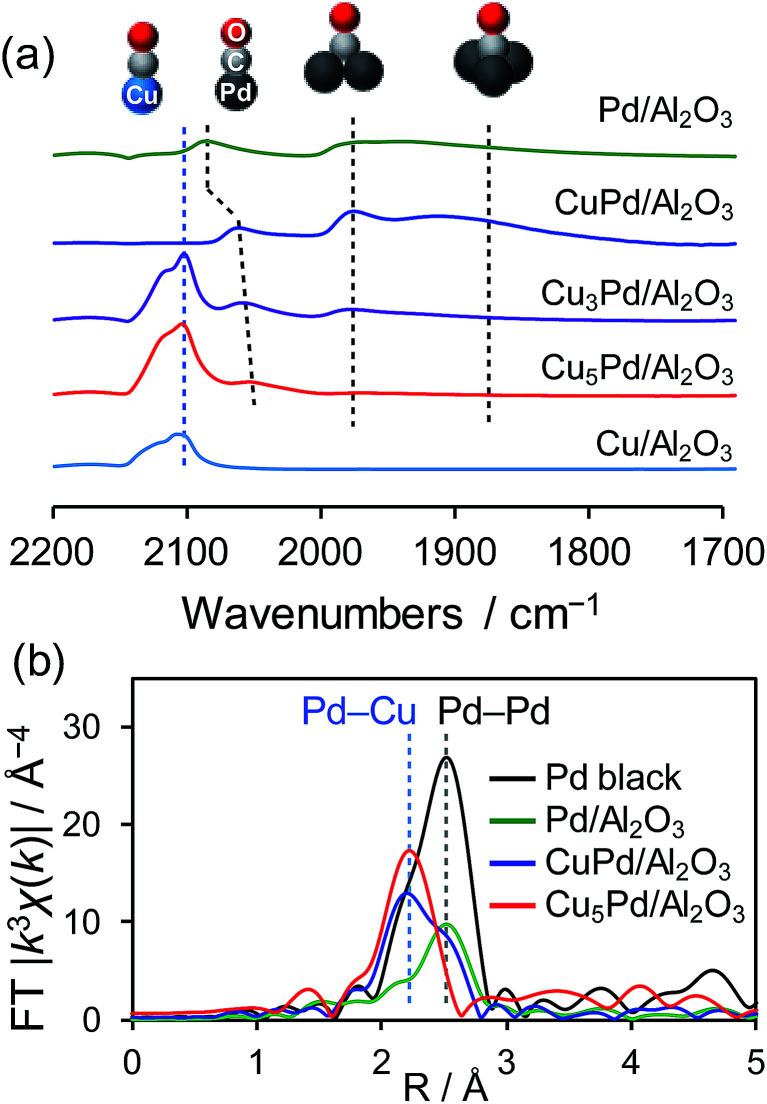
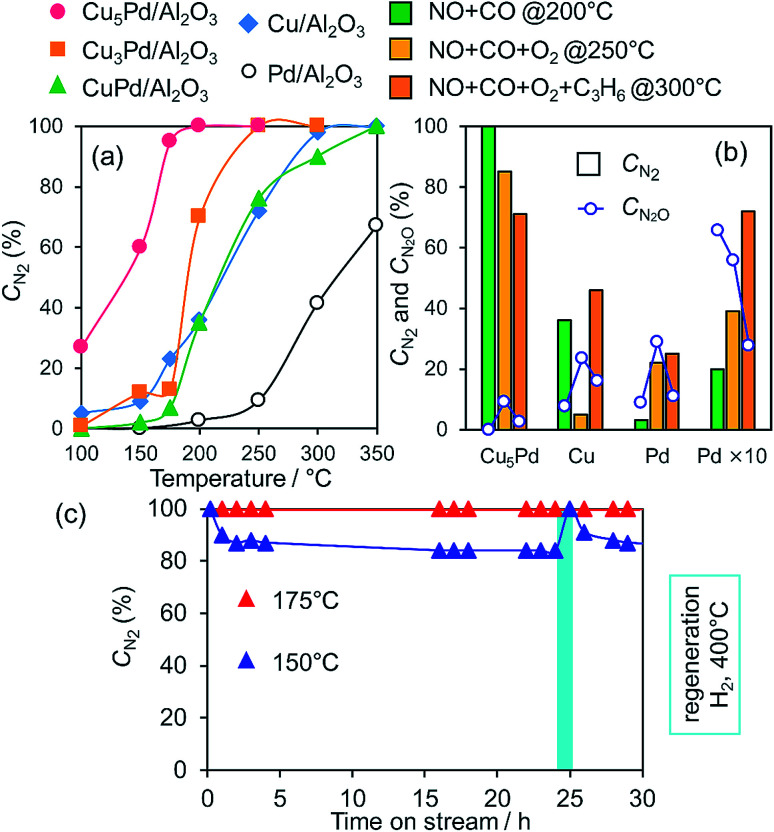
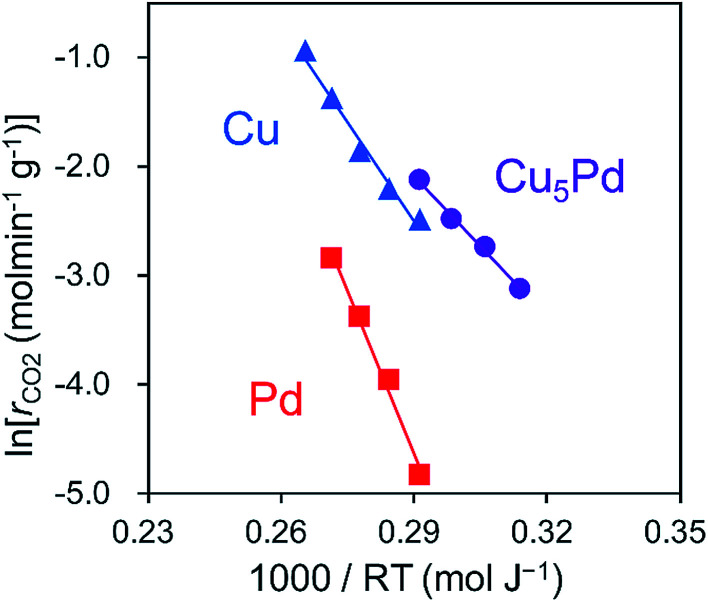
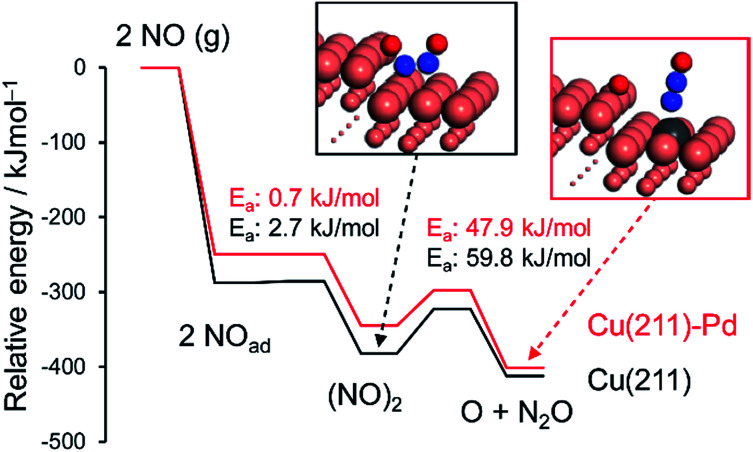
A series of Cu-Pd alloy nanoparticles supported on AlO were prepared and tested as catalysts for deNO reactions. XRD, HAADF-STEM, XAFS, and FT-IR analyses revealed that a single-atom alloy structure was formed when the Cu/Pd ratio was 5, where Pd atoms were well isolated by Cu atoms. Compared with Pd/AlO, CuPd/AlO exhibited outstanding catalytic activity and N selectivity in the reduction of NO by CO: for the first time, the complete conversion of NO to N was achieved even at 175 °C, with long-term stability for at least 30 h. High catalytic performance was also obtained in the presence of O and CH (model exhaust gas), where a 90% decrease in Pd use was achieved with minimum evolution of NO. Kinetic and DFT studies demonstrated that N-O bond breaking of the (NO) dimer was the rate-determining step and was kinetically promoted by the isolated Pd.
制备了一系列负载在AlO上的Cu-Pd合金纳米颗粒,并将其作为脱硝反应的催化剂进行测试。XRD、HAADF-STEM、XAFS和FT-IR分析表明,当Cu/Pd比为5时形成了单原子合金结构,其中Pd原子被Cu原子很好地隔离。与Pd/AlO相比,CuPd/AlO在CO还原NO反应中表现出出色的催化活性和N选择性:首次在175°C时实现了NO完全转化为N,并且具有至少30小时的长期稳定性。在O和CH(模拟废气)存在的情况下也获得了高催化性能,其中在NO生成量最小的情况下实现了Pd用量减少90%。动力学和DFT研究表明,(NO)二聚体的N-O键断裂是速率决定步骤,并且被孤立的Pd在动力学上促进。