Korczak B, Robson I B, Lamarche C, Bernstein A, Kerbel R S
Division of Cancer and Cell Biology, Mount Sinai Hospital Research Institute, Toronto, Ontario, Canada.
Mol Cell Biol. 1988 Aug;8(8):3143-9. doi: 10.1128/mcb.8.8.3143-3149.1988.
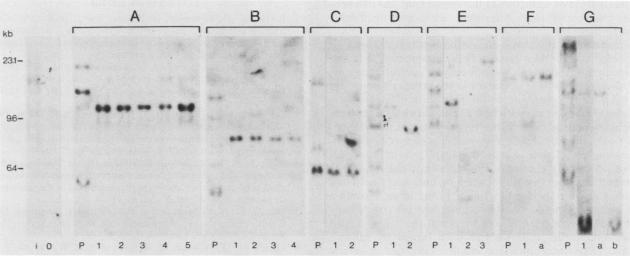
Retrovirus vector infection was used to introduce large numbers of unique genetic markers into tumor cell populations for the purpose of analyzing comparative changes in the clonal composition of metastatic versus that of nonmetastatic tumors during their progressive growth in vivo. The cell lines used were SP1, a nonmetastatic, aneuploid mouse mammary adenocarcinoma, and SP1HU9L, a metastatic variant of SP1. Cells were infected with delta e delta pMoTN, a replication-defective retrovirus vector which possesses the dominant selectable neo gene and crippled long terminal repeats. G418r colonies were obtained at a frequency of 4 x 10(-3). Southern blot analysis of a number of clones provided evidence of random and heritable integration of one or two copies of the proviral DNA. Clonal evolution of primary tumor growth and the nature of lineage relationships among spontaneous metastases and primary tumors were analyzed by subcutaneously injecting 10(5) cells from a pooled mixture of 3.6 x 10(2) G418r SP1HU9L or 10(4) G418r SP1 colonies into syngeneic CBA/J mice. The most striking finding was the relative clonal homogeneity of advanced primary tumors; they invariably consisted of a small number (less than 10) of distinct clones despite the fact that hundreds or thousands of uniquely marked clones had been injected. In the case of the metastatic SP1HU9L cells, the nature of these "dominant" clones varied from one tumor to another. Analysis of a number of lung metastases revealed that a proportion of them were derived from dominant primary tumor clones and were composed of one, and sometimes two, distinct progenitors. In some animals, all the lung metastases were derived from a common progenitor clone, whereas in others, each metastatic nodule had a different progenitor. The results show the following. (i) Retrovirus vector infection can be used to introduce large numbers of unique and stable clonal markers into tumor cell populations. (ii) The progeny of a very limited number of clones dominate in advanced primary tumors. (iii) Mammary carcinoma metastases are of mono- or biclonal origin. The significance of the results is discussed.
为了分析转移性肿瘤与非转移性肿瘤在体内渐进性生长过程中克隆组成的比较变化,采用逆转录病毒载体感染的方法将大量独特的遗传标记引入肿瘤细胞群体。所用的细胞系为SP1,一种非转移性的非整倍体小鼠乳腺腺癌,以及SP1HU9L,SP1的转移性变体。细胞用δeδpMoTN感染,这是一种复制缺陷型逆转录病毒载体,它具有显性选择neo基因和缺陷的长末端重复序列。以4×10⁻³的频率获得G418抗性菌落。对多个克隆的Southern印迹分析提供了原病毒DNA一两个拷贝随机且可遗传整合的证据。通过将来自3.6×10²个G418抗性SP1HU9L或10⁴个G418抗性SP1菌落的混合池中的10⁵个细胞皮下注射到同基因CBA/J小鼠中,分析原发性肿瘤生长的克隆进化以及自发转移瘤与原发性肿瘤之间谱系关系的性质。最显著的发现是晚期原发性肿瘤的相对克隆同质性;尽管已注射了数百或数千个独特标记的克隆,但它们总是由少数(少于10个)不同的克隆组成。对于转移性SP1HU9L细胞,这些“优势”克隆的性质因肿瘤而异。对多个肺转移瘤的分析表明,其中一部分来自优势原发性肿瘤克隆,由一个,有时是两个不同的祖细胞组成。在一些动物中,所有肺转移瘤都来自一个共同的祖细胞克隆,而在其他动物中,每个转移结节都有不同的祖细胞。结果表明:(i)逆转录病毒载体感染可用于将大量独特且稳定的克隆标记引入肿瘤细胞群体。(ii)在晚期原发性肿瘤中,数量非常有限的克隆的后代占主导地位。(iii)乳腺癌转移瘤起源于单克隆或双克隆。讨论了这些结果的意义。