Lund University, Department of Biology, Mammalian Rhinarium Group, Sölvegatan 35, 22362, Lund, Sweden.
MTA-ELTE Comparative Ethology Research Group, 1117, Budapest, Hungary.
Sci Rep. 2020 Feb 28;10(1):3736. doi: 10.1038/s41598-020-60439-y.
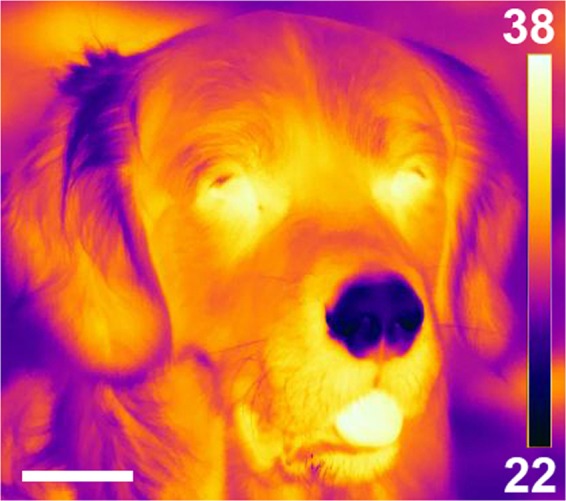
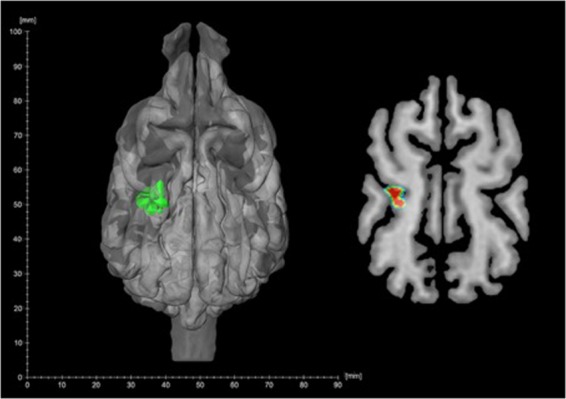
The dog rhinarium (naked and often moist skin on the nose-tip) is prominent and richly innervated, suggesting a sensory function. Compared to nose-tips of herbivorous artio- and perissodactyla, carnivoran rhinaria are considerably colder. We hypothesized that this coldness makes the dog rhinarium particularly sensitive to radiating heat. We trained three dogs to distinguish between two distant objects based on radiating heat; the neutral object was about ambient temperature, the warm object was about the same surface temperature as a furry mammal. In addition, we employed functional magnetic resonance imaging on 13 awake dogs, comparing the responses to heat stimuli of about the same temperatures as in the behavioural experiment. The warm stimulus elicited increased neural response in the left somatosensory association cortex. Our results demonstrate a hitherto undiscovered sensory modality in a carnivoran species.
狗的鼻镜(鼻尖上裸露且通常湿润的皮肤)非常突出,并且富含神经,表明其具有某种感觉功能。与草食性的偶蹄目和奇蹄目动物的鼻尖相比,食肉动物的鼻镜要冷得多。我们假设这种低温使狗的鼻镜对辐射热特别敏感。我们训练了三只狗根据辐射热来区分两个远处的物体;中性物体的温度接近环境温度,而温暖的物体的表面温度与毛茸茸的哺乳动物大致相同。此外,我们对 13 只清醒的狗进行了功能磁共振成像,比较了与行为实验中相同温度的热刺激的反应。温暖的刺激会引起左躯体感觉联合皮层的神经反应增强。我们的研究结果证明了在食肉动物物种中存在一种以前未被发现的感觉方式。