Key Laboratory of Bio-resources and Eco-environment of Ministry of Education, College of Life Sciences, Sichuan University, Chengdu 610065, PR China.
Key Laboratory of Bio-resources and Eco-environment of Ministry of Education, College of Life Sciences, Sichuan University, Chengdu 610065, PR China.
Poult Sci. 2020 Mar;99(3):1643-1654. doi: 10.1016/j.psj.2019.10.062. Epub 2019 Dec 30.
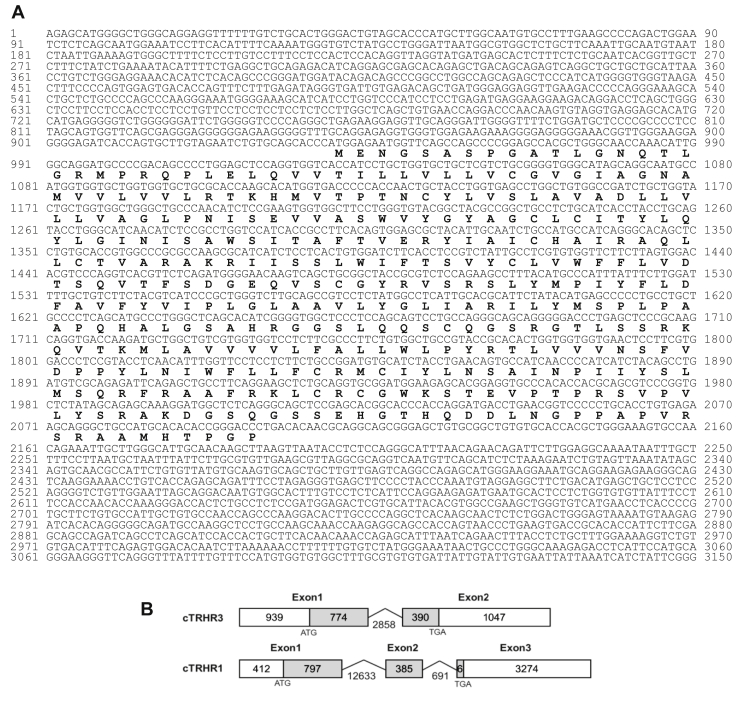
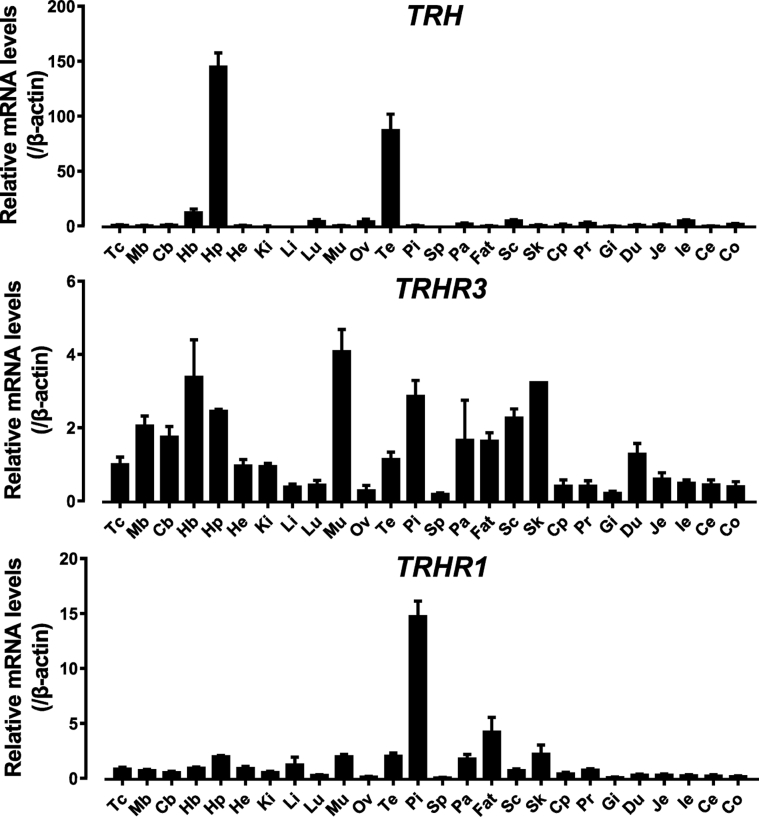
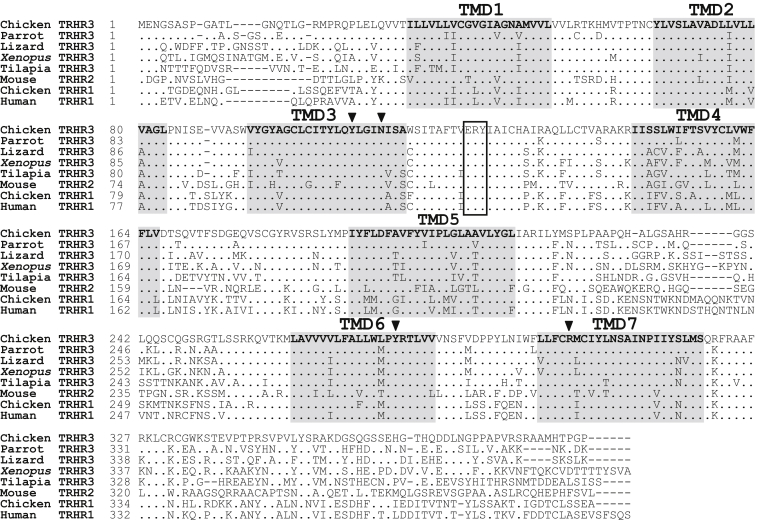
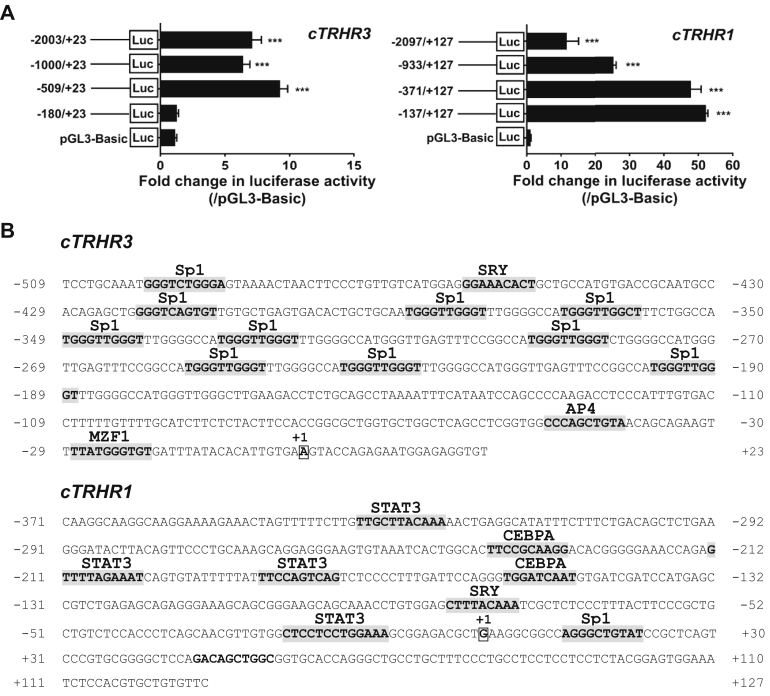
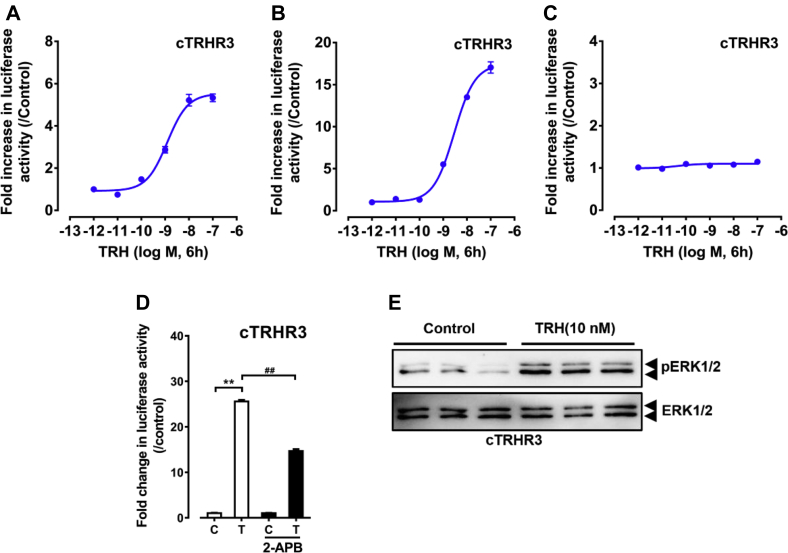
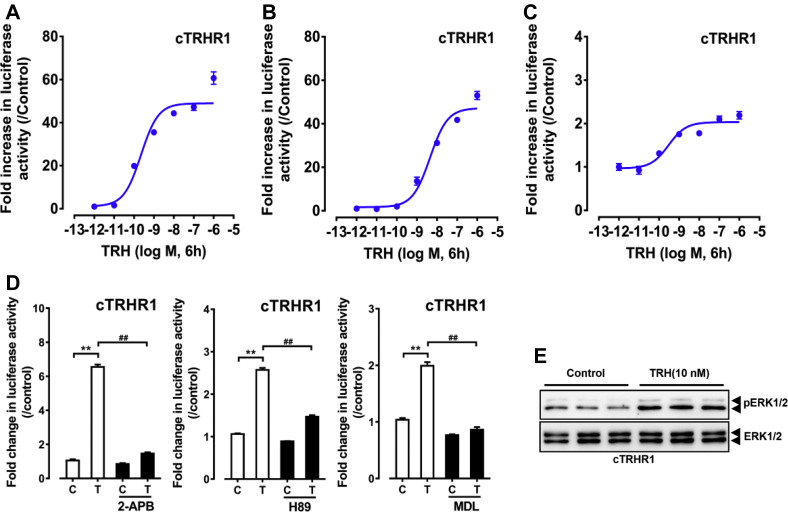
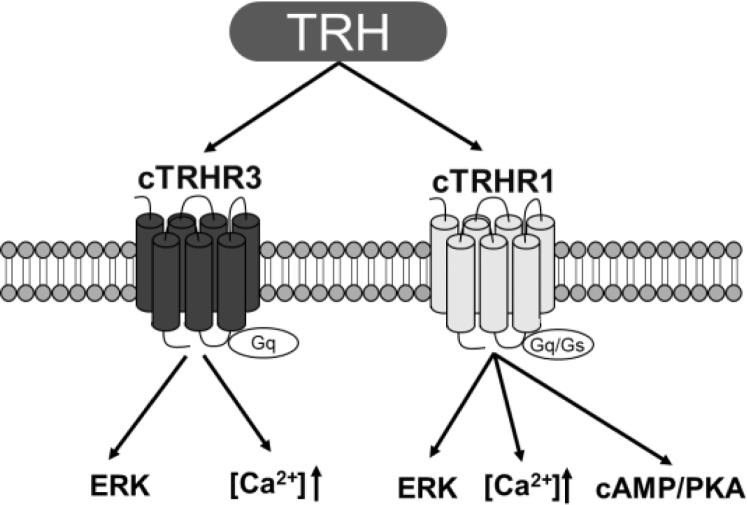
The physiological roles of thyrotropin-releasing hormone (TRH) are proposed to be mediated by TRH receptors (TRHR), which have been divided into 3 subtypes, namely, TRHR1, TRHR2, and TRHR3, in vertebrates. Although 2 TRH receptors (TRHR1 and TRHR3) have been predicted to exist in birds, it remains unclear whether TRHR3 is a functional TRH receptor similar to TRHR1. Here, we reported the functionality and tissue expression of TRHR3 in chickens. The cloned chicken TRHR3 (cTRHR3) encodes a receptor of 387 amino acids, which shares high-amino-acid identities (63-80%) to TRHR3 of parrots, lizards, Xenopus tropicalis, and tilapia and comparatively lower sequence identities to chicken TRHR1 or mouse TRHR2. Using cell-based luciferase reporter assays and Western blot, we demonstrated that similar to chicken TRHR1 (cTRHR1), cTRHR3 expressed in HEK 293 cells can be potently activated by TRH and that its activation stimulates multiple signaling pathways, indicating both TRH receptors are functional. Quantitative real-time PCR revealed that cTRHR1 and cTRHR3 are widely, but differentially, expressed in chicken tissues, and their expression is likely controlled by promoters located upstream of exon 1, which display strong promoter activities in cultured DF-1 cells. cTRHR1 is highly expressed in the anterior pituitary and testes, while cTRHR3 is highly expressed in the muscle, testes, fat, pituitary, spinal cord, and many brain regions (including hypothalamus). These findings indicate that TRH actions are likely mediated by 2 TRH receptors in chickens. In conclusion, our data provide the first piece of evidence that both cTRHR3 and cTRHR1 are functional TRH receptors, which helps to elucidate the physiological roles of TRH in birds.
促甲状腺激素释放激素(TRH)的生理作用被认为是通过 TRH 受体(TRHR)介导的,在脊椎动物中,TRHR 已被分为 3 种亚型,即 TRHR1、TRHR2 和 TRHR3。尽管已经预测鸟类存在 2 种 TRH 受体(TRHR1 和 TRHR3),但 TRHR3 是否是类似于 TRHR1 的功能性 TRH 受体仍不清楚。在这里,我们报道了鸡 TRHR3(cTRHR3)的功能和组织表达。克隆的鸡 TRHR3(cTRHR3)编码一个由 387 个氨基酸组成的受体,它与鹦鹉、蜥蜴、非洲爪蟾和罗非鱼的 TRHR3 具有高度的氨基酸同一性(63-80%),而与鸡 TRHR1 或小鼠 TRHR2 的序列同一性较低。使用基于细胞的荧光素酶报告基因检测和 Western blot,我们证明类似于鸡 TRHR1(cTRHR1),在 HEK 293 细胞中表达的 cTRHR3 可以被 TRH 强烈激活,并且其激活刺激多种信号通路,表明这两种 TRH 受体都是功能性的。实时定量 PCR 显示,cTRHR1 和 cTRHR3 在鸡组织中广泛表达,但存在差异,它们的表达可能受位于外显子 1 上游的启动子控制,该启动子在培养的 DF-1 细胞中具有很强的启动子活性。cTRHR1 在垂体前叶和睾丸中高度表达,而 cTRHR3 在肌肉、睾丸、脂肪、垂体、脊髓和许多脑区(包括下丘脑)中高度表达。这些发现表明,TRH 的作用可能是通过鸡中的 2 种 TRH 受体介导的。总之,我们的数据首次提供了证据表明 cTRHR3 和 cTRHR1 都是功能性的 TRH 受体,这有助于阐明 TRH 在鸟类中的生理作用。