Lewis Ricky W, Okubara Patricia A, Fuerst E Patrick, He Ruifeng, Gang David, Sullivan Tarah S
Department of Crop and Soil Sciences, Washington State University, Pullman, WA, United States.
Wheat Health, Genetics, and Quality, USDA-ARS, Pullman, WA, United States.
Front Microbiol. 2020 Feb 4;11:51. doi: 10.3389/fmicb.2020.00051. eCollection 2020.
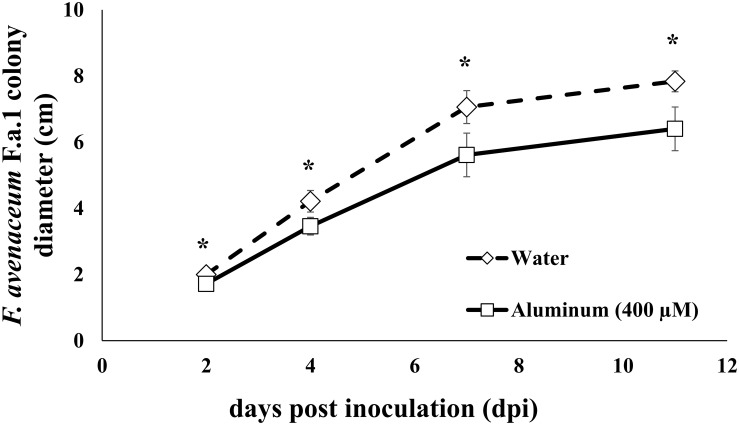
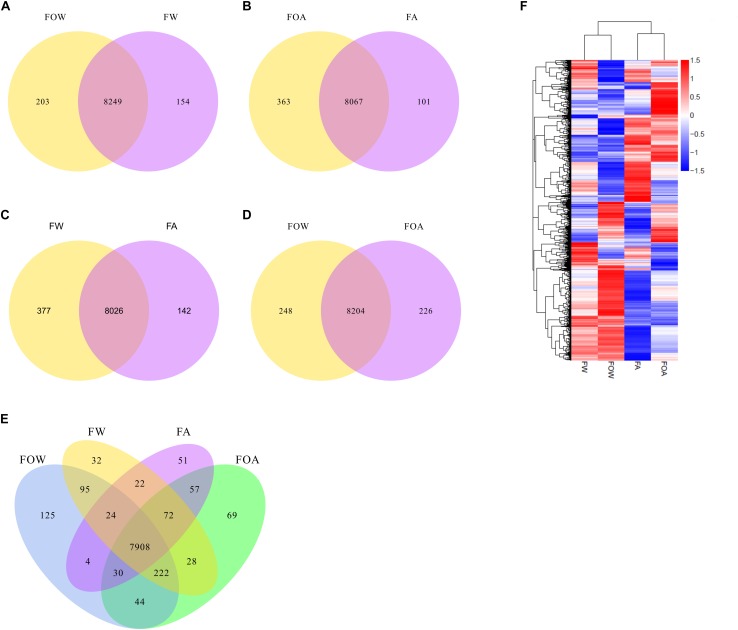
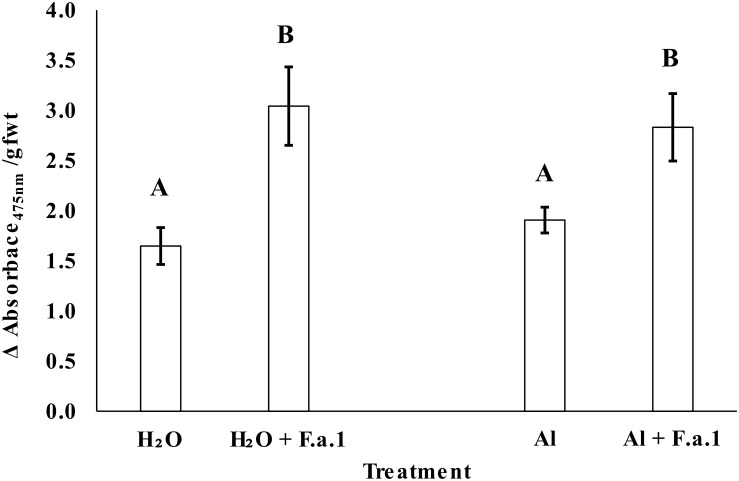
F.a.1 is a novel strain of a fungal plant pathogen capable of preferentially decaying wild oat () caryopses compared with those of wheat (). Understanding the molecular mechanisms governing weed seed-pathogen interactions is crucial to developing novel weed seed suppression technologies. Additionally, wild oat often competes with wheat in regions undergoing soil acidification, which leads to increases in soluble concentrations of many metals, including aluminum (Al). There is a dearth of information regarding the gene expression responses of species to Al toxicity, or how metal toxicity might influence caryopsis colonization. To address this, a transcriptomic approach was used to investigate molecular responses of F.a.1 during wild oat caryopsis colonization in the presence and absence of chronic, sublethal concentrations of Al (400 μM). Caryopsis colonization was associated with induction of genes related to virulence, development, iron metabolism, oxidoreduction, stress, and detoxification, along with repression of genes associated with development, transport, cell-wall turnover, and virulence. Caryopsis colonization during Al exposure resulted in the induction of genes associated with virulence, detoxification, stress, iron metabolism, oxidoreduction, and cell wall turnover, along with repression of genes associated with cell wall metabolism, virulence, development, detoxification, stress, and transcriptional regulation. Aluminum exposure in the absence of caryopses was associated with induction of genes involved in siderophore biosynthesis, secretion, uptake, and utilization, along with several other iron metabolism-related and organic acid metabolism-related genes. The siderophore-related responses associated with Al toxicity occurred concurrently with differential regulation of genes indicating disruption of iron homeostasis. These findings suggest Al toxicity is attenuated by siderophore metabolism in F.a.1. In summary, both caryopsis colonization and Al toxicity uniquely influence transcriptomic responses of F.a.1.
F.a.1是一种新型的真菌植物病原体菌株,与小麦相比,它能够优先使野燕麦颖果腐烂。了解控制杂草种子与病原体相互作用的分子机制对于开发新型杂草种子抑制技术至关重要。此外,在土壤酸化地区,野燕麦经常与小麦竞争,这会导致包括铝(Al)在内的许多金属的可溶性浓度增加。关于野燕麦对铝毒性的基因表达反应,或者金属毒性如何影响颖果定殖,目前缺乏相关信息。为了解决这个问题,采用转录组学方法研究了在存在和不存在慢性亚致死浓度铝(400 μM)的情况下,F.a.1在野燕麦颖果定殖过程中的分子反应。颖果定殖与毒力、发育、铁代谢、氧化还原、应激和解毒相关基因的诱导有关,同时与发育、运输、细胞壁周转和毒力相关基因的抑制有关。铝暴露期间的颖果定殖导致毒力、解毒、应激、铁代谢、氧化还原和细胞壁周转相关基因的诱导,同时与细胞壁代谢、毒力、发育、解毒、应激和转录调控相关基因的抑制有关。在没有颖果的情况下铝暴露与参与铁载体生物合成、分泌、摄取和利用的基因的诱导有关,以及其他一些与铁代谢和有机酸代谢相关的基因。与铝毒性相关的铁载体相关反应与表明铁稳态破坏的基因的差异调节同时发生。这些发现表明铝毒性在F.a.1中通过铁载体代谢而减弱。总之,颖果定殖和铝毒性都独特地影响F.a.1的转录组反应。