Department of Microbiology and Immunology, University of Oklahoma Health Sciences Center, Oklahoma City, OK, United States.
Department of Ophthalmology, University of Oklahoma Health Sciences Center, Oklahoma City, OK, United States.
Front Immunol. 2020 Feb 12;11:215. doi: 10.3389/fimmu.2020.00215. eCollection 2020.
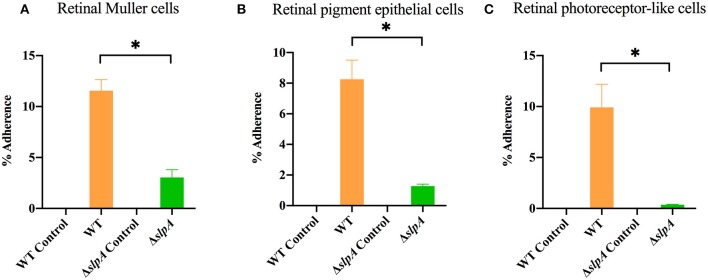
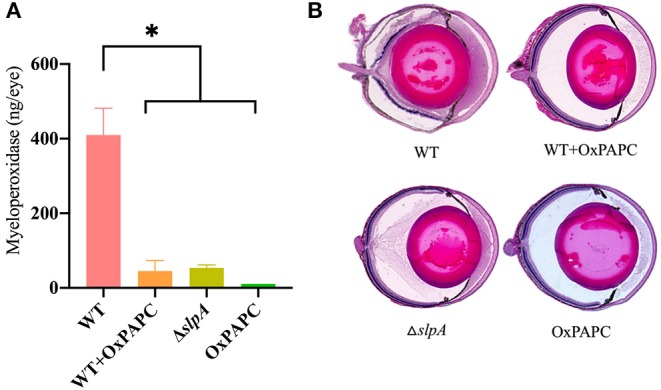
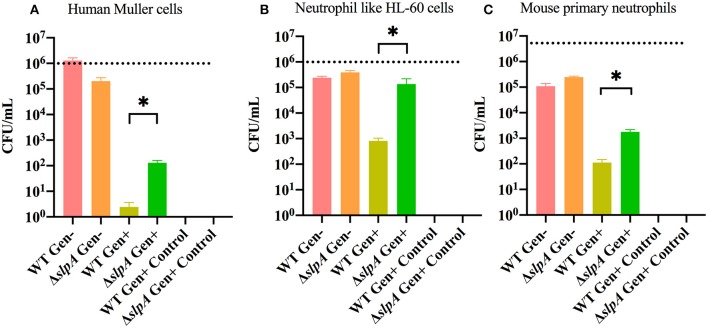
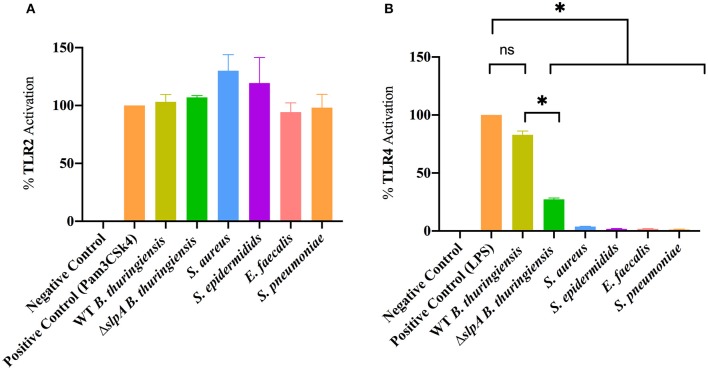
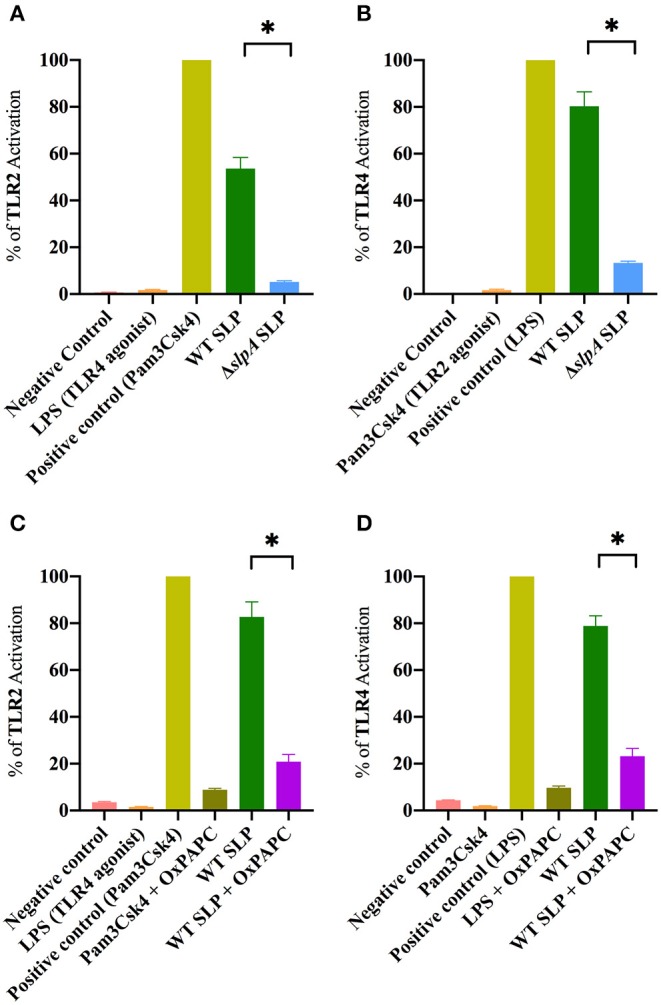
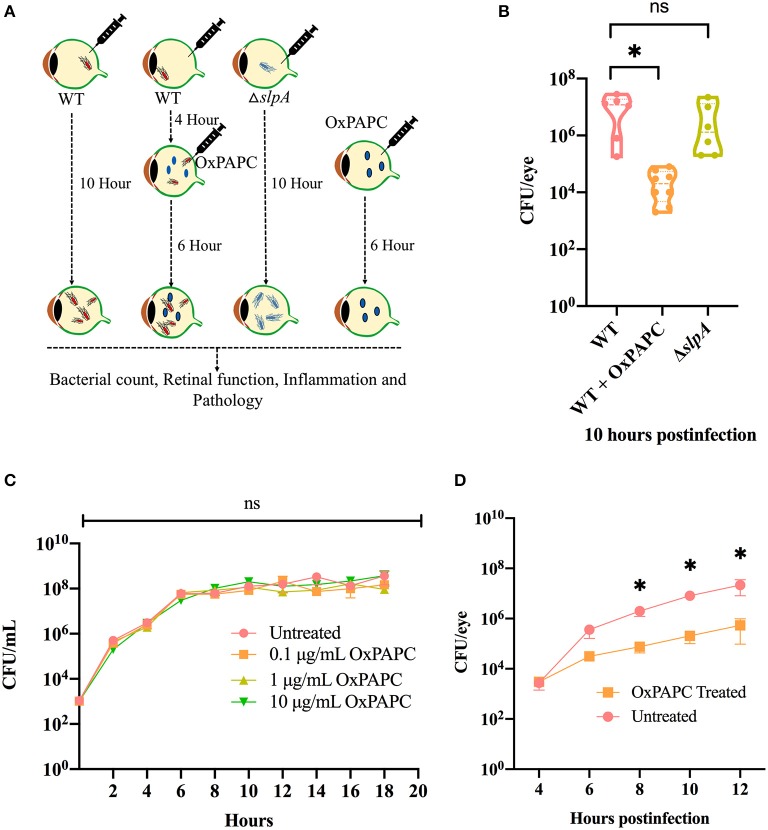
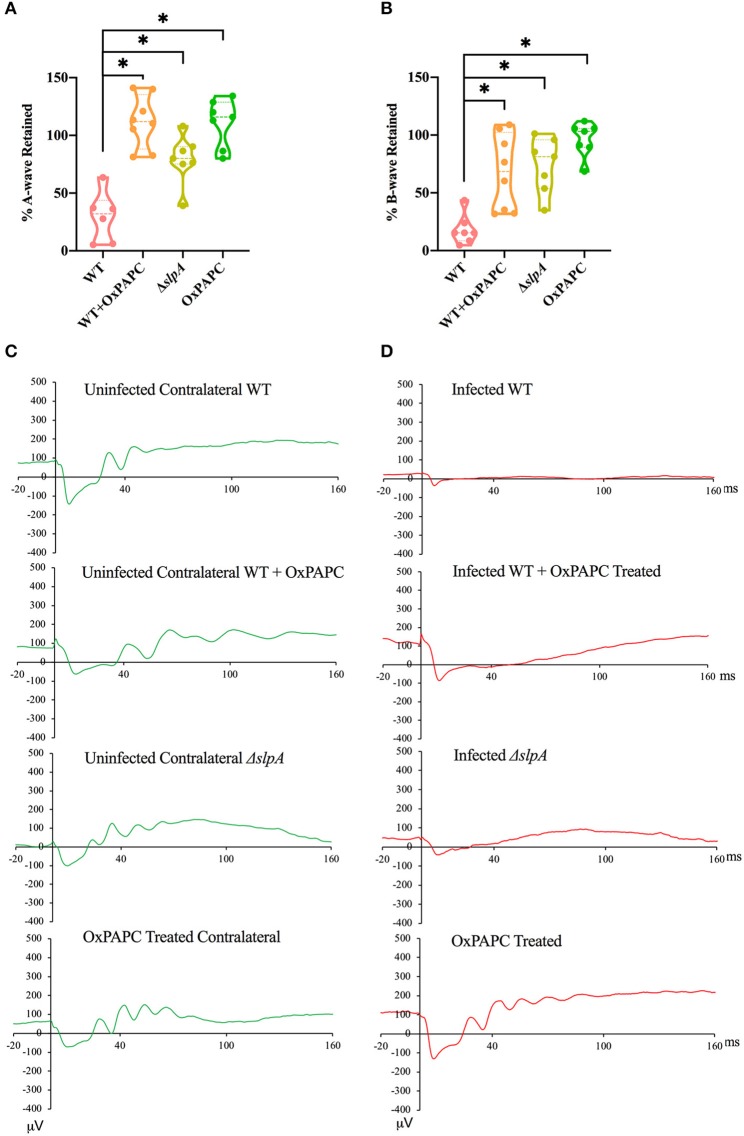
endophthalmitis is a severe intraocular infection. Hallmarks of endophthalmitis include robust inflammation and rapid loss of vision. We reported that the absence of surface layer protein (SLP) significantly blunted endophthalmitis severity. Here, we further investigated SLP in the context of retinal cell interactions and innate immune pathways to explore the mechanisms by which SLP contributes to intraocular inflammation. We compared phenotypes of Wild-type (WT) and SLP deficient Δ) by analyzing bacterial adherence to and phagocytosis by human retinal Muller cells and phagocytosis by mouse neutrophils. Innate immune receptor activation by the envelope and purified SLP was analyzed using TLR2/4 reporter cell lines. A synthetic TLR2/4 inhibitor was used as a control for this receptor activation. To induce endophthalmitis, mouse eyes were injected intravitreally with 100 CFU WT or Δ. A group of WT infected mice was treated intravitreally with a TLR2/4 inhibitor at 4 h postinfection. At 10 h postinfection, infected eyes were analyzed for viable bacteria, inflammation, and retinal function. We observed that SLPs contributed to retinal Muller cell adherence, and protected this pathogen from Muller cell- and neutrophil-mediated phagocytosis. We found that envelope activated TLR2 and, surprisingly, TLR4, suggesting the presence of a surface-associated TLR4 agonist in . Further investigation showed that purified SLP from activated TLR4, as well as TLR2 . Growth of WT was significantly higher and caused greater inflammation in untreated eyes than in eyes treated with the TLR2/4 inhibitor. Retinal function analysis also showed greater retention of A-wave and B-wave function in infected eyes treated with the TLR2/4 inhibitor. The TLR2/4 inhibitor was not antibacterial , and did not cause inflammation when injected into uninfected eyes. Taken together, these results suggest a potential role for SLP in host-bacterial interactions, as well as in endophthalmitis pathogenesis via TLR2- and TLR4-mediated pathways.
眼内炎是一种严重的眼内感染。眼内炎的特征包括强烈的炎症和迅速的视力丧失。我们报道过表面层蛋白(SLP)缺失显著减轻了眼内炎的严重程度。在此,我们进一步研究了 SLP 在视网膜细胞相互作用和固有免疫途径中的作用,以探讨 SLP 导致眼内炎症的机制。我们通过分析人视网膜 Muller 细胞对细菌的黏附和吞噬作用以及小鼠中性粒细胞的吞噬作用,比较了野生型(WT)和 SLP 缺陷型(Δ)的表型。使用 TLR2/4 报告细胞系分析了包膜和纯化的 SLP 对固有免疫受体的激活作用。用合成的 TLR2/4 抑制剂作为该受体激活的对照。为了诱导眼内炎,将 100 CFU 的 WT 或 Δ 通过玻璃体内注射入小鼠眼内。一组 WT 感染的小鼠在感染后 4 小时通过玻璃体内注射 TLR2/4 抑制剂进行治疗。在感染后 10 小时,分析感染眼的活菌、炎症和视网膜功能。我们观察到 SLP 有助于视网膜 Muller 细胞黏附,并保护这种病原体免受 Muller 细胞和中性粒细胞介导的吞噬作用。我们发现 包膜激活了 TLR2,而且令人惊讶的是,还激活了 TLR4,这表明 中存在一种表面相关的 TLR4 激动剂。进一步的研究表明,从 中纯化的 SLP 激活了 TLR4,以及 TLR2。未经处理的 WT 生长明显高于未经处理的眼睛,并且在未用 TLR2/4 抑制剂处理的眼睛中引起更大的炎症。感染眼用 TLR2/4 抑制剂治疗后,视网膜功能分析也显示 A 波和 B 波功能保留更多。TLR2/4 抑制剂没有抗菌作用,并且在注射到未感染的眼睛中时不会引起炎症。总之,这些结果表明 SLP 在宿主-细菌相互作用以及通过 TLR2 和 TLR4 介导的途径在眼内炎发病机制中可能发挥作用。