Pasley Heather R, Huber Isaiah, Castellano Michael J, Archontoulis Sotirios V
Department of Agronomy, Iowa State University, Ames, IA, Unites States.
Front Plant Sci. 2020 Feb 12;11:62. doi: 10.3389/fpls.2020.00062. eCollection 2020.
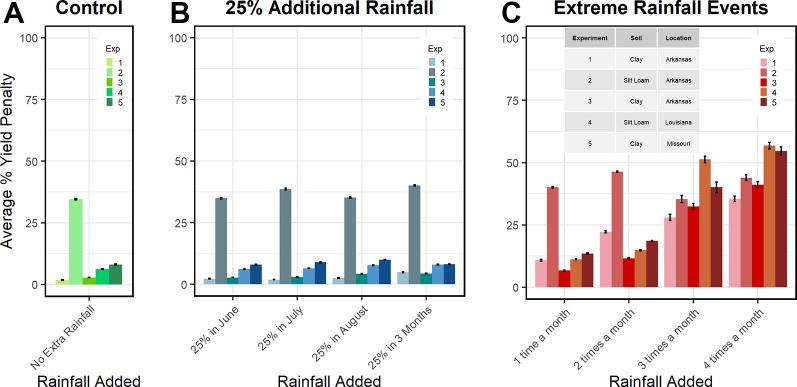
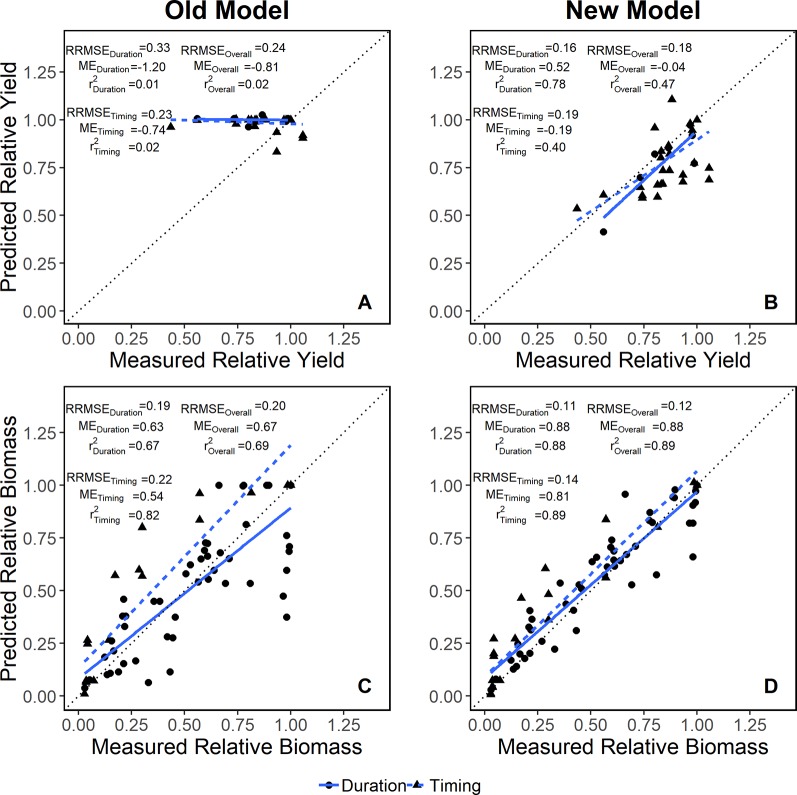
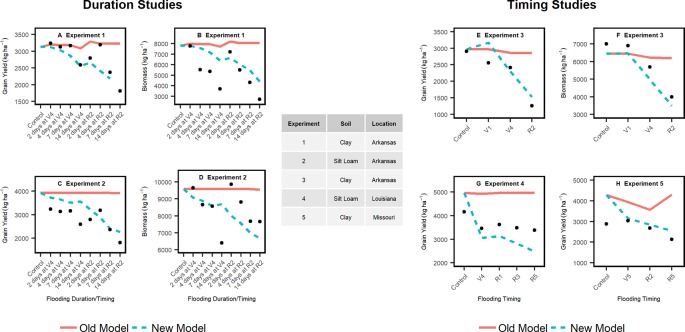
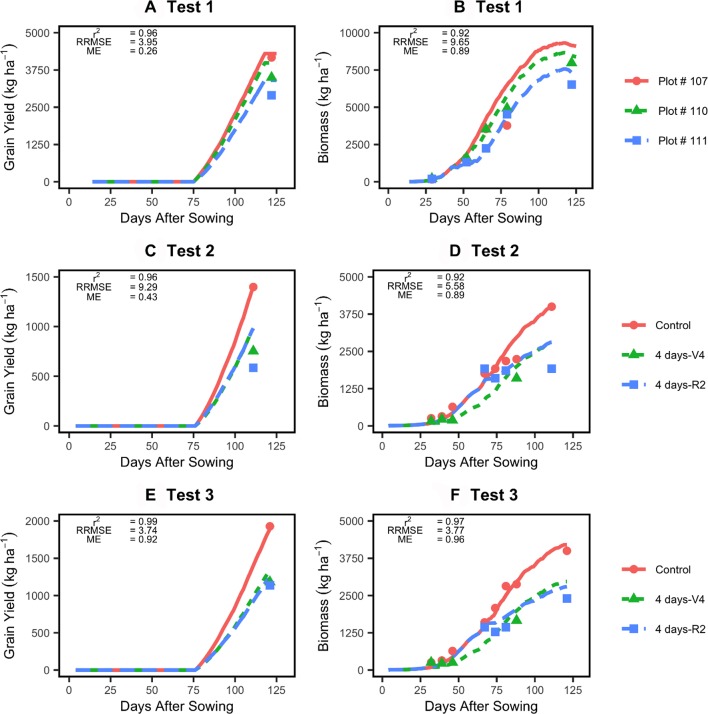
Despite the detrimental impact that excess moisture can have on soybean ( [L.] Merr) yields, most of today's crop models do not capture soybean's dynamic responses to waterlogged conditions. In light of this, we synthesized literature data and used the APSIM software to enhance the modeling capacity to simulate plant growth, development, and N fixation response to flooding. Literature data included greenhouse and field experiments from across the U.S. that investigated the impact of flood timing and duration on soybean. Five datasets were used for model parameterization of new functions and three datasets were used for testing. Improvements in prediction accuracy were quantified by comparing model performance before and after the implementation of new stage-dependent excess water functions for phenology, photosynthesis and N-fixation. The relative root mean square error (RRMSE) for yield predictions improved by 26% and the RRMSE predictions of biomass improved by 40%. Extensive model testing found that the improved model accurately simulates plant responses to flooding including how these responses change with flood timing and duration. When used to project soybean response to future climate scenarios, the model showed that intense rain events had a greater negative effect on yield than a 25% increase in rainfall distributed over 1 or 3 month(s). These developments advance our ability to understand, predict and, thereby, mitigate yield loss as increases in climatic volatility lead to more frequent and intense flooding events in the future.
尽管过多水分会对大豆([L.] Merr)产量产生不利影响,但如今大多数作物模型并未捕捉到大豆对涝渍条件的动态响应。有鉴于此,我们综合了文献数据,并使用农业生产系统模拟器(APSIM)软件来增强模拟植物生长、发育以及固氮对洪水响应的建模能力。文献数据包括来自美国各地的温室和田间试验,这些试验研究了洪水发生时间和持续时间对大豆的影响。五个数据集用于新函数的模型参数化,三个数据集用于测试。通过比较物候、光合作用和固氮的新阶段依赖过量水分函数实施前后的模型性能,对预测准确性的提高进行了量化。产量预测的相对均方根误差(RRMSE)提高了26%,生物量的RRMSE预测提高了40%。广泛的模型测试发现,改进后的模型能够准确模拟植物对洪水的响应,包括这些响应如何随洪水发生时间和持续时间而变化。当用于预测大豆对未来气候情景的响应时,该模型表明,强降雨事件对产量的负面影响大于在1个月或3个月内降雨量增加25%的情况。随着气候波动加剧导致未来洪水事件更加频繁和强烈,这些进展提升了我们理解、预测并从而减轻产量损失的能力。