Hernández-Gómez Obed, Byrne Allison Q, Gunderson Alex R, Jenkinson Thomas S, Noss Clay F, Rothstein Andrew P, Womack Molly C, Rosenblum Erica B
Department of Environmental Science, Policy, and Management, University of California, Berkeley, Berkeley, CA, USA.
Department of Ecology and Evolutionary Biology, Tulane University, New Orleans, LA, USA.
PeerJ. 2020 Feb 19;8:e8549. doi: 10.7717/peerj.8549. eCollection 2020.
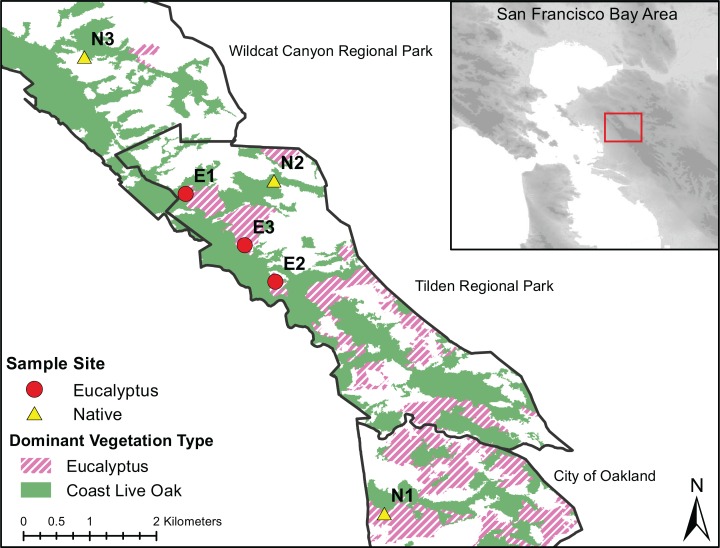
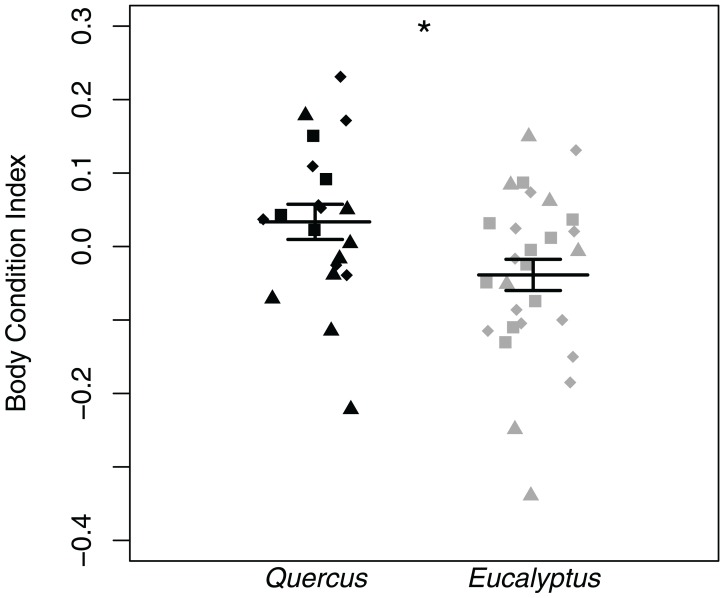
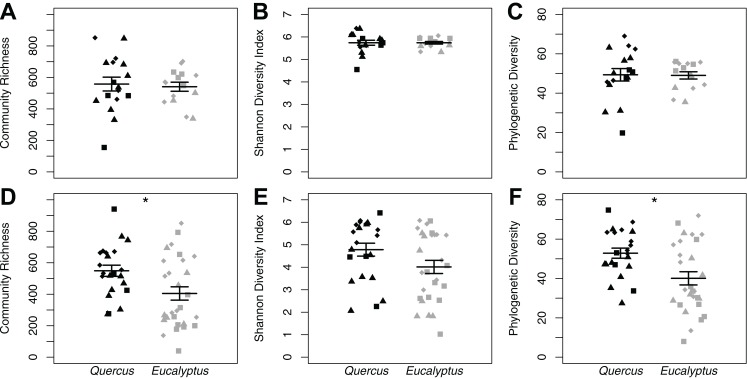
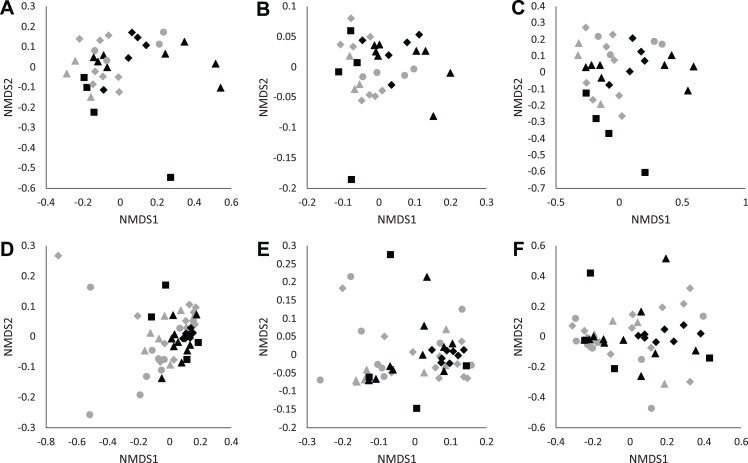
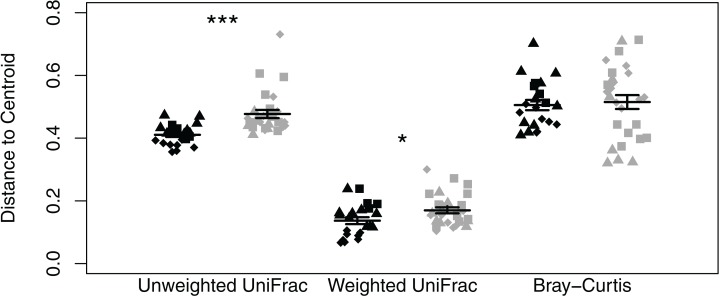
Invasive plants are major drivers of habitat modification and the scale of their impact is increasing globally as anthropogenic activities facilitate their spread. In California, an invasive plant genus of great concern is . leaves can alter soil chemistry and negatively affect underground macro- and microbial communities. Amphibians serve as excellent models to evaluate the effect of invasion on ground-dwelling species as they predate on soil arthropods and incorporate soil microbes into their microbiotas. The skin microbiota is particularly important to amphibian health, suggesting that invasive plant species could ultimately affect amphibian populations. To investigate the potential for invasive vegetation to induce changes in microbial communities, we sampled microbial communities in the soil and on the skin of local amphibians. Specifically, we compared skin microbiomes in both (Myrtaceae) and native (Fagaceae) dominated forests in the San Francisco Bay Area. We determined whether changes in microbial diversity and composition in both soil and skin were associated with dominant vegetation type. To evaluate animal health across vegetation types, we compared body condition and the presence/absence of the amphibian skin pathogen . We found that invasion had no measurable effect on soil microbial community diversity and a relatively small effect (compared to the effect of site identity) on community structure in the microhabitats sampled. In contrast, our results show that skin microbiota diversity was greater in dominated habitats. One amplicon sequence variant identified in the family Chlamydiaceae was observed in higher relative abundance among salamanders sampled in dominated habitats. We also observed that body condition was higher in dominated habitats. Incidence of across all individuals was very low (only one positive individual). The effect on body condition demonstrates that although may not always decrease amphibian abundance or diversity, it can potentially have cryptic negative effects. Our findings prompt further work to determine the mechanisms that lead to changes in the health and microbiome of native species post-plant invasion.
入侵植物是栖息地改变的主要驱动因素,随着人为活动促进其传播,其影响范围在全球不断扩大。在加利福尼亚州,一个备受关注的入侵植物属是 。其叶子会改变土壤化学性质,并对地下大型和微生物群落产生负面影响。两栖动物是评估 入侵对地面栖息物种影响的优秀模型,因为它们以土壤节肢动物为食,并将土壤微生物纳入其微生物群。皮肤微生物群对两栖动物健康尤为重要,这表明入侵植物物种最终可能会影响两栖动物种群。为了研究入侵植被诱导微生物群落变化的可能性,我们对当地两栖动物土壤和皮肤中的微生物群落进行了采样。具体而言,我们比较了旧金山湾区以 (桃金娘科)和本地 (壳斗科)为主的森林中两栖动物的皮肤微生物组。我们确定了土壤和两栖动物皮肤中微生物多样性和组成的变化是否与优势植被类型有关。为了评估不同植被类型下动物的健康状况,我们比较了两栖动物的身体状况以及两栖动物皮肤病原体 的有无。我们发现, 入侵对土壤微生物群落多样性没有可测量的影响,对所采样微生境中的群落结构影响相对较小(与地点特征的影响相比)。相比之下,我们的结果表明,在以 为主的栖息地中,两栖动物皮肤微生物群多样性更大。在以 为主的栖息地中采样的蝾螈中,观察到衣原体科中一个鉴定出的扩增子序列变体的相对丰度更高。我们还观察到,在以 为主的栖息地中,两栖动物的身体状况更好。所有个体中 的发病率非常低(只有一只个体呈阳性)。对身体状况的影响表明,尽管 可能并不总是会降低两栖动物的数量或多样性,但它可能会产生潜在的隐性负面影响。我们的发现促使进一步开展工作,以确定植物入侵后导致本地物种健康和微生物组变化的机制。