Yang Haojie, Lin Hong-Cheng, Liu Hua, Gan Dan, Jin Wei, Cui Can, Yan Yixin, Qian Yiming, Han Changpeng, Wang Zhenyi
Department of Coloproctology, Yueyang Hospital of Integrated Traditional Chinese and Western Medicine, Shanghai University of Traditional Chinese Medicine, Shanghai, China.
Department of Coloproctology, The Sixth Affiliated Hospital of Sun Yat-sen University (Gastrointestinal & Anal Hospital of Sun Yat-sen University), Guangzhou, China.
Front Oncol. 2020 Feb 6;10:81. doi: 10.3389/fonc.2020.00081. eCollection 2020.
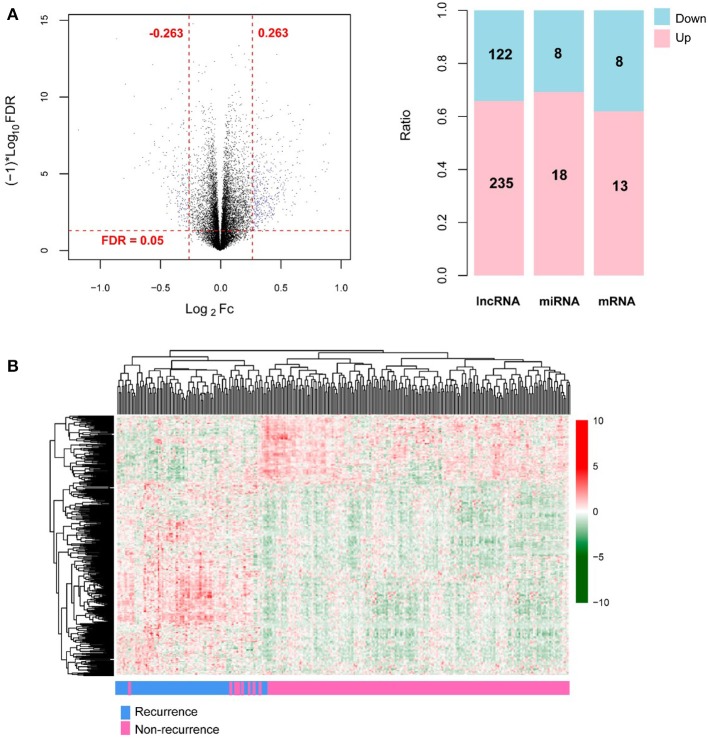
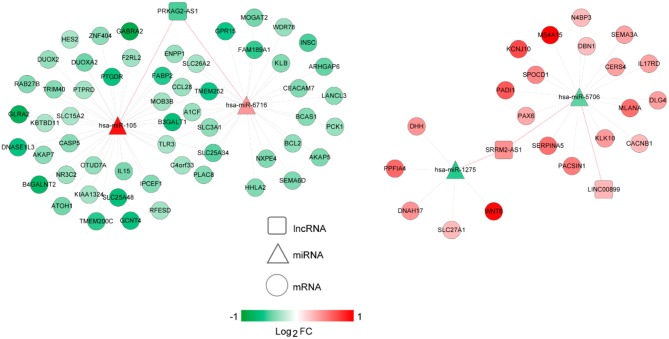
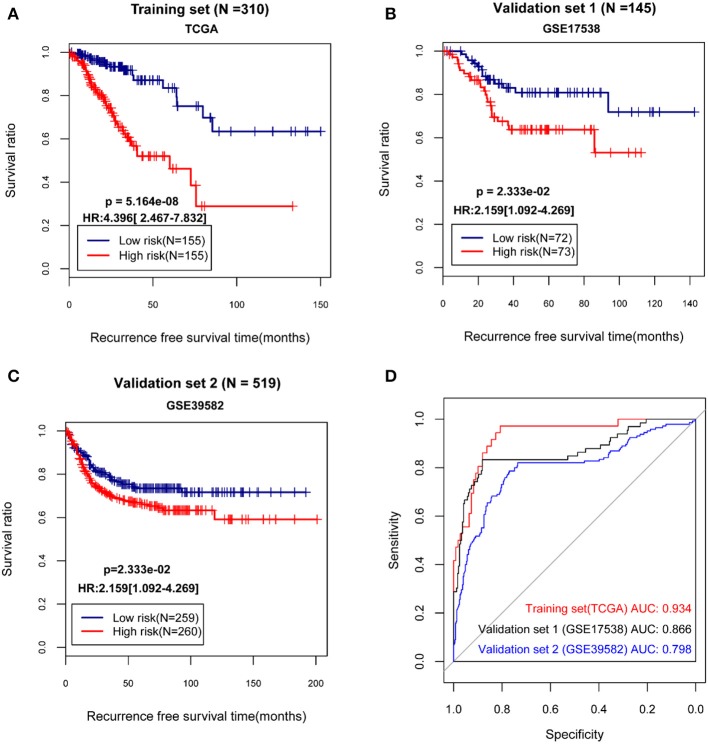
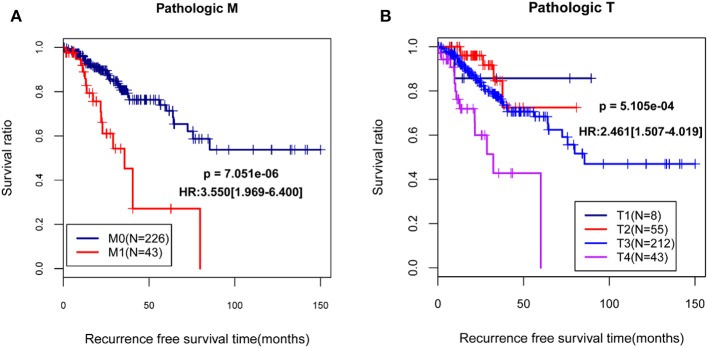
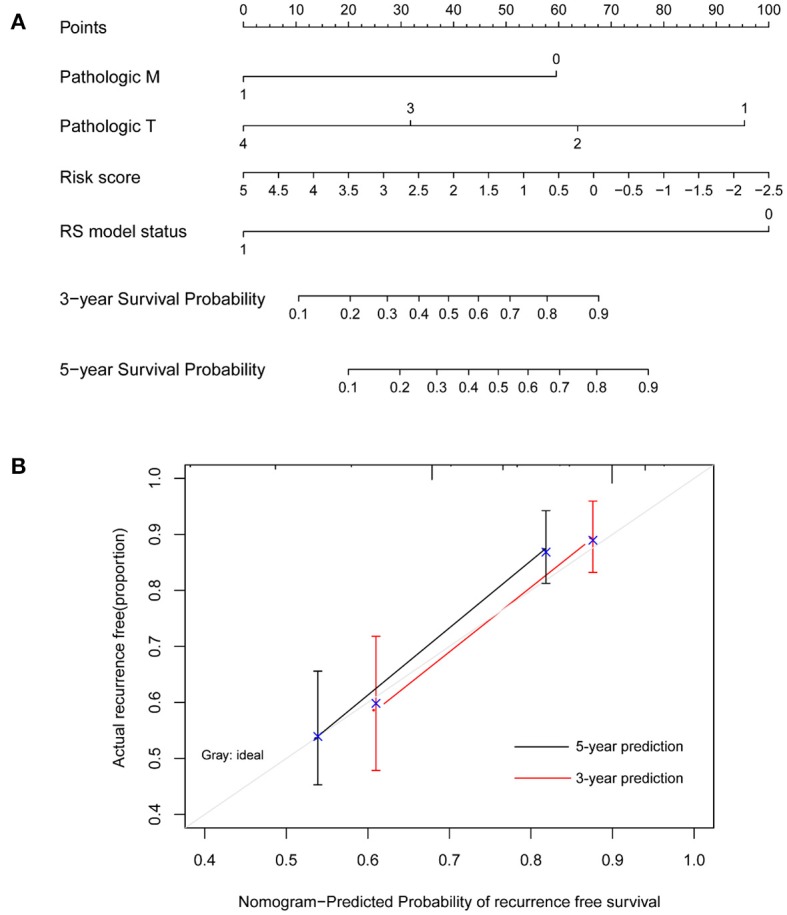
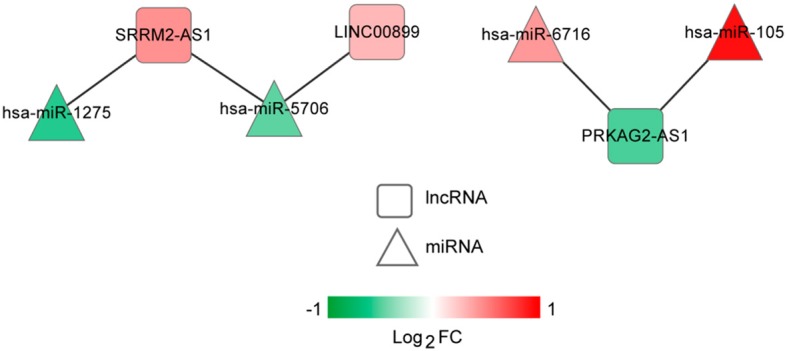
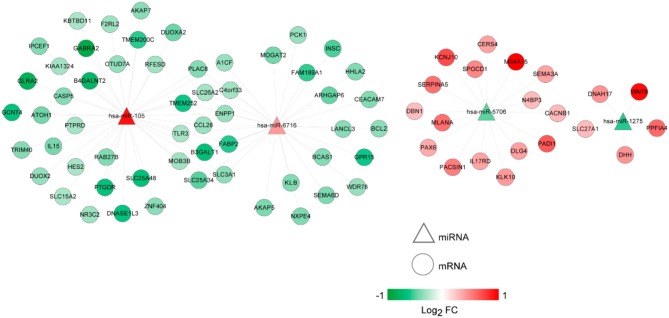
Colon adenocarcinoma (COAD) is a common type of colon cancer, and post-operative recurrence and metastasis may occur in COAD patients. This study is designed to build a risk score system for COAD patients. The Cancer Genome Atlas (TCGA) dataset of COAD (the training set) was downloaded, and GSE17538 and GSE39582 (the validation sets) from Gene Expression Omnibus database were obtained. The differentially expressed RNAs (DERs) were analyzed by limma package. Using survival package, the independent prognosis-associated long non-coding RNAs (lncRNAs) were selected for constructing risk score system. After the independent clinical prognostic factors were screened out using survival package, a nomogram survival model was constructed using rms package. Furthermore, competitive endogenous RNA (ceRNA) regulatory network and enrichment analyses separately were performed using Cytoscape software and DAVID tool. Totally 404 DERs between recurrence and non-recurrence groups were identified. Based on the six independent prognosis-associated lncRNAs (including , and ), the risk score system was constructed. After the independent clinical prognostic factors (Pathologic M, pathologic T, and RS model status) were identified, the nomogram survival model was built. In the ceRNA regulatory network, there were three lncRNAs, four miRNAs, and 77 mRNAs. Additionally, PPAR signaling pathway and hedgehog signaling pathway were enriched for the mRNAs in the ceRNA regulatory network. The risk score system and the nomogram survival model might be used for predicting COAD recurrence. Besides, PPAR signaling pathway and hedgehog signaling pathway might affect the recurrence of COAD patients.
结肠腺癌(COAD)是结肠癌的常见类型,COAD患者术后可能会发生复发和转移。本研究旨在构建COAD患者的风险评分系统。下载了COAD的癌症基因组图谱(TCGA)数据集(训练集),并从基因表达综合数据库中获取了GSE17538和GSE39582(验证集)。使用limma软件包分析差异表达RNA(DER)。使用生存软件包选择独立的预后相关长链非编码RNA(lncRNA)以构建风险评分系统。使用生存软件包筛选出独立的临床预后因素后,使用rms软件包构建列线图生存模型。此外,分别使用Cytoscape软件和DAVID工具进行竞争性内源性RNA(ceRNA)调控网络分析和富集分析。在复发组和非复发组之间共鉴定出404个DER。基于六个独立的预后相关lncRNA(包括 , 和 )构建了风险评分系统。确定独立的临床预后因素(病理M、病理T和RS模型状态)后,建立了列线图生存模型。在ceRNA调控网络中,有三个lncRNA、四个miRNA和77个mRNA。此外,PPAR信号通路和刺猬信号通路在ceRNA调控网络中的mRNA中富集。风险评分系统和列线图生存模型可用于预测COAD复发。此外,PPAR信号通路和刺猬信号通路可能影响COAD患者的复发。