Department of Colorectal & Anal Surgery, First Hospital Bethune of Jilin University, No. 71, Xinmin Street, Chaoyang District, Changchun, Jilin, 130000, China.
Hum Genomics. 2020 Jun 10;14(1):24. doi: 10.1186/s40246-020-00270-8.
Colon adenocarcinoma (COAD) is one of the common gastrointestinal malignant diseases, with high mortality rate and poor prognosis due to delayed diagnosis. This study aimed to construct a prognostic prediction model for patients with colon adenocarcinoma (COAD) recurrence.
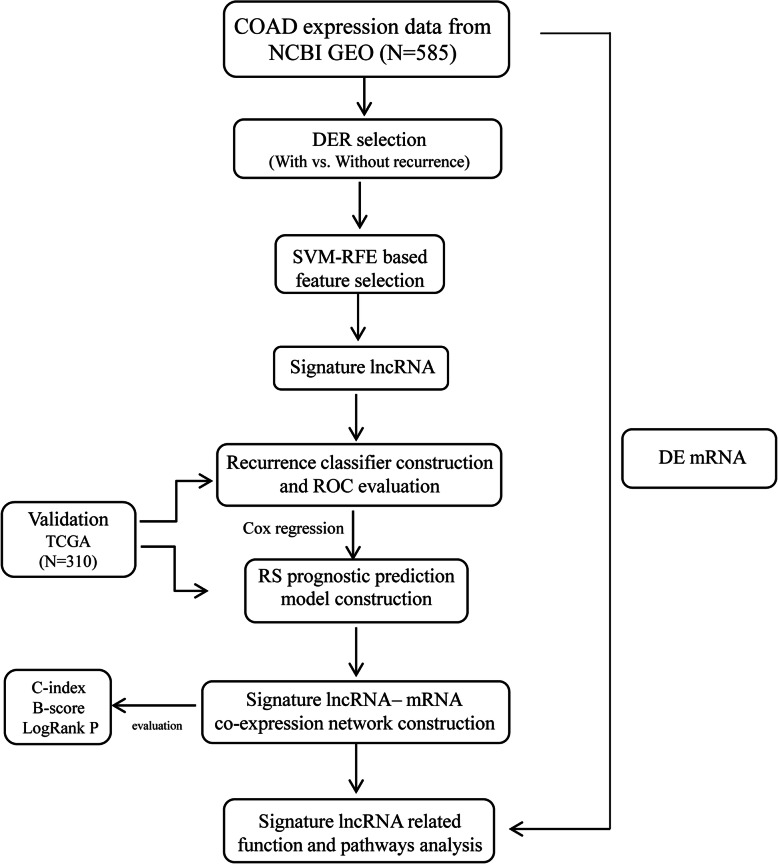
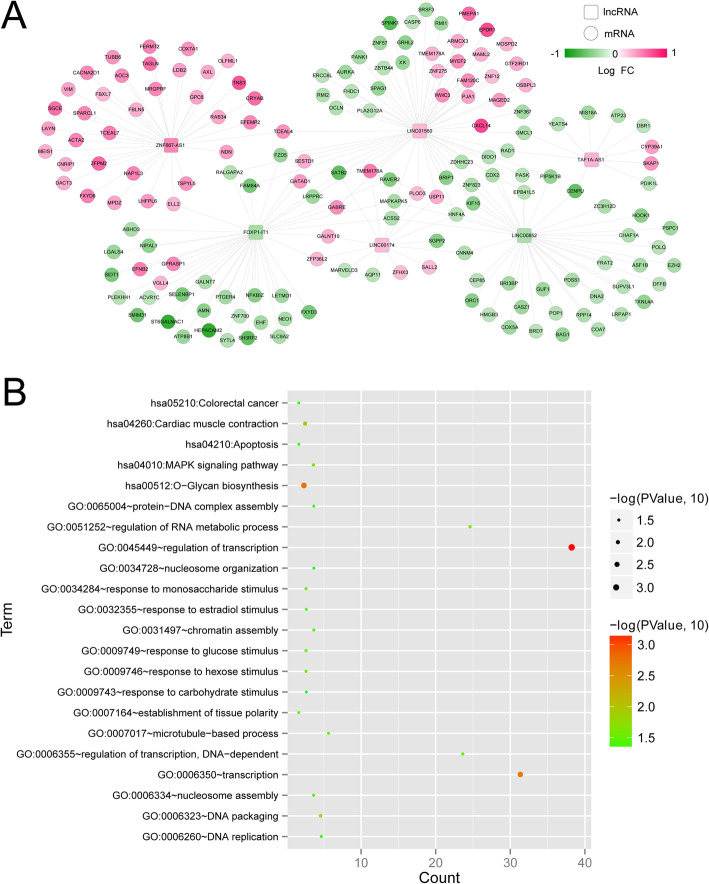
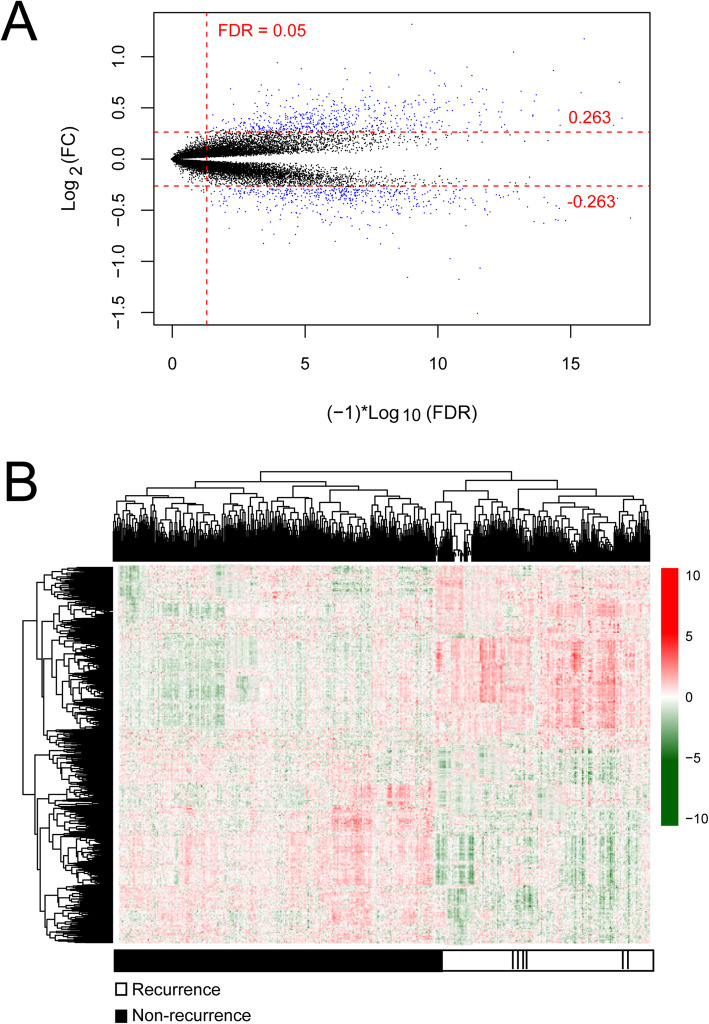
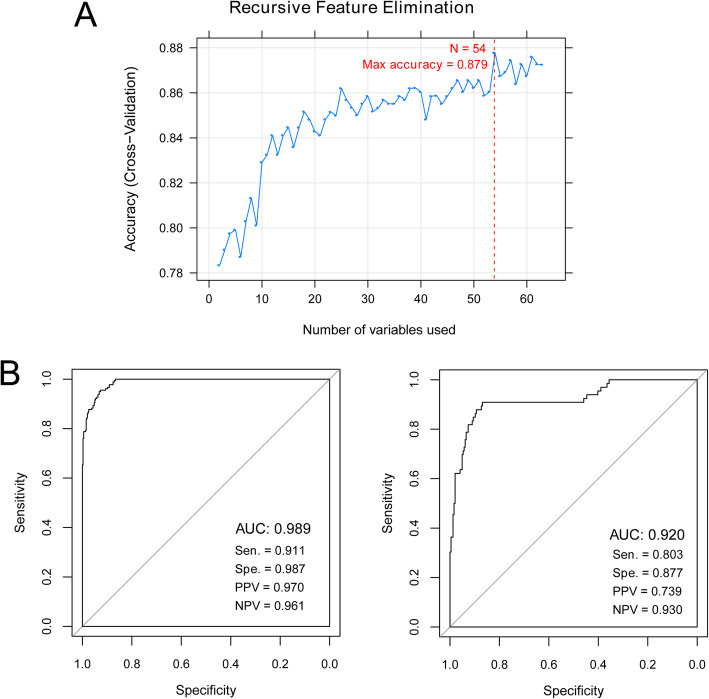
Differently expressed RNAs (DERs) between recurrence and non-recurrence COAD samples were identified based on expression profile data from the NCBI Gene Expression Omnibus (GEO) repository and The Cancer Genome Atlas (TCGA) database. Then, recurrent COAD discriminating classifier was established using SMV-RFE algorithm, and receiver operating characteristic curve was used to assess the predictive power of classifier. Furthermore, the prognostic prediction model was constructed based on univariate and multivariate Cox regression analysis, and Kaplan-Meier survival curve analysis was used to estimate this model. Furthermore, the co-expression network of DElncRNAs and DEmRNAs was constructed followed by GO and KEGG pathway enrichment analysis.
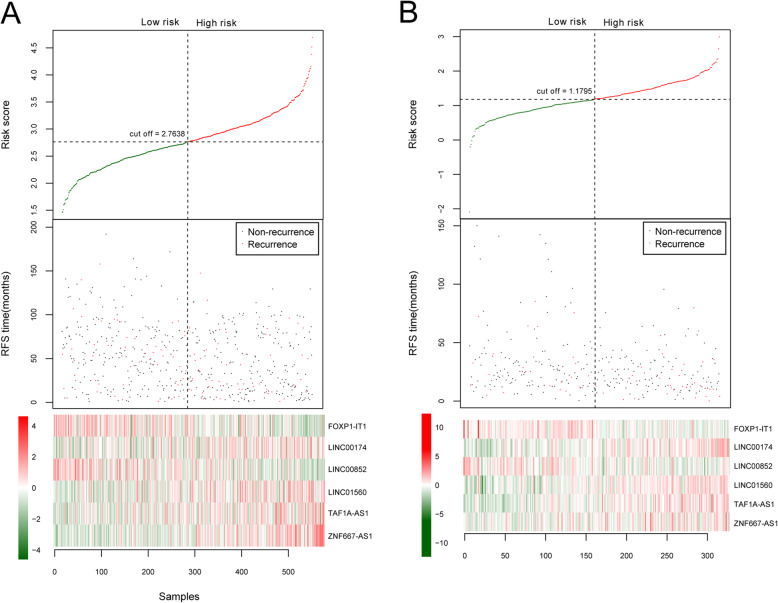
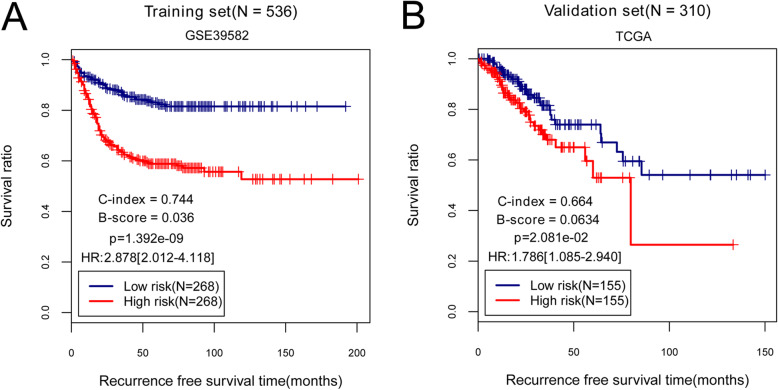
A total of 54 optimized signature DElncRNAs were screened and SMV classifier was constructed, which presented a high accuracy to distinguish recurrence and non-recurrence COAD samples. Furthermore, six independent prognostic lncRNAs signatures (LINC00852, ZNF667-AS1, FOXP1-IT1, LINC01560, TAF1A-AS1, and LINC00174) in COAD patients with recurrence were screened, and the prognostic prediction model for recurrent COAD was constructed, which possessed a relative satisfying predicted ability both in the training dataset and validation dataset. Furthermore, the DEmRNAs in the co-expression network were mainly enriched in glycan biosynthesis, cardiac muscle contraction, and colorectal cancer.
Our study revealed that six lncRNA signatures acted as an independent prognostic biomarker for patients with COAD recurrence.
结肠腺癌(COAD)是常见的胃肠道恶性肿瘤之一,由于诊断延误,死亡率和预后较差。本研究旨在构建结肠腺癌(COAD)复发患者的预后预测模型。
基于 NCBI 基因表达综合数据库(GEO)和癌症基因组图谱(TCGA)数据库中的表达谱数据,鉴定复发和非复发 COAD 样本之间的差异表达 RNA(DERs)。然后,使用 SMV-RFE 算法构建复发性 COAD 鉴别分类器,并使用接受者操作特征曲线评估分类器的预测能力。此外,基于单变量和多变量 Cox 回归分析构建预后预测模型,并使用 Kaplan-Meier 生存曲线分析来评估该模型。此外,构建 DElncRNAs 和 DEmRNAs 的共表达网络,并进行 GO 和 KEGG 通路富集分析。
筛选出 54 个优化的特征 DElncRNAs,并构建了 SMV 分类器,该分类器能够准确地区分复发和非复发 COAD 样本。此外,筛选出 6 个独立的 COAD 患者复发预后 lncRNA 标志物(LINC00852、ZNF667-AS1、FOXP1-IT1、LINC01560、TAF1A-AS1 和 LINC00174),构建了复发性 COAD 的预后预测模型,该模型在训练数据集和验证数据集均具有相对较好的预测能力。此外,共表达网络中的 DEmRNAs 主要富集在聚糖生物合成、心肌收缩和结直肠癌。
本研究揭示了 6 个 lncRNA 标志物可作为 COAD 复发患者的独立预后生物标志物。