Wang Baoming, Chen Hui, Chan Yik Lung, Wang Gang, Oliver Brian G
School of Life Sciences, Faculty of Science, University of Technology Sydney, Sydney, NSW, Australia.
Woolcock Institute of Medical Research, The University of Sydney, Sydney, NSW, Australia.
Front Cell Dev Biol. 2020 Feb 5;8:38. doi: 10.3389/fcell.2020.00038. eCollection 2020.
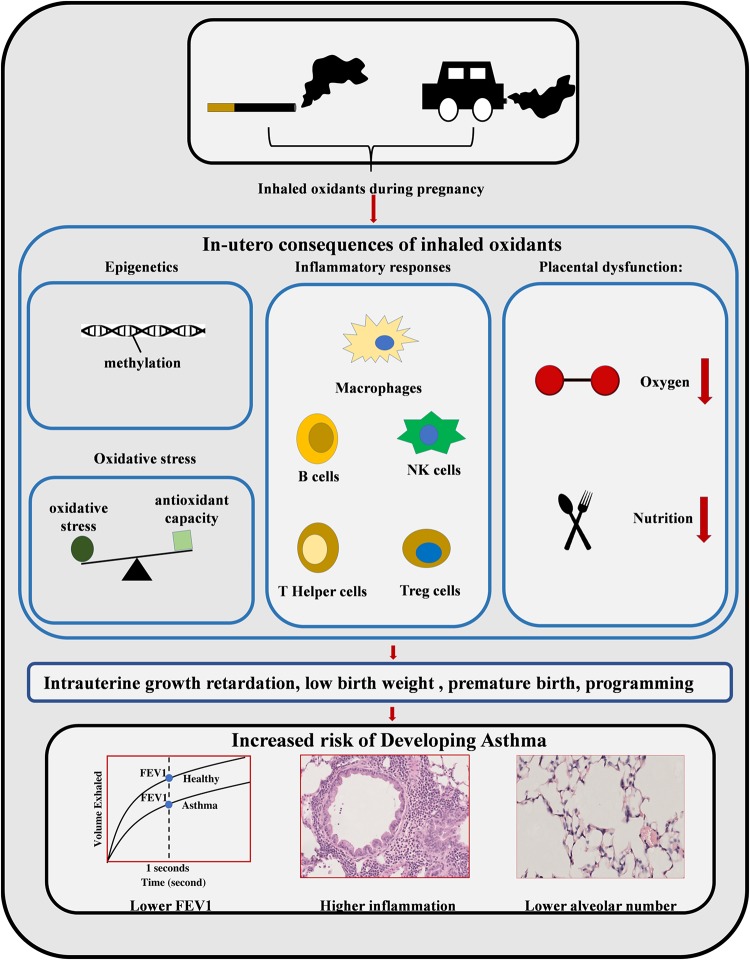
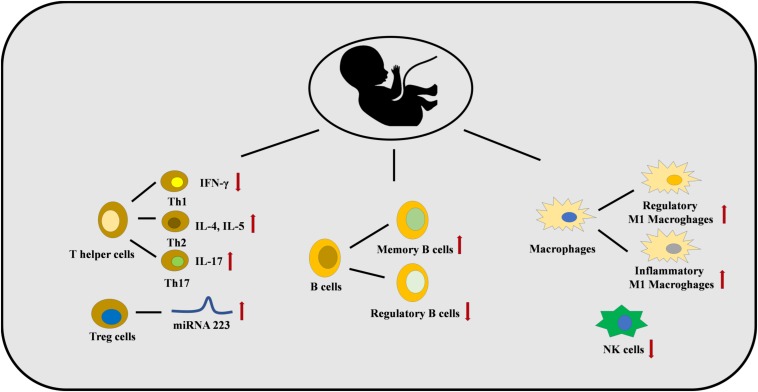
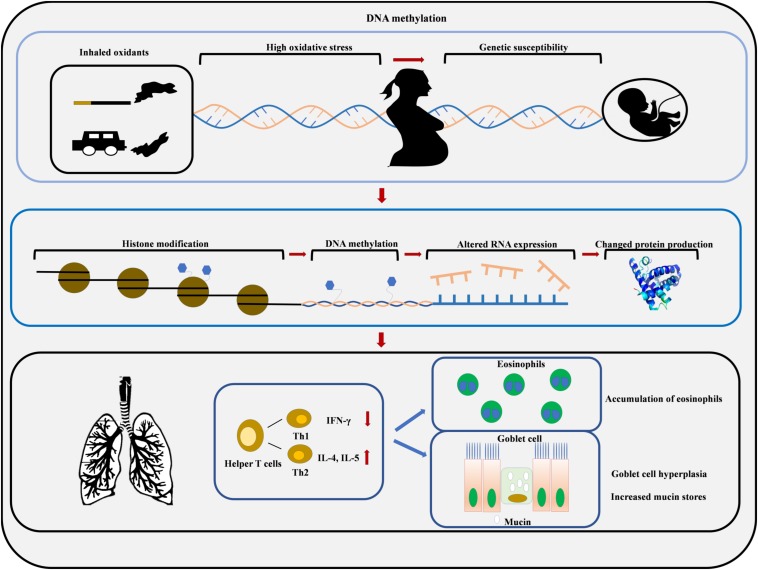
The prevalence of childhood asthma is increasing worldwide and increased exposure to environmental toxicants may play a major role. As current asthma treatments are not curative, understanding the mechanisms underlying the etiology of asthma will allow better preventative strategies to be developed. This review focuses on the current understanding of how exposure to environmental factors increases the risk of developing asthma in children. Epidemiological studies show that maternal smoking and particulate matter exposure during pregnancy are prominent risk factors for the development of childhood asthma. We discuss the changes in the developing fetus due to reduced oxygen and nutrient delivery affected by intrauterine environmental change. This leads to fetal underdevelopment and abnormal lung structure. Concurrently an altered immune response and aberrant epithelial and mesenchymal cellular function occur possibly due to epigenetic reprograming. The sequelae of these early life events are airway remodeling, airway hyperresponsiveness, and inflammation, the hallmark features of asthma. In summary, exposure to inhaled oxidants such as cigarette smoking or particulate matter increases the risk of childhood asthma and involves multiple mechanisms including impaired fetal lung development (structural changes), endocrine disorders, abnormal immune responses, and epigenetic modifications. These make it challenging to reduce the risk of asthma, but knowledge of the mechanisms can still help to develop personalized medicines.
全球范围内儿童哮喘的患病率正在上升,环境毒物暴露增加可能起到了主要作用。由于目前的哮喘治疗方法无法治愈,了解哮喘病因背后的机制将有助于制定更好的预防策略。本综述聚焦于目前对环境因素暴露如何增加儿童患哮喘风险的理解。流行病学研究表明,孕期母亲吸烟和接触颗粒物是儿童哮喘发病的主要危险因素。我们讨论了由于子宫内环境变化导致氧气和营养物质输送减少,发育中的胎儿所发生的变化。这会导致胎儿发育不全和肺部结构异常。同时,可能由于表观遗传重编程,免疫反应改变以及上皮和间充质细胞功能异常也会发生。这些早期生命事件的后果是气道重塑、气道高反应性和炎症,这些都是哮喘的标志性特征。总之,接触如吸烟或颗粒物等吸入性氧化剂会增加儿童患哮喘的风险,且涉及多种机制,包括胎儿肺部发育受损(结构变化)、内分泌紊乱、异常免疫反应和表观遗传修饰。这些使得降低哮喘风险具有挑战性,但对这些机制的了解仍有助于开发个性化药物。