One Health Center, School of Public Health, Sun Yat-sen University, Guangzhou, Guangdong 510080, China.
Key Laboratory of Livestock Infectious Diseases in Northeast China, Ministry of Education, Shenyang Agricultural University, Shenyang, Liaoning 110866, China.
Chin Med J (Engl). 2020 May 5;133(9):1044-1050. doi: 10.1097/CM9.0000000000000782.
The ongoing new coronavirus pneumonia (Corona Virus Disease 2019, COVID-19) outbreak is spreading in China, but it has not yet reached its peak. Five million people emigrated from Wuhan before lockdown, potentially representing a source of virus infection. Determining case distribution and its correlation with population emigration from Wuhan in the early stage of the epidemic is of great importance for early warning and for the prevention of future outbreaks.
The official case report on the COVID-19 epidemic was collected as of January 30, 2020. Time and location information on COVID-19 cases was extracted and analyzed using ArcGIS and WinBUGS software. Data on population migration from Wuhan city and Hubei province were extracted from Baidu Qianxi, and their correlation with the number of cases was analyzed.
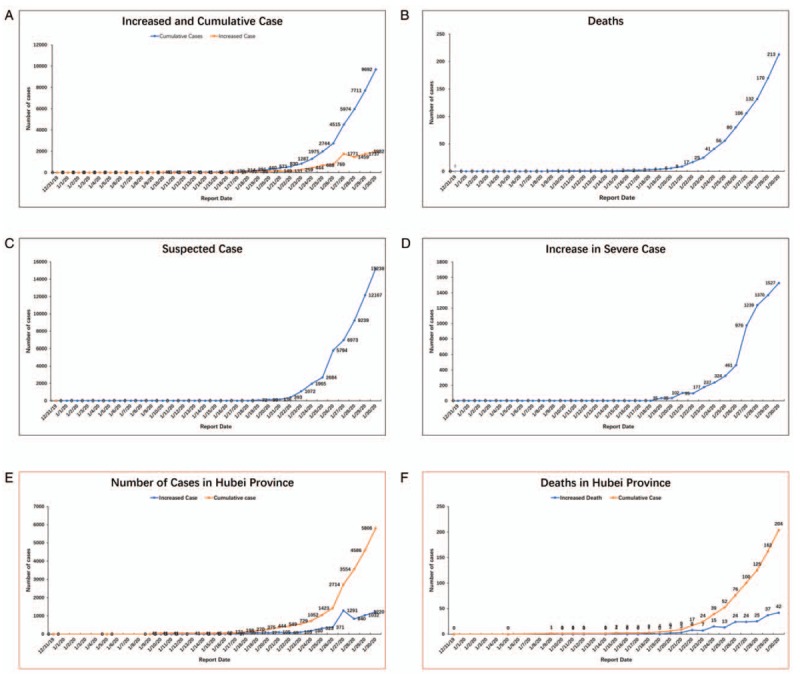
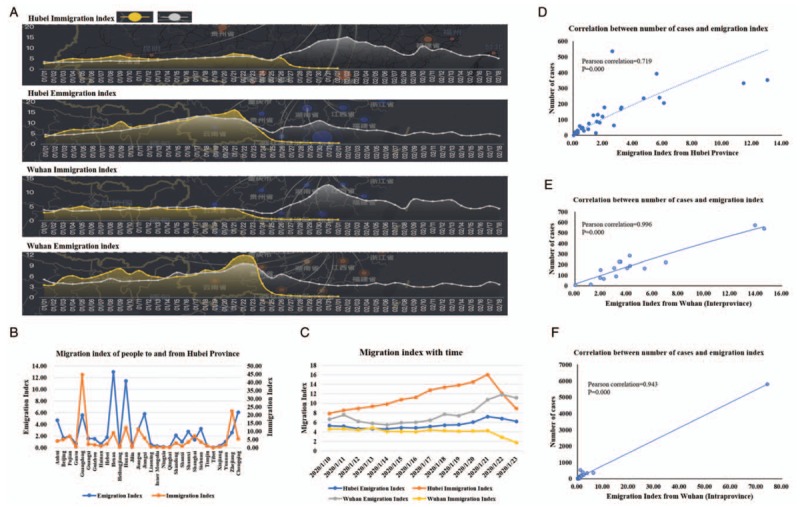
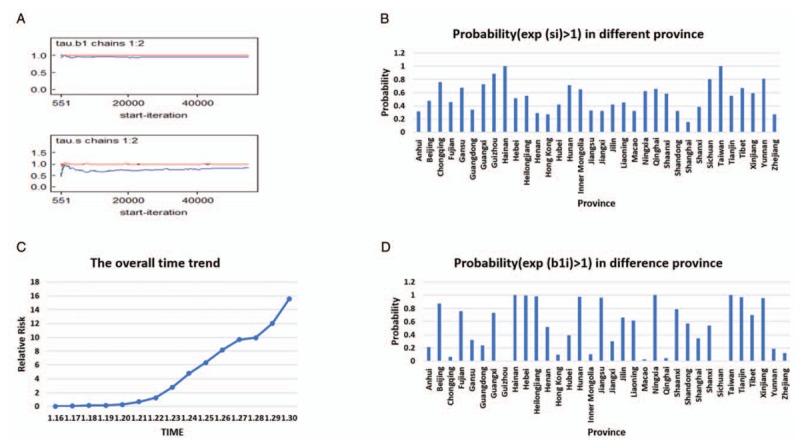
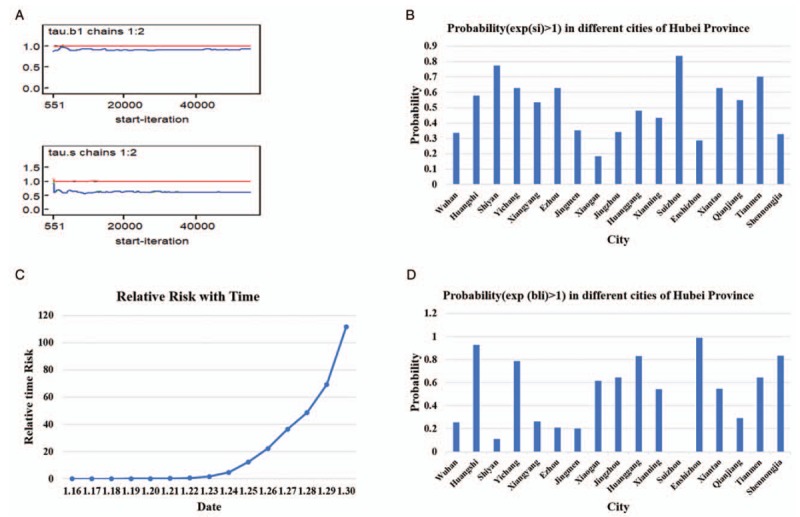
The COVID-19 confirmed and death cases in Hubei province accounted for 59.91% (5806/9692) and 95.77% (204/213) of the total cases in China, respectively. Hot spot provinces included Sichuan and Yunnan, which are adjacent to Hubei. The time risk of Hubei province on the following day was 1.960 times that on the previous day. The number of cases in some cities was relatively low, but the time risk appeared to be continuously rising. The correlation coefficient between the provincial number of cases and emigration from Wuhan was up to 0.943. The lockdown of 17 cities in Hubei province and the implementation of nationwide control measures efficiently prevented an exponential growth in the number of cases.
The population that emigrated from Wuhan was the main infection source in other cities and provinces. Some cities with a low number of cases showed a rapid increase in case load. Owing to the upcoming Spring Festival return wave, understanding the risk trends in different regions is crucial to ensure preparedness at both the individual and organization levels and to prevent new outbreaks.
目前中国正处于新型冠状病毒肺炎(COVID-19)疫情流行阶段,但尚未达到高峰。在封城之前,有 500 万人从武汉移民,这可能成为病毒感染的源头。确定病例分布及其与疫情早期武汉人口迁移的相关性,对于疫情预警和预防未来疫情爆发具有重要意义。
截至 2020 年 1 月 30 日,收集了 COVID-19 疫情的官方病例报告。使用 ArcGIS 和 WinBUGS 软件提取和分析 COVID-19 病例的时间和位置信息。从百度迁徙中提取武汉城市和湖北省的人口迁移数据,并分析其与病例数量的相关性。
湖北省确诊和死亡病例分别占中国确诊和死亡病例的 59.91%(5806/9692)和 95.77%(204/213)。热点省份包括与湖北相邻的四川和云南。湖北省次日的时间风险是前一天的 1.960 倍。一些城市的病例数量相对较低,但时间风险似乎呈持续上升趋势。省级病例数与武汉移民的相关系数高达 0.943。湖北省 17 个城市的封锁和全国范围内的控制措施的实施,有效地防止了病例数量的指数级增长。
从武汉移民的人口是其他城市和省份的主要感染源。一些病例数量较低的城市呈现出病例负荷快速增加的趋势。由于即将到来的春节返乡潮,了解不同地区的风险趋势对于确保个人和组织层面的准备工作,预防新的疫情爆发至关重要。