Provoost Lena, Siracusa Carlo, Stefanovski Darko, Che Yan, Li Mingyao, Casal Margret
Small Animal Behavior Service, Department of Clinical Sciences and Advanced Medicine, University of Pennsylvania, 3900 Spruce Street, Philadelphia, PA 19104, USA.
Department of Clinical Sciences and Advanced Medicine, University of Pennsylvania, New Bolton Center, Kennett Square, PA 19348, USA.
Animals (Basel). 2020 Feb 28;10(3):397. doi: 10.3390/ani10030397.
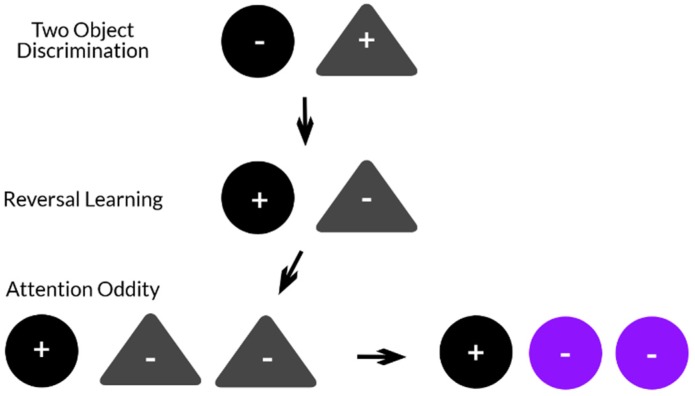
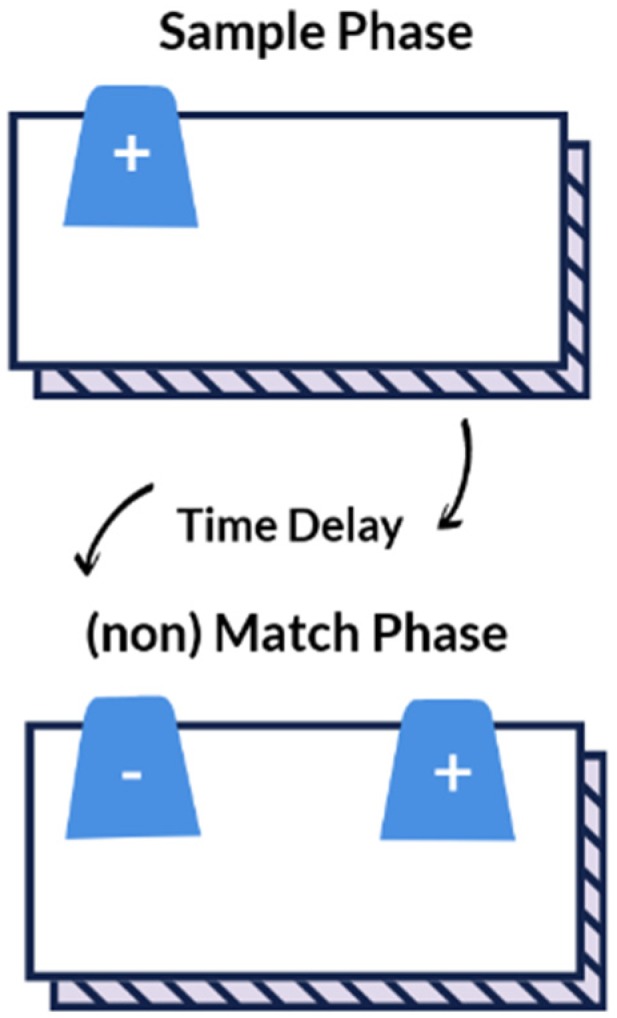
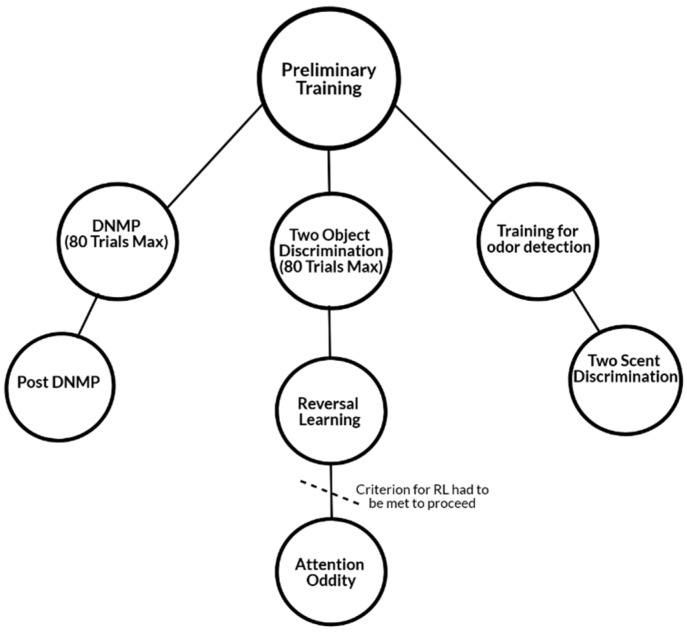
Mucopolysaccharidosis I (MPS I) results from a deficiency of a lysosomal enzyme, alpha-L-iduronidase (IDUA). IDUA deficiency leads to glycosaminoglycan (GAG) accumulation resulting in cellular degeneration and multi-organ dysfunction. The primary aims of this pilot study were to determine the feasibility of cognitive testing MPS I affected dogs and to determine their non-social cognitive abilities with and without gene therapy. Fourteen dogs were tested: 5 MPS I untreated, 5 MPS I treated, and 4 clinically normal. The treated group received intrathecal gene therapy as neonates to replace the gene. Cognitive tests included delayed non-match to position (DNMP), two-object visual discrimination (VD), reversal learning (RL), attention oddity (AO), and two-scent discrimination (SD). Responses were recorded as correct, incorrect, or no response, and analyzed using mixed effect logistic regression analysis. Significant differences were not observed among the three groups for DNMP, VD, RL, or AO. The MPS I untreated dogs were excluded from AO testing due to failing to pass acquisition of the task, potentially representing a learning or executive function deficit. The MPS I affected group (treated and untreated) was significantly more likely to discriminate between scents than the normal group, which may be due to an age effect. The normal group was comprised of the oldest dogs, and a mixed effect logistic model indicated that older dogs were more likely to respond incorrectly on scent discrimination. Overall, this study found that cognition testing of MPS I affected dogs to be feasible. This work provides a framework to refine future cognition studies of dogs affected with diseases, including MPS I, in order to assess therapies in a more comprehensive manner.
黏多糖贮积症I型(MPS I)是由溶酶体酶α-L-艾杜糖醛酸酶(IDUA)缺乏引起的。IDUA缺乏导致糖胺聚糖(GAG)积累,从而引起细胞变性和多器官功能障碍。这项初步研究的主要目的是确定对患有MPS I的犬进行认知测试的可行性,并确定它们在接受和未接受基因治疗时的非社交认知能力。对14只犬进行了测试:5只未接受治疗的MPS I犬、5只接受治疗的MPS I犬和4只临床正常的犬。治疗组在新生时接受了鞘内基因治疗以替代该基因。认知测试包括延迟位置非匹配(DNMP)、双物体视觉辨别(VD)、逆向学习(RL)、注意力异常(AO)和双气味辨别(SD)。将反应记录为正确、错误或无反应,并使用混合效应逻辑回归分析进行分析。在DNMP、VD、RL或AO方面,三组之间未观察到显著差异。由于未能通过任务习得,未接受治疗的MPS I犬被排除在AO测试之外,这可能代表着学习或执行功能缺陷。与正常组相比,受MPS I影响的组(治疗组和未治疗组)更有可能辨别气味,这可能是由于年龄效应。正常组由年龄最大的犬组成,混合效应逻辑模型表明,年龄较大的犬在气味辨别上更有可能做出错误反应。总体而言,本研究发现对受MPS I影响的犬进行认知测试是可行的。这项工作提供了一个框架,以完善未来对患有包括MPS I在内的疾病的犬的认知研究,以便更全面地评估治疗方法。