Mikami Nana, Tsukada Yoshiro, Pelpolage Samanthi Wathsala, Han Kyu-Ho, Fukushima Michihiro, Shimada Kenichiro
Department of Life and Food Sciences, Obihiro University of Agriculture and Veterinary Medicine, West 2-11, Inada-cho, Obihiro, Hokkaido, 080-8555, Japan.
Heliyon. 2020 Feb 21;6(2):e03379. doi: 10.1016/j.heliyon.2020.e03379. eCollection 2020 Feb.
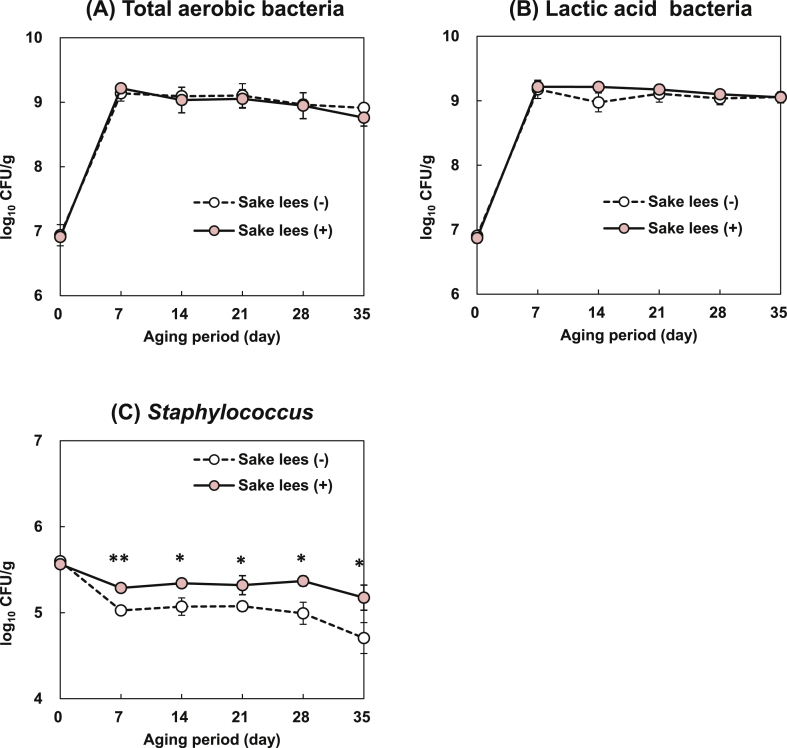
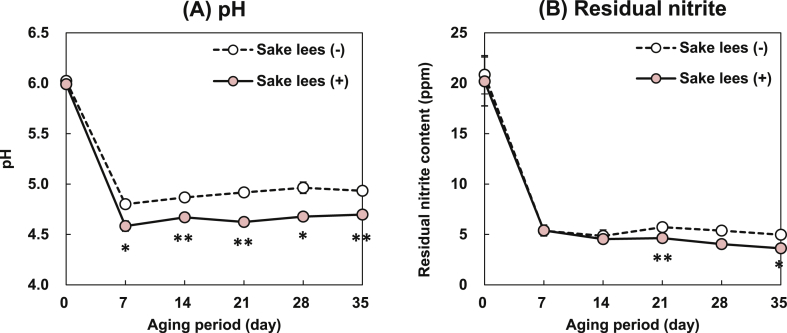
Sake lees (Sake-kasu) are the sediments of Japanese sake brewing process from fermented rice with and yeasts. Sake lees contain various enzymes and metabolites derived from the Sake starter culture, and expected to add aroma, flavor and softness to sausages. We investigated the effects of Sake lees supplementation on fermented dry sausage characteristics over an aging period of 35 days. Sake lees supplementation significantly accelerated sarcoplasmic and myofibrillar protein decomposition and increased peptide and free amino acid content compared to untreated sausage meat. Sake lees significantly acidified the sausages, enhanced their sour taste, and influenced their acceptability. Sake lees supplementation also significantly improved the hardness of the final product and conferred a preferable flavor to it. These results suggest that the various enzymes and compounds in Sake lees improve the flavor and texture of fermented dry sausages.
酒粕是日本清酒酿造过程中由发酵大米和酵母产生的沉淀物。酒粕含有源自清酒发酵剂培养物的各种酶和代谢产物,有望为香肠增添香气、风味和柔软度。我们研究了添加酒粕对35天陈化期发酵干香肠特性的影响。与未处理的香肠肉相比,添加酒粕显著加速了肌浆蛋白和肌原纤维蛋白的分解,并增加了肽和游离氨基酸的含量。酒粕显著酸化了香肠,增强了其酸味,并影响了其可接受性。添加酒粕还显著提高了最终产品的硬度,并赋予其较好的风味。这些结果表明,酒粕中的各种酶和化合物改善了发酵干香肠的风味和质地。