Allergy Partners of North Texas, Dallas, TX, USA.
Adv Ther. 2020 Apr;37(4):1536-1549. doi: 10.1007/s12325-020-01264-7. Epub 2020 Mar 2.
HyQvia (Immune Globulin Infusion 10% [Human] with Recombinant Human Hyaluronidase) was developed to combine the advantages of intravenous and subcutaneous immune globulin (SCIG), allowing administration of larger volumes at a single subcutaneous site with less frequent dosing when compared to other SCIG products. Current US prescribing guidelines for HyQvia are limited to adults and do not encompass the flexibility required to achieve success in all patients with primary immunodeficiency (PID).
This retrospective study was designed to evaluate the clinical experience of treating patients with PID with HyQvia regimens outside of package insert recommendations as well as in pediatric patients. Data were abstracted from 38 patient records (317 HyQvia infusions), including five patients less than 16 years of age, from seven US immunology clinics.
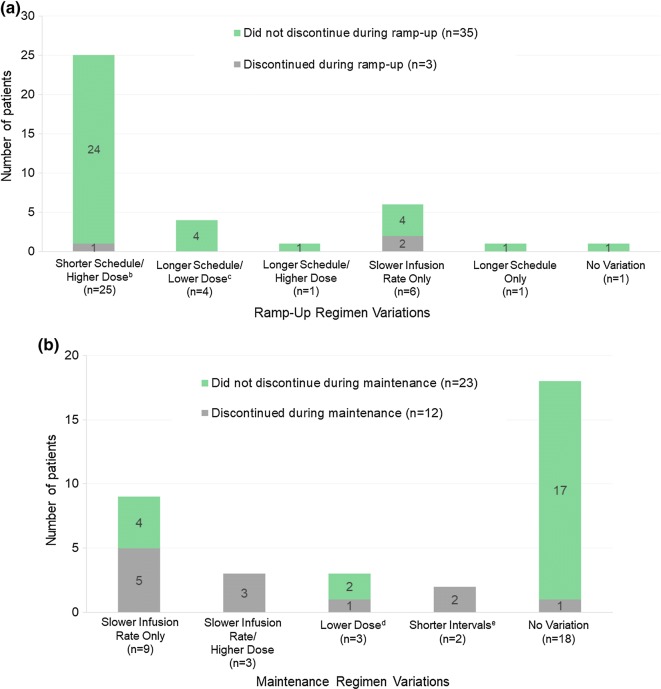
Among 37 patients receiving HyQvia regimens differing from prescribing guidelines, the most notable variations included shorter ramp-up periods, use of two rather than one infusion site, and slower than maximal infusion rates to mitigate local adverse events (AEs). The medication volume infused for single site doses ranged from 75 to 200 mL and doses split between two sites ranged from 100 to 750 mL. The most common type of regimen variation was a condensed ramp-up phase (shorter schedule, higher doses), and 96% (24/25) of patients managed in this way completed ramp-up. The most common ramp-up schedule was three infusions (one at 25-45%, another at 50-75%, and the final at 100% of target dose) spread over 2-4 weeks.
A shorter ramp-up schedule did not appear to increase the number of AEs compared to standard ramp-up schedules. For patients with AEs, slower infusion rates and the use of two sites may improve medication tolerability. Four of five pediatric patients reported no AEs, and only one discontinued, stating a fear of needles. HyQvia may be tailored to adults requiring alternative rates, ramp-up, and/or dosing regimens and may be especially well-suited to children.
HyQvia(含重组人透明质酸酶的 10%免疫球蛋白静脉输注[人])的开发结合了静脉免疫球蛋白和皮下免疫球蛋白(SCIG)的优势,与其他 SCIG 产品相比,允许在单个皮下部位单次输注更大体积的药物,且给药频率更低。目前,HyQvia 的美国处方指南仅限于成人,不包括在所有原发性免疫缺陷(PID)患者中取得成功所需的灵活性。
本回顾性研究旨在评估在 HyQvia 产品说明书建议之外以及在儿科患者中使用 HyQvia 方案治疗 PID 患者的临床经验。从美国 7 家免疫诊所的 38 名患者的 317 次 HyQvia 输注记录中提取数据,其中包括 5 名年龄小于 16 岁的患者。
在 37 名接受与处方指南不同的 HyQvia 方案的患者中,最显著的变化包括缩短 ramp-up 期、使用两个而不是一个输注部位以及降低最大输注速率以减轻局部不良反应(AE)。单部位剂量输注的药物体积范围为 75 至 200ml,两个部位之间的剂量范围为 100 至 750ml。最常见的方案变化类型是浓缩的 ramp-up 阶段(较短的方案,较高的剂量),96%(24/25)以这种方式管理的患者完成了 ramp-up。最常见的 ramp-up 方案是在 2-4 周内分 3 次输注(第 1 次为 25-45%,第 2 次为 50-75%,第 3 次为 100%目标剂量)。
与标准 ramp-up 方案相比,较短的 ramp-up 方案似乎不会增加 AE 的数量。对于出现 AE 的患者,降低输注速率和使用两个部位可能会提高药物耐受性。5 名儿科患者中有 4 名报告无 AE,只有 1 名患者因害怕针头而停药。HyQvia 可根据需要替代速率、ramp-up 和/或给药方案的成人进行调整,并且可能特别适合儿童。