Eliasson Sigfus Thor, Dahl Jon Einar
Nordic Institute of Dental Materials, Oslo, Norway.
Faculty of Odontology, School of Health Sciences, University of Iceland, Reykjavik, Iceland.
Biomater Investig Dent. 2020 Jan 29;7(1):16-24. doi: 10.1080/26415275.2019.1709470. eCollection 2020.
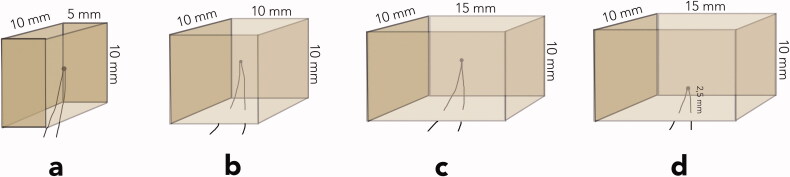
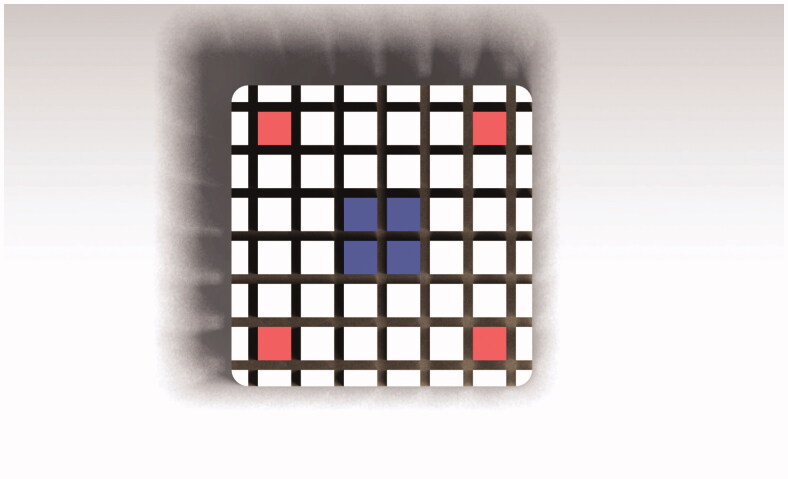
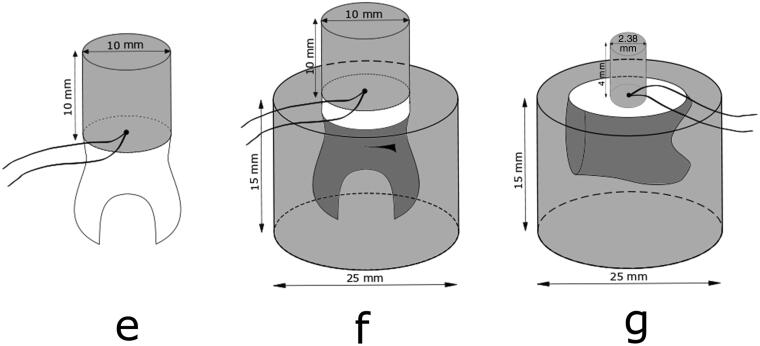
To investigate temperature changes in various test specimens during thermal cycling and to evaluate difference in micro-tensile repair bond strength in specimens cut from the inner or the outer area of composite blocks after thermal cycling. Four rectangular composite blocks of various sizes were fabricated, and thermocouples placed in the centre of the specimens or halfway from the surface to the centre. Composite cylinders were made on ground flat extracted molars, as intended for micro-tensile and shear bond testing, with a thermocouple placed at the centre of the cylinder radius between composite and dentin. The specimens were thermal cycled between 5 °C and 55 °C with 20-60 s dwell times. The highest and lowest temperatures in the test specimens were recorded. Composite blocks were fabricated and stored in water for a week and then repaired with the same composite. After thermal cycling (5000×, 5 °C and 55 °C with a 20 s dwell time), test specimens were cut for micro-tensile testing. None of the specimens tested reached the cold and warm water bath temperatures after a 20 s dwell time. In the smallest composite block, the centre core temperature reached 5 °C and 55 °C after 40 s dwell time, but lacked 1 °C after 60 s in the largest block. None of the specimens involving teeth reached water temperatures. The micro-tensile repair strength was significantly different between the outer and the central cut rods ( < .05). The most commonly used dwell times for thermal cycling are insufficient to create a homogeneous temperature change.
研究热循环过程中各种测试样本的温度变化,并评估热循环后从复合树脂块内部或外部区域切割的样本在微拉伸修复粘结强度方面的差异。制作了四个不同尺寸的矩形复合树脂块,并将热电偶置于样本中心或从表面到中心的中间位置。在磨平的离体磨牙上制作复合树脂圆柱体,用于微拉伸和剪切粘结测试,在复合树脂与牙本质之间的圆柱体半径中心放置一个热电偶。样本在5°C至55°C之间进行热循环,保持时间为20 - 60秒。记录测试样本中的最高和最低温度。制作复合树脂块并在水中储存一周,然后用相同的复合树脂进行修复。热循环(5000次,5°C和55°C,保持时间20秒)后,将测试样本切割用于微拉伸测试。在20秒的保持时间后,没有一个测试样本达到冷水浴和温水浴的温度。在最小的复合树脂块中,中心核心温度在40秒保持时间后达到5°C和55°C,但在最大的块中60秒后还差1°C。没有一个涉及牙齿的样本达到水温。外部和中心切割棒之间的微拉伸修复强度有显著差异(<0.05)。热循环最常用的保持时间不足以产生均匀的温度变化。