Touvykine Boris, Elgbeili Guillaume, Quessy Stephan, Dancause Numa
Département de Neurosciences, Faculté de Médecine, Université de Montréal, Québec, Canada.
Psychosocial Research Division, Douglas Institute Research Centre, Verdun, Québec, Canada.
J Neurophysiol. 2020 Apr 1;123(4):1355-1368. doi: 10.1152/jn.00591.2019. Epub 2020 Mar 4.
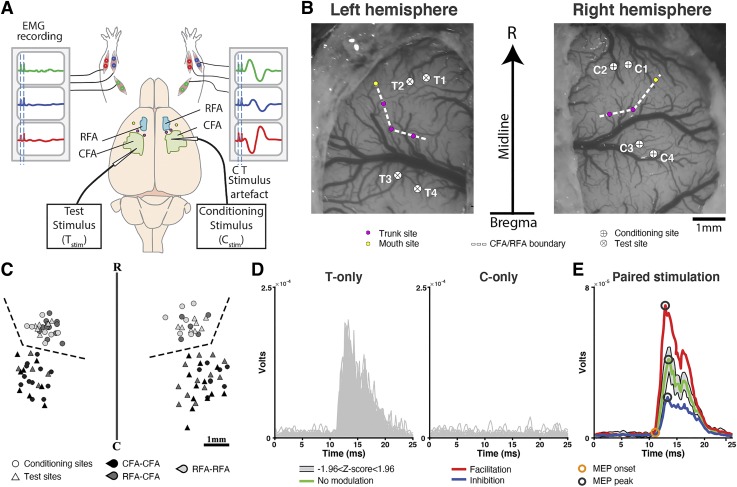
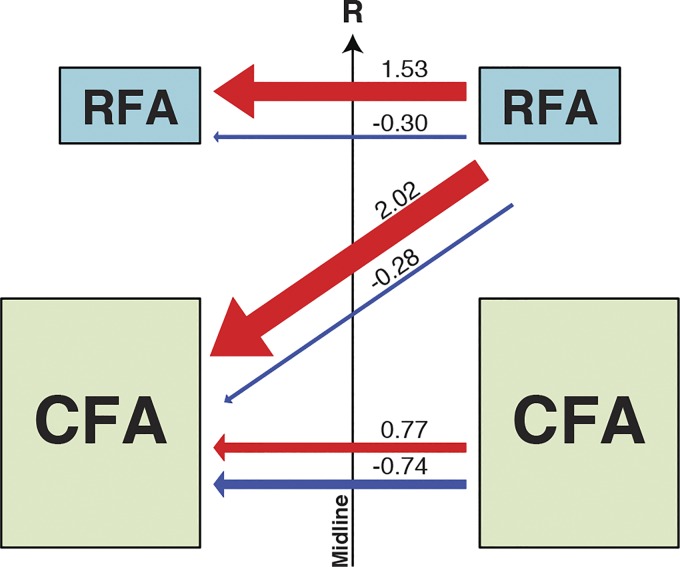
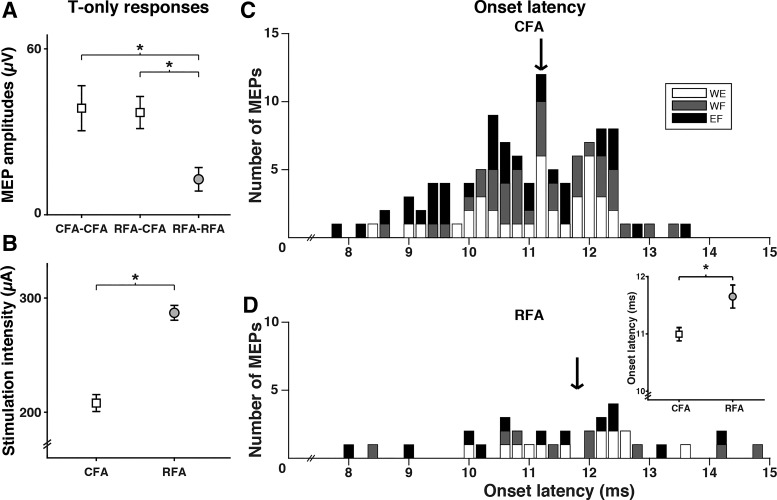
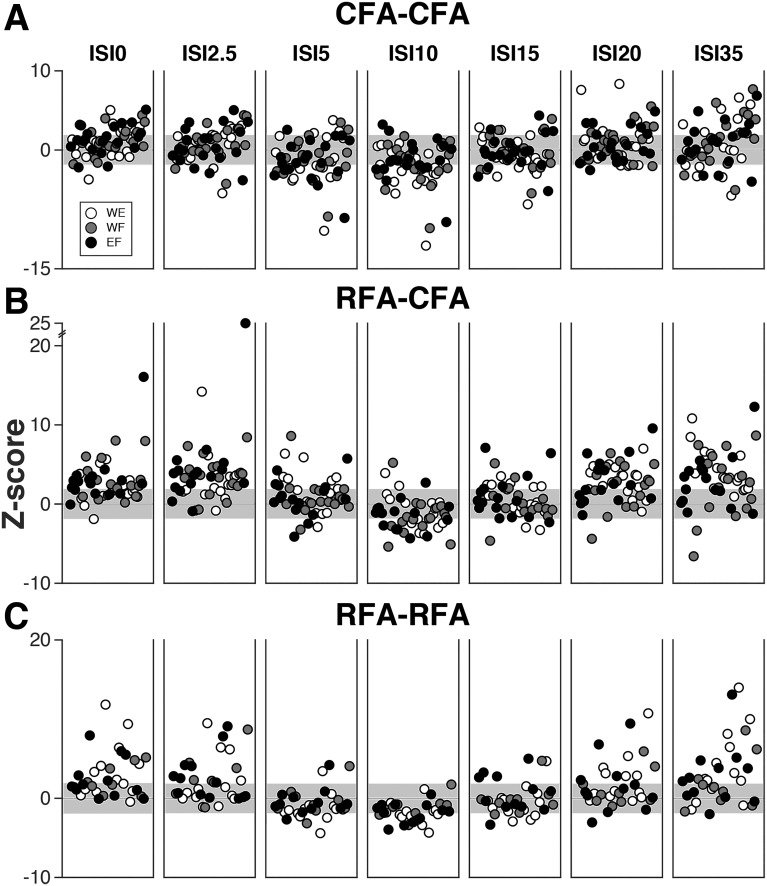
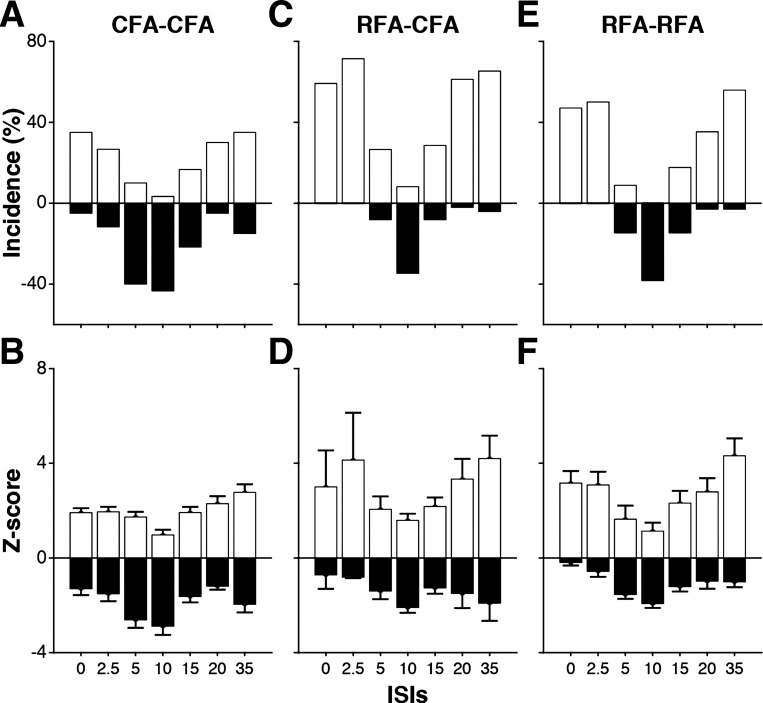
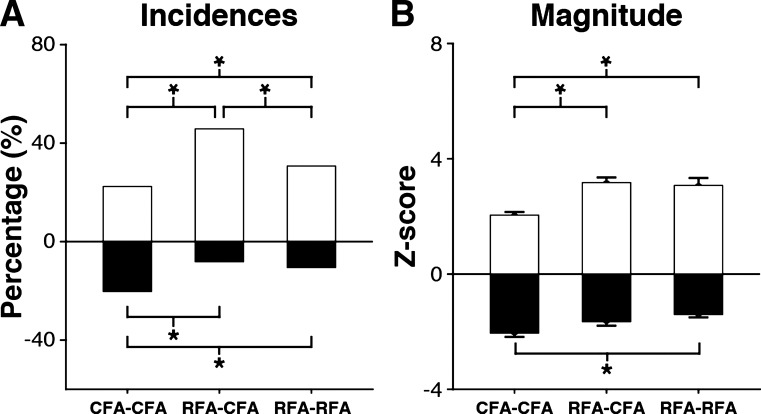
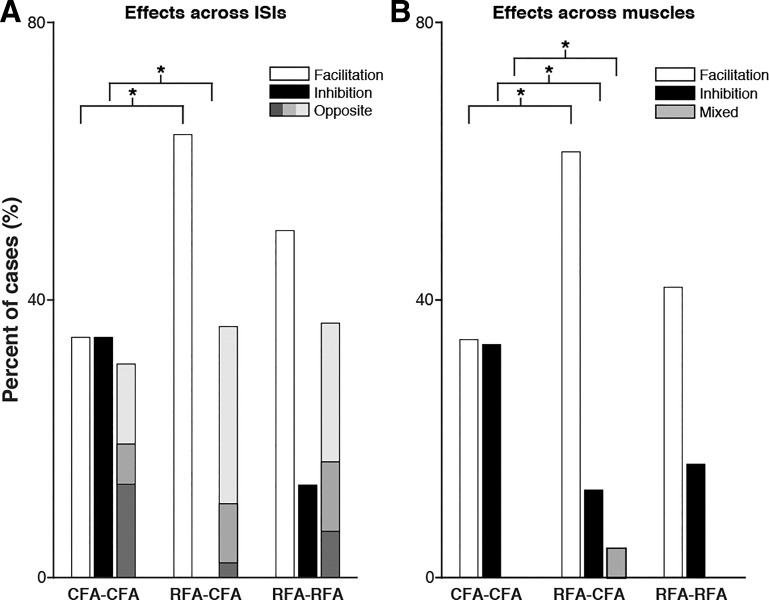
In rats, forelimb movements are evoked from two cortical regions, the caudal and rostral forelimb areas (CFA and RFA, respectively). These areas are densely interconnected and RFA induces complex and powerful modulations of CFA outputs. CFA and RFA also have interhemispheric connections, and these areas from both hemispheres send projections to common targets along the motor axis, providing multiple potential sites of interactions for movement production. Our objective was to characterize how CFA and RFA in one hemisphere can modulate motor outputs of the opposite hemisphere. To do so, we used paired-pulse protocols with intracortical microstimulation techniques (ICMS), while recording electromyographic (EMG) activity of forelimb muscles in sedated rats. A subthreshold conditioning stimulation was applied in either CFA or RFA in one hemisphere simultaneously or before a suprathreshold test stimulation in either CFA or RFA in the opposite hemisphere. Both CFA and RFA tended to facilitate motor outputs with short (0-2.5 ms) or long (20-35 ms) delays between the conditioning and test stimuli. In contrast, they tended to inhibit motor outputs with intermediate delays, in particular 10 ms. When comparing the two areas, we found that facilitatory effects from RFA were more frequent and powerful than the ones from CFA. In contrast, inhibitory effects from CFA on its homolog were more frequent and powerful than the ones from RFA. Our results demonstrate that interhemispheric modulations from CFA and RFA share some similarities but also have clear differences that could sustain specific functions these cortical areas carry for the generation of forelimb movements. We show that caudal and rostral forelimb areas (CFA and RFA) have distinct effects on motor outputs from the opposite hemisphere, supporting that they are distinct nodes in the motor network of rats. However, the pattern of interhemispheric modulations from RFA has no clear equivalent among premotor areas in nonhuman primates, suggesting they contribute differently to the generation of ipsilateral hand movements. Understanding these interspecies differences is important given the common use of rodent models in motor control and recovery studies.
在大鼠中,前肢运动由两个皮质区域诱发,即尾侧和嘴侧前肢区域(分别为CFA和RFA)。这些区域紧密相连,RFA对CFA的输出产生复杂而强大的调制作用。CFA和RFA也有半球间连接,来自两个半球的这些区域沿着运动轴将投射发送到共同目标,为运动产生提供了多个潜在的相互作用位点。我们的目的是描述一个半球中的CFA和RFA如何调节对侧半球的运动输出。为此,我们在记录麻醉大鼠前肢肌肉的肌电图(EMG)活动时,使用了皮质内微刺激技术(ICMS)的配对脉冲方案。在一个半球的CFA或RFA中施加阈下条件刺激,同时或在对侧半球的CFA或RFA中的阈上测试刺激之前。CFA和RFA在条件刺激和测试刺激之间有短(0 - 2.5毫秒)或长(20 - 35毫秒)延迟时都倾向于促进运动输出。相比之下,它们在中间延迟(特别是10毫秒)时倾向于抑制运动输出。比较这两个区域时,我们发现RFA的促进作用比CFA的更频繁、更强大。相反,CFA对其同源区域的抑制作用比RFA的更频繁、更强大。我们的结果表明,CFA和RFA的半球间调制有一些相似之处,但也有明显差异,这些差异可能维持这些皮质区域在产生前肢运动中所承担的特定功能。我们表明,尾侧和嘴侧前肢区域(CFA和RFA)对来自对侧半球的运动输出有不同影响,支持它们是大鼠运动网络中的不同节点。然而,RFA的半球间调制模式在非人类灵长类动物的运动前区中没有明显的对应物,表明它们对同侧手部运动产生的贡献不同。鉴于啮齿动物模型在运动控制和恢复研究中的广泛应用,了解这些种间差异很重要。