van Rooij R, Braat A J A T, de Jong H W A M, Lam M G E H
Department of Radiology and Nuclear Medicine, University Medical Center Utrecht, Heidelberglaan 100, 3584 CX, Utrecht, The Netherlands.
EJNMMI Phys. 2020 Mar 4;7(1):13. doi: 10.1186/s40658-020-0280-9.
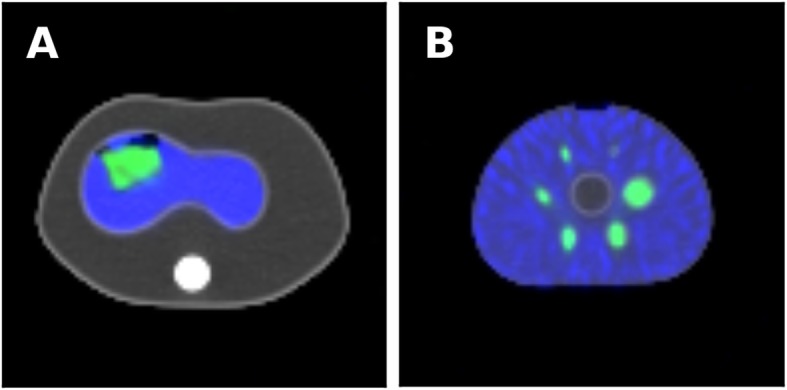
Intrahepatic dosimetry is paramount to optimize radioembolization treatment accuracy using radioactive holmium-166 microspheres (Ho). This requires a practical protocol that combines quantitative imaging of microsphere distribution with automated and robust delineation of the volumes of interest. To this end, we propose a dual isotope single photon emission computed tomography (SPECT) protocol based on Ho therapeutic microspheres and technetium-99 m (Tc) stannous phytate, which accumulates in healthy liver tissue. This protocol may allow accurate and automatic estimation of tumor-absorbed dose and healthy liver-absorbed dose. The current study focuses on a Monte Carlo-based reconstruction framework that inherently corrects for scatter crosstalk between the Ho and Tc imaging. To demonstrate the feasibility of the method, it is evaluated with realistic phantom experiments and patient data.
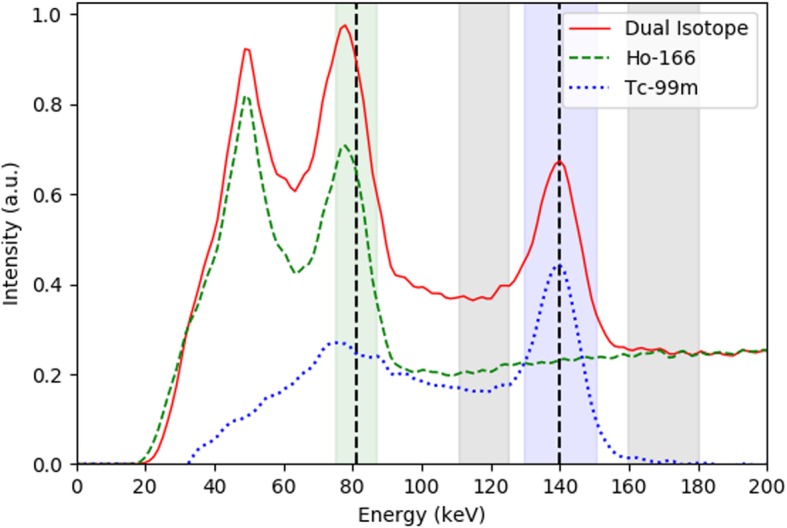
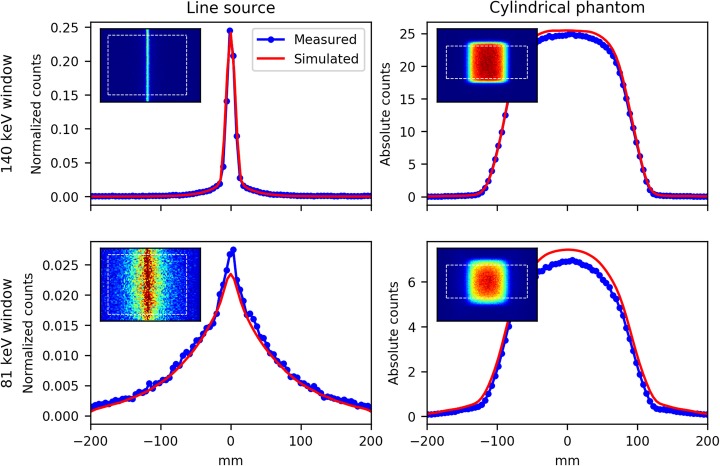
The Utrecht Monte Carlo System (UMCS) was extended to include detailed modeling of crosstalk interactions between Tc and Ho. First, Tc images were reconstructed including energy window-based corrections for Ho downscatter. Next, Tc downscatter in the 81-keV Ho window was Monte Carlo simulated to allow quantitative reconstruction of the Ho images. The accuracy of the Tc-downscatter modeling was evaluated by comparing measurements with simulations. In addition, the ratio between Tc and Ho yielding the best Ho dose estimates was established and the quantitative accuracy was reported.
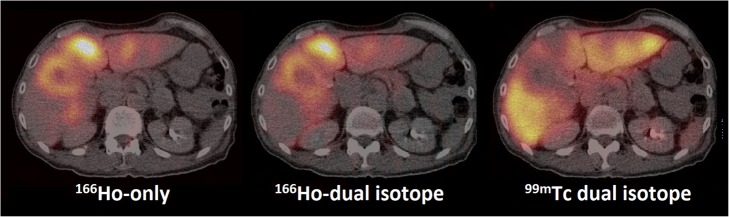
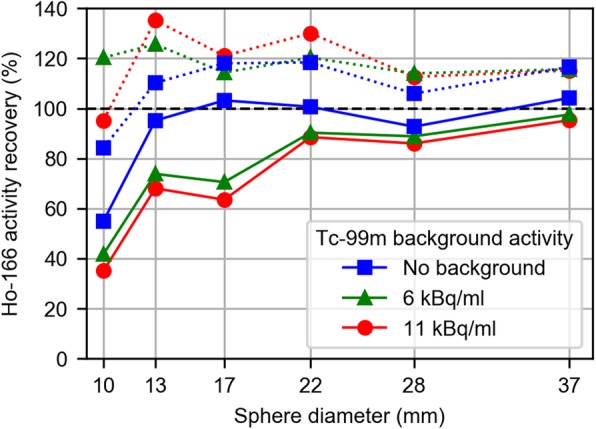
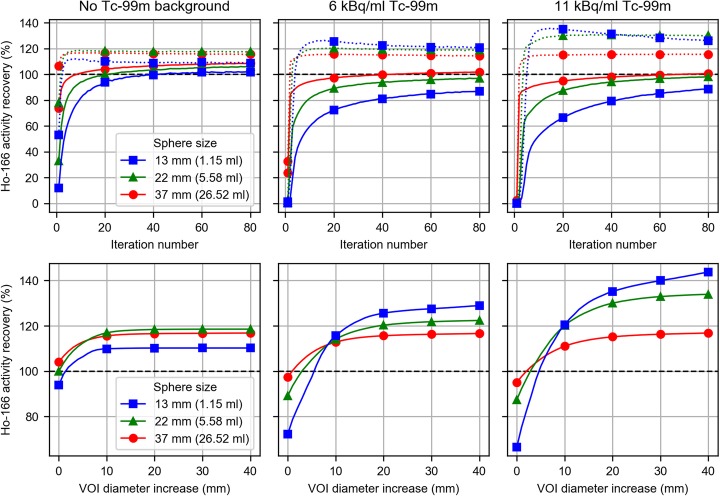
Given the same level of activity, Tc contributes twice as many counts to the 81-keV window than Ho, and four times as many counts to the 140-keV window, applying a Ho/Tc ratio of 5:1 yielded a high accuracy in both Ho and Tc reconstruction. Phantom experiments revealed that the accuracy of quantitative Ho activity recovery was reduced by 10% due to the presence of Tc. Twenty iterations (8 subsets) of the SPECT/CT reconstructions were considered feasible for clinical practice. Applicability of the proposed protocol was shown in a proof-of-concept case.
A novel Ho/Tc dual-isotope protocol for automatic dosimetry compensates accurately for downscatter and allows for the addition of Tc without compromising Ho SPECT image quality.
肝内剂量测定对于优化使用放射性钬 - 166微球(Ho)的放射性栓塞治疗准确性至关重要。这需要一个实用的方案,将微球分布的定量成像与感兴趣体积的自动且稳健的描绘相结合。为此,我们提出了一种基于Ho治疗微球和锝 - 99m(Tc)植酸钠的双同位素单光子发射计算机断层扫描(SPECT)方案,Tc植酸钠会在健康肝脏组织中积聚。该方案可能允许准确且自动地估计肿瘤吸收剂量和健康肝脏吸收剂量。当前研究聚焦于一个基于蒙特卡罗的重建框架,该框架本质上可校正Ho和Tc成像之间的散射串扰。为证明该方法的可行性,通过逼真的体模实验和患者数据对其进行了评估。
乌得勒支蒙特卡罗系统(UMCS)得到扩展,纳入了Tc和Ho之间串扰相互作用的详细建模。首先,重建Tc图像,包括基于能量窗的Ho散射校正。接下来,对81 keV Ho窗中的Tc散射进行蒙特卡罗模拟,以便对Ho图像进行定量重建。通过将测量结果与模拟结果进行比较,评估Tc散射建模的准确性。此外,确定了产生最佳Ho剂量估计的Tc与Ho的比率,并报告了定量准确性。
在相同活度水平下,Tc对81 keV窗的计数贡献是Ho的两倍,对140 keV窗的计数贡献是Ho的四倍,应用5:1的Ho/Tc比率在Ho和Tc重建中均产生了高精度。体模实验表明,由于Tc的存在,定量Ho活度恢复的准确性降低了10%。SPECT/CT重建的20次迭代(8个子集)被认为在临床实践中是可行的。在一个概念验证病例中展示了所提出方案的适用性。
一种用于自动剂量测定的新型Ho/Tc双同位素方案可准确补偿散射,并允许添加Tc而不影响Ho SPECT图像质量。