Department of Molecular, Cellular and Biomedical Sciences, University of New Hampshire, Durham, NH, USA.
Hubbard Center for Genome Studies, University of New Hampshire, Durham, NH, USA.
Mol Ecol. 2020 Apr;29(7):1300-1314. doi: 10.1111/mec.15401. Epub 2020 Mar 23.
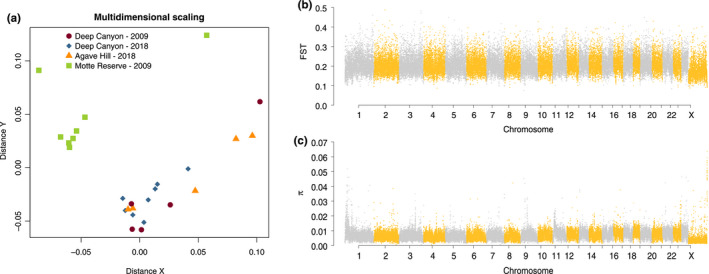
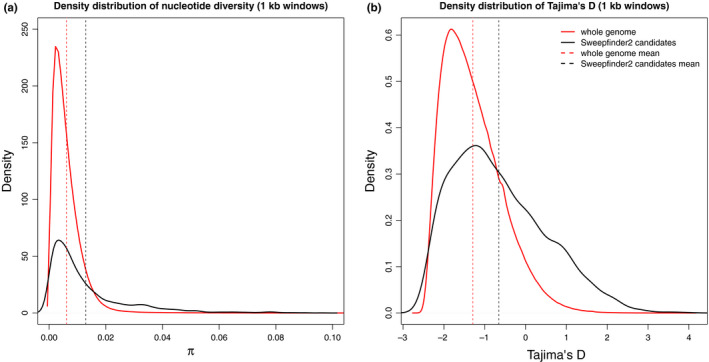
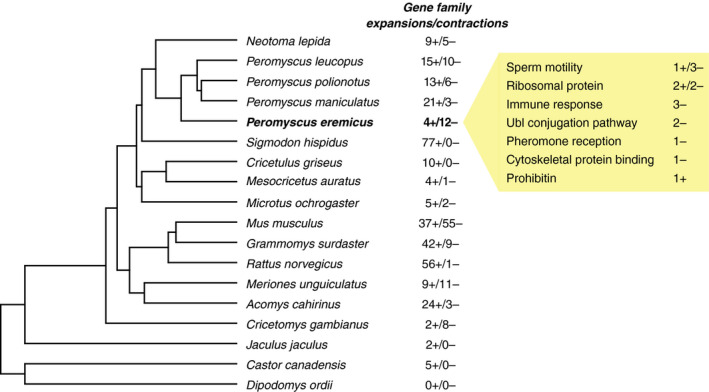
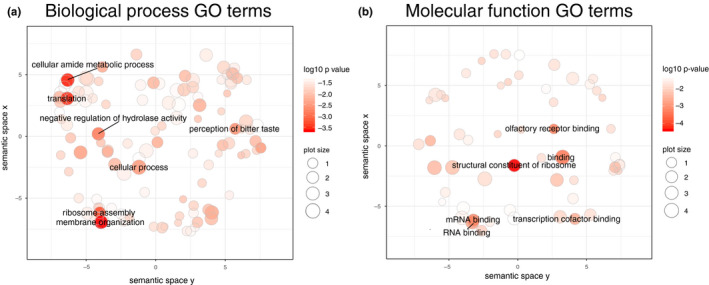
Organisms that live in deserts offer the opportunity to investigate how species adapt to environmental conditions that are lethal to most plants and animals. In the hot deserts of North America, high temperatures and lack of water are conspicuous challenges for organisms living there. The cactus mouse (Peromyscus eremicus) displays several adaptations to these conditions, including low metabolic rate, heat tolerance, and the ability to maintain homeostasis under extreme dehydration. To investigate the genomic basis of desert adaptation in cactus mice, we built a chromosome-level genome assembly and resequenced 26 additional cactus mouse genomes from two locations in southern California (USA). Using these data, we integrated comparative, population, and functional genomic approaches. We identified 16 gene families exhibiting significant contractions or expansions in the cactus mouse compared to 17 other Myodontine rodent genomes, and found 232 sites across the genome associated with selective sweeps. Functional annotations of candidate gene families and selective sweeps revealed a pervasive signature of selection at genes involved in the synthesis and degradation of proteins, consistent with the evolution of cellular mechanisms to cope with protein denaturation caused by thermal and hyperosmotic stress. Other strong candidate genes included receptors for bitter taste, suggesting a dietary shift towards chemically defended desert plants and insects, and a growth factor involved in lipid metabolism, potentially involved in prevention of dehydration. Understanding how species adapted to deserts will provide an important foundation for predicting future evolutionary responses to increasing temperatures, droughts and desertification in the cactus mouse and other species.
生活在沙漠中的生物为研究物种如何适应对大多数动植物具有致命性的环境条件提供了机会。在北美炎热的沙漠中,高温和缺水是生物生存的明显挑战。仙人掌鼠(Peromyscus eremicus)展示了对这些条件的几种适应,包括低代谢率、耐热性和在极端脱水条件下维持体内平衡的能力。为了研究仙人掌鼠在沙漠适应方面的基因组基础,我们构建了一个染色体水平的基因组组装,并对来自加利福尼亚州南部的两个地点的 26 只额外的仙人掌鼠基因组进行了重测序。利用这些数据,我们综合了比较、群体和功能基因组学方法。我们在仙人掌鼠中发现了 16 个基因家族与 17 个其他 Myodontine 啮齿动物基因组相比明显收缩或扩张,并在基因组中发现了 232 个与选择清除相关的位点。候选基因家族和选择清除的功能注释揭示了与蛋白质合成和降解相关的基因中存在普遍的选择信号,这与细胞机制进化以应对热和高渗应激引起的蛋白质变性相一致。其他强候选基因包括苦味受体,表明对化学防御的沙漠植物和昆虫的饮食转变,以及参与脂质代谢的生长因子,可能涉及预防脱水。了解物种如何适应沙漠将为预测仙人掌鼠和其他物种对温度升高、干旱和沙漠化的未来进化反应提供重要基础。