MRC Human Genetics Unit, MRC IGMM, University of Edinburgh, Western General Hospital, Crewe Road, Edinburgh, EH4 2XU, Scotland.
BMC Biol. 2020 Mar 4;18(1):25. doi: 10.1186/s12915-020-0752-3.
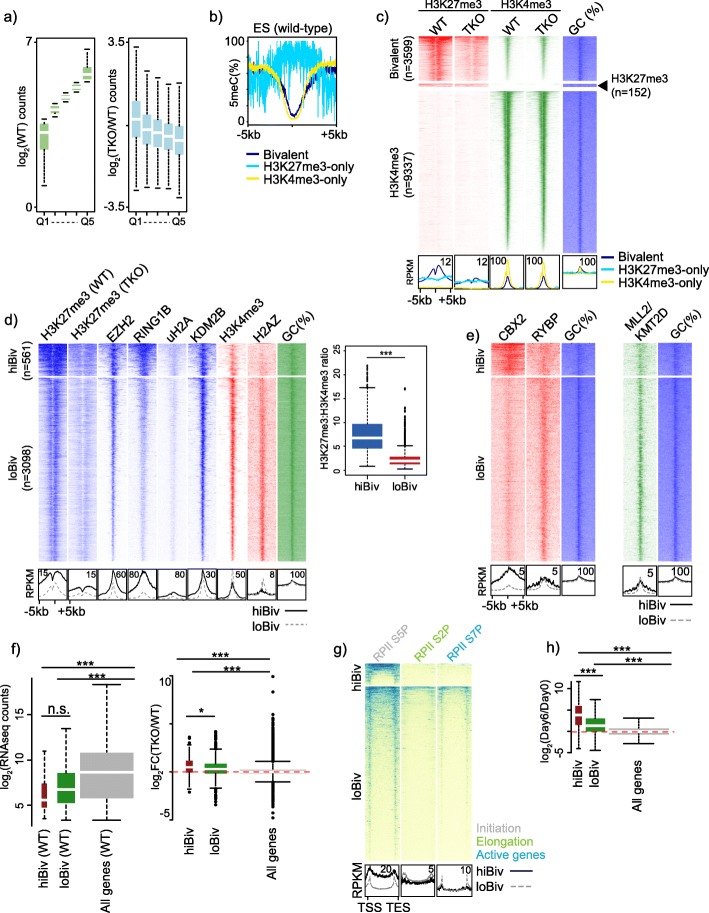
Thousands of mammalian promoters are defined by co-enrichment of the histone tail modifications H3K27me3 (repressive) and H3K4me3 (activating) and are thus termed bivalent. It was previously observed that bivalent genes in human ES cells (hESC) are frequent targets for hypermethylation in human cancers, and depletion of DNA methylation in mouse embryonic stem cells has a marked impact on H3K27me3 distribution at bivalent promoters. However, only a fraction of bivalent genes in stem cells are targets of hypermethylation in cancer, and it is currently unclear whether all bivalent promoters are equally sensitive to DNA hypomethylation and whether H3K4me3 levels play a role in the interplay between DNA methylation and H3K27me3.
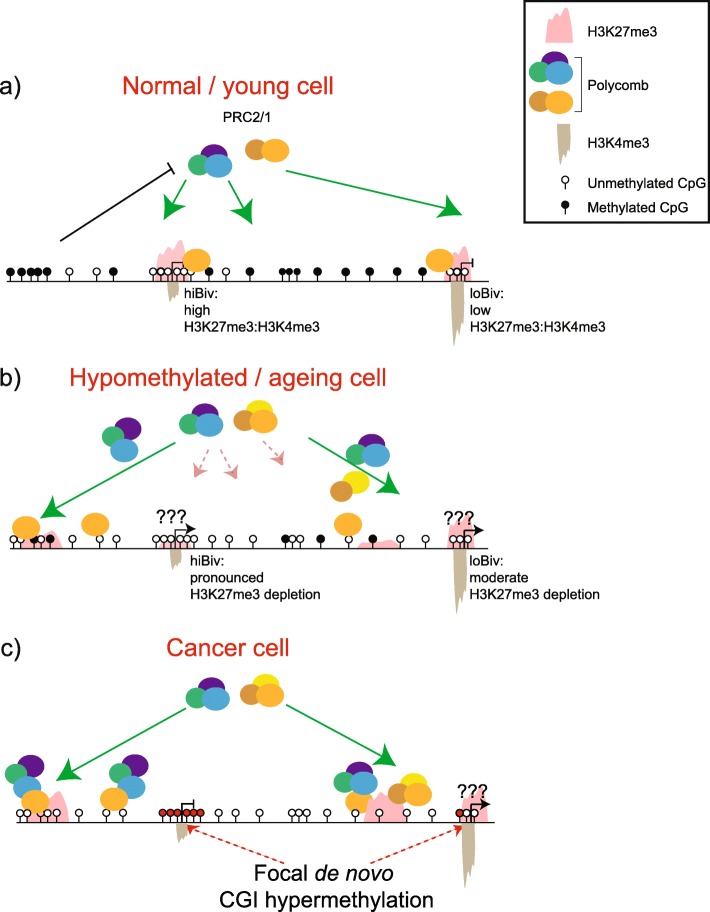
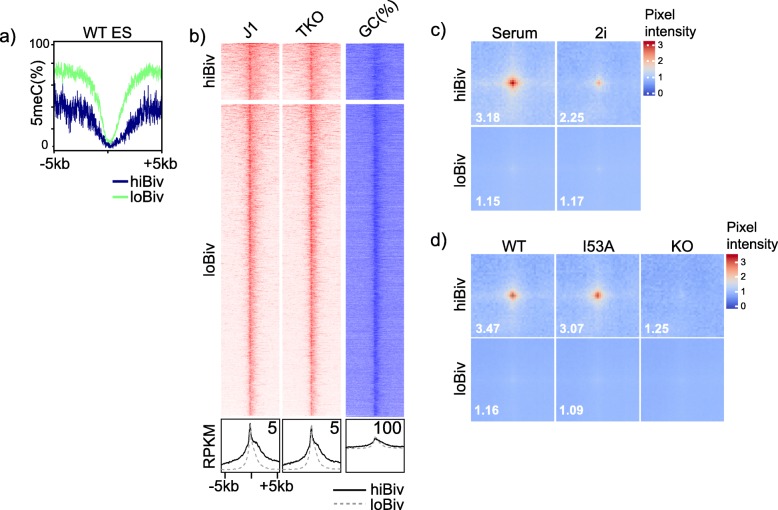
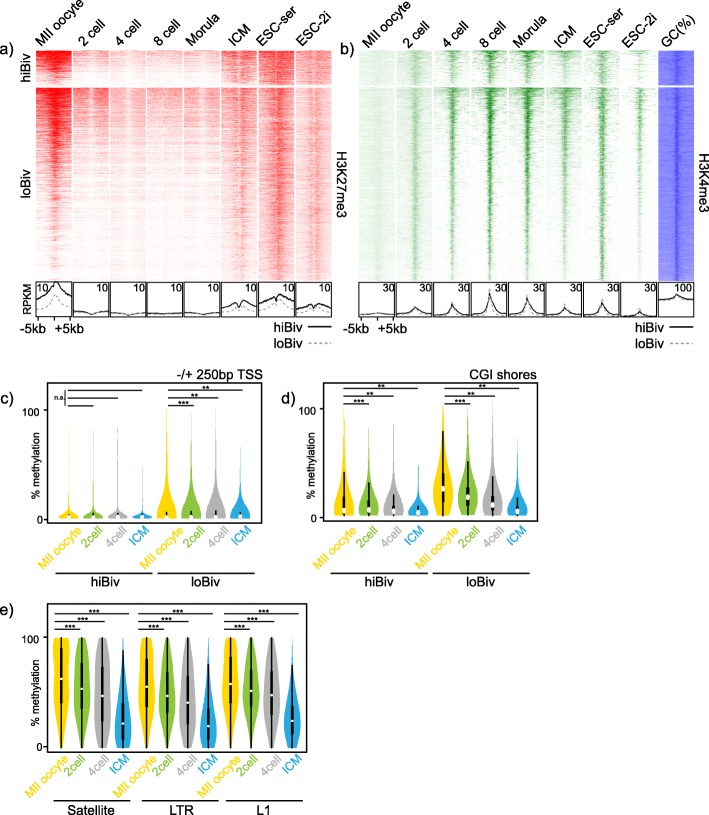
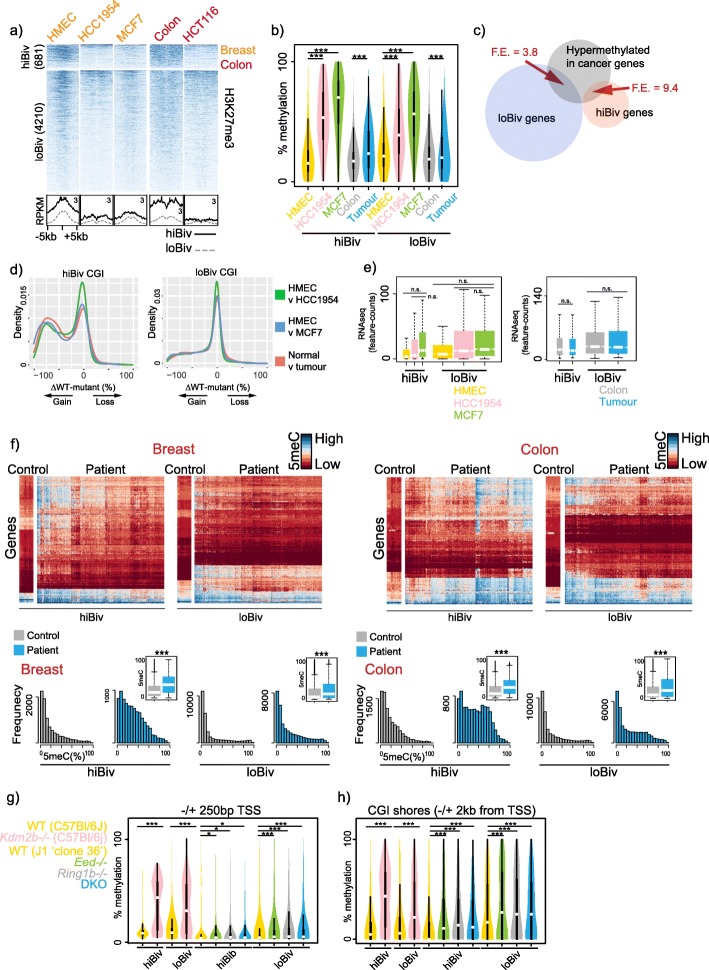
We report the sub-classification of bivalent promoters into two groups-promoters with a high H3K27me3:H3K4me3 (hiBiv) ratio or promoters with a low H3K27me3:H3K4me3 ratio (loBiv). HiBiv are enriched in canonical Polycomb components, show a higher degree of local intrachromosomal contacts and are highly sensitive to DNA hypomethylation in terms of H3K27me3 depletion from broad Polycomb domains. In contrast, loBiv promoters are enriched in non-canonical Polycomb components, show lower intrachromosomal contacts and are less sensitive to DNA hypomethylation at the same genomic resolution. Multiple systems reveal that hiBiv promoters are more depleted of Polycomb complexes than loBiv promoters following a reduction in DNA methylation, and we demonstrate that H3K27me3 re-accumulates at promoters when DNA methylation is restored. In human cancer, we show that hiBiv promoters lose H3K27me3 and are more susceptible to DNA hypermethylation than loBiv promoters.
We conclude that bivalency as a general term to describe mammalian promoters is an over-simplification and our sub-classification has revealed novel insights into the interplay between the largely antagonistic presence of DNA methylation and Polycomb systems at bivalent promoters. This approach redefines molecular pathologies underlying disease in which global DNA methylation is aberrant or where Polycomb mutations are present.
数以千计的哺乳动物启动子通过组蛋白尾部修饰 H3K27me3(抑制性)和 H3K4me3(激活性)的共富集来定义,因此被称为双价。先前观察到,人胚胎干细胞(hESC)中的双价基因是人类癌症中超甲基化的频繁靶点,而小鼠胚胎干细胞中 DNA 甲基化的耗竭对双价启动子处的 H3K27me3 分布有显著影响。然而,在癌症中,只有一部分干细胞中的双价基因是超甲基化的靶点,目前尚不清楚所有双价启动子是否对 DNA 低甲基化同样敏感,以及 H3K4me3 水平是否在 DNA 甲基化与 H3K27me3 之间的相互作用中起作用。
我们报告了将双价启动子分为两类——H3K27me3:H3K4me3 比值高的启动子(hiBiv)或 H3K27me3:H3K4me3 比值低的启动子(loBiv)。HiBiv 富含经典多梳成分,表现出更高程度的局部染色体间接触,并且在广泛的多梳域中从 H3K27me3 耗竭的角度来看,对 DNA 低甲基化非常敏感。相比之下,loBiv 启动子富含非经典多梳成分,表现出较低的染色体间接触,并且在相同的基因组分辨率下,对 DNA 低甲基化的敏感性较低。多种系统表明,与 loBiv 启动子相比,hiBiv 启动子在 DNA 甲基化减少后,多梳复合物的耗竭程度更高,我们证明当 DNA 甲基化恢复时,H3K27me3 重新积累在启动子上。在人类癌症中,我们表明 hiBiv 启动子失去 H3K27me3 并且比 loBiv 启动子更容易受到 DNA 超甲基化的影响。
我们得出结论,作为描述哺乳动物启动子的一般术语,双价是一种过于简化的说法,我们的细分揭示了 DNA 甲基化和多梳系统在双价启动子处的主要拮抗存在之间相互作用的新见解。这种方法重新定义了在全局 DNA 甲基化异常或多梳突变存在的情况下,疾病的分子病理学。