Department of Neurobiology, Harvard Medical School, Boston, 02115, MA, USA.
Acta Pharmacol Sin. 2020 Apr;41(4):453-463. doi: 10.1038/s41401-020-0380-z. Epub 2020 Mar 4.
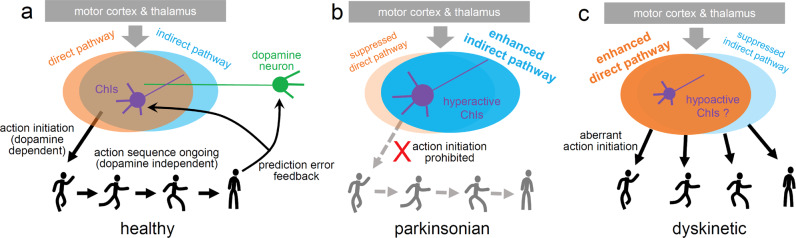
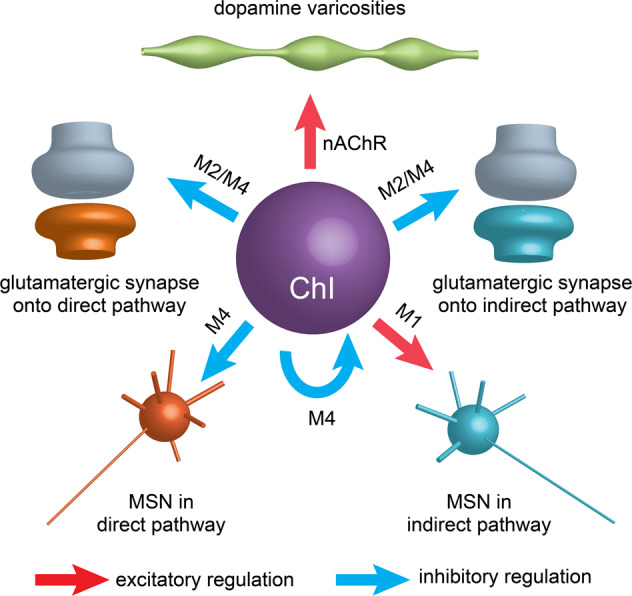
Motor control in the striatum is an orchestra played by various neuronal populations. Loss of harmony due to dopamine deficiency is considered the primary pathological cause of the symptoms of Parkinson's disease (PD). Recent progress in experimental approaches has enabled us to examine the striatal circuitry in a much more comprehensive manner, not only reshaping our understanding of striatal functions in movement regulation but also leading to new opportunities for the development of therapeutic strategies for treating PD. In addition to dopaminergic innervation, giant aspiny cholinergic interneurons (ChIs) within the striatum have long been recognized as a critical node for balancing dopamine signaling and regulating movement. With the roles of ChIs in motor control further uncovered and more specific manipulations available, striatal ChIs and their corresponding receptors are emerging as new promising therapeutic targets for PD. This review summarizes recent progress in functional studies of striatal circuitry and discusses the translational implications of these new findings for the treatment of PD.
纹状体中的运动控制是由各种神经元群体演奏的管弦乐。由于多巴胺缺乏导致的和谐丧失被认为是帕金森病 (PD) 症状的主要病理原因。实验方法的最新进展使我们能够更全面地检查纹状体回路,不仅重塑了我们对纹状体在运动调节中的功能的理解,而且为开发治疗 PD 的治疗策略提供了新的机会。除了多巴胺能神经支配外,纹状体内的巨大无棘胆碱性中间神经元 (ChIs) 长期以来一直被认为是平衡多巴胺信号和调节运动的关键节点。随着 ChIs 在运动控制中的作用进一步被揭示,并且有了更具体的操作手段,纹状体 ChIs 及其相应的受体作为 PD 的新的有前途的治疗靶点正在出现。这篇综述总结了纹状体回路功能研究的最新进展,并讨论了这些新发现对治疗 PD 的转化意义。