Department of Surgery, Kaohsiung Armed Forces General Hospital, Kaohsiung, Taiwan.
Department of Biological Sciences, National Sun Yat-sen University, Kaohsiung, Taiwan.
Int J Med Sci. 2020 Feb 4;17(3):403-413. doi: 10.7150/ijms.41177. eCollection 2020.
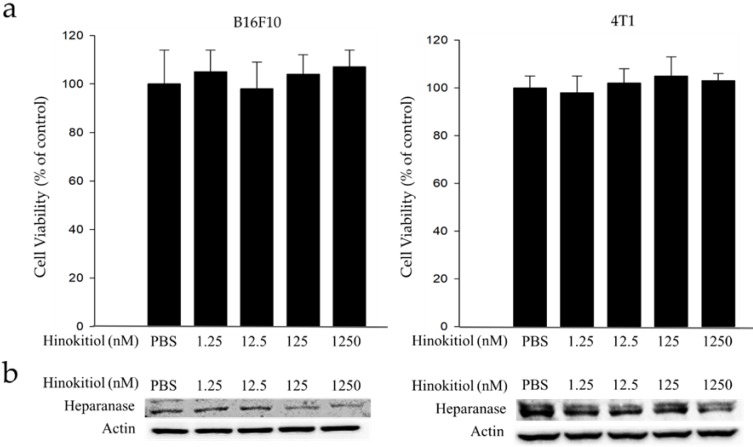
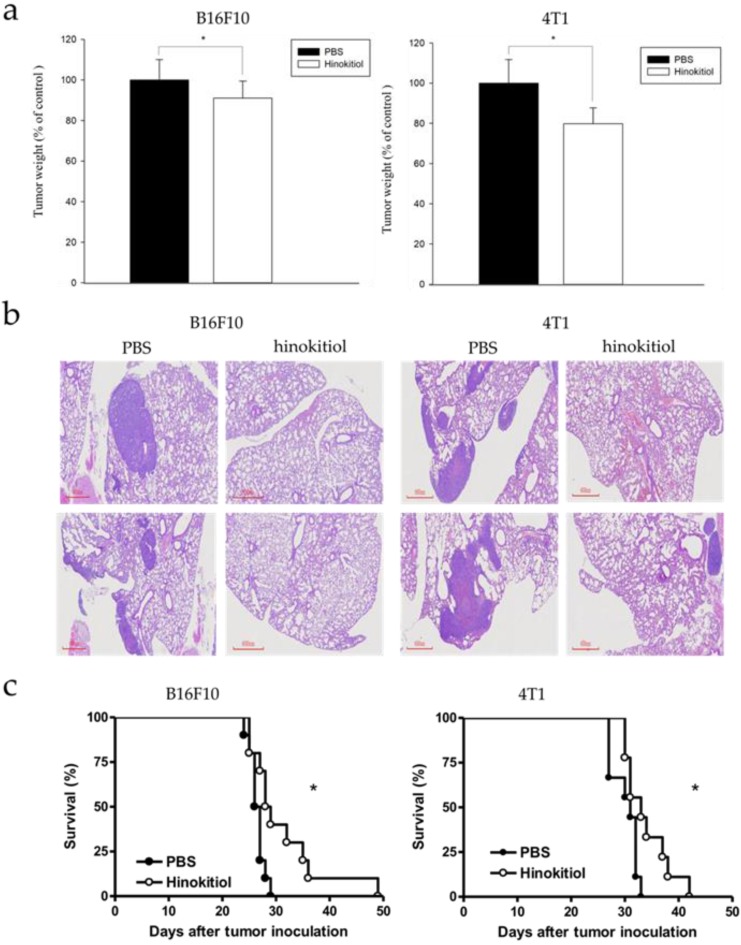
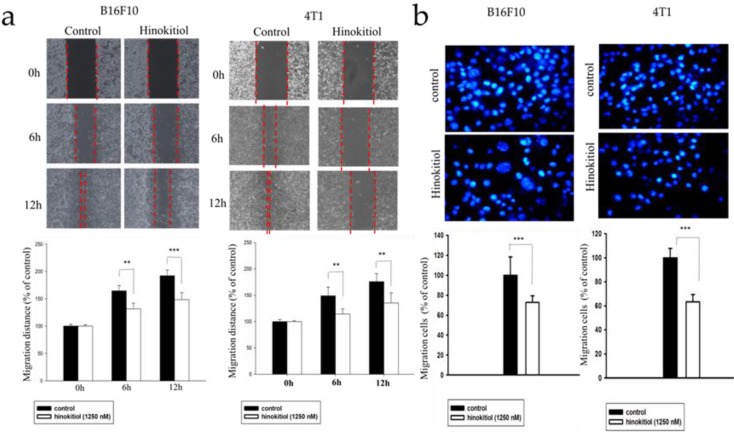
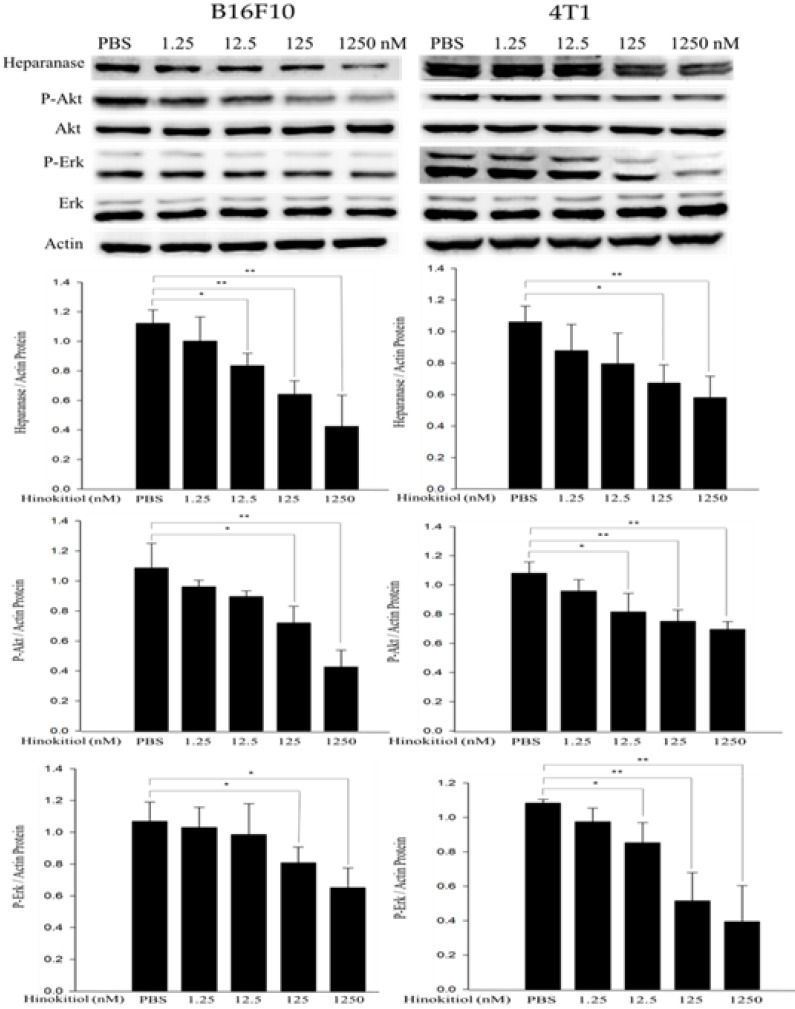
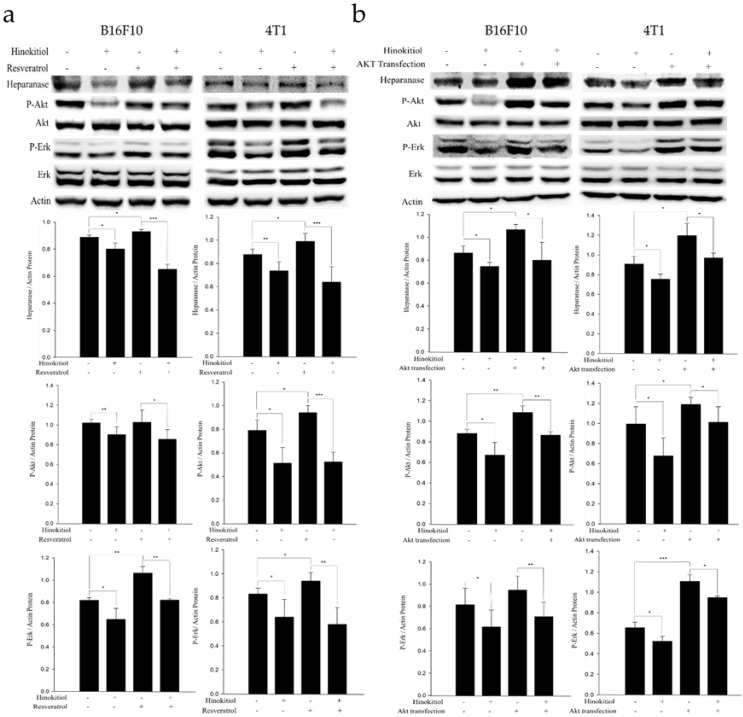
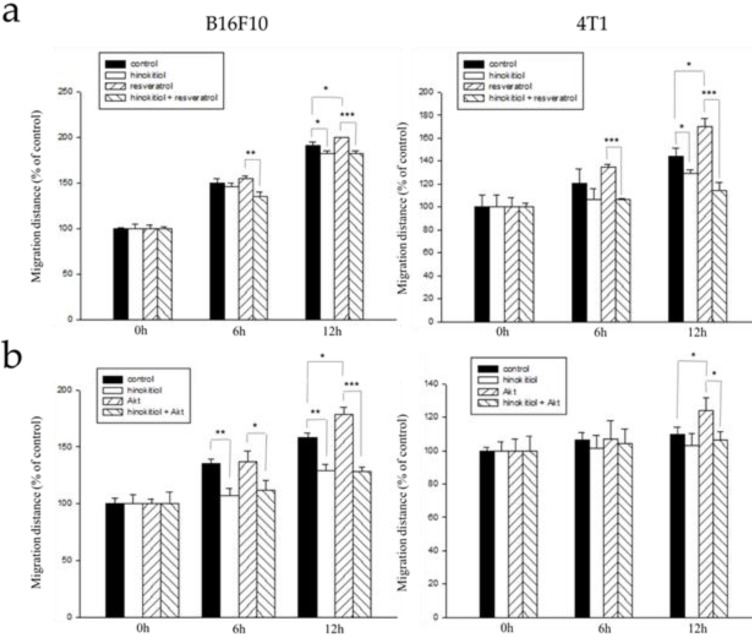
Heparanase cleaves the extracellular matrix by degrading heparan sulfate that ultimately leads to cell invasion and metastasis; a condition that causes high mortality among cancer patients. Many of the anticancer drugs available today are natural products of plant origin, such as hinokitiol. In the previous report, it was revealed that hinokitiol plays an essential role in anti-inflammatory and anti-oxidation processes and promote apoptosis or autophagy resulting to the inhibition of tumor growth and differentiation. Therefore, this study explored the effects of hinokitiol on the cancer-promoting pathway in mouse melanoma (B16F10) and breast (4T1) cancer cells, with emphasis on heparanase expression. We detected whether hinokitiol can elicit anti-metastatic effects on cancer cells via wound healing and Transwell assays. Besides, mice experiment was conducted to observe the impact of hinokitiol . Our results show that hinokitiol can inhibit the expression of heparanase by reducing the phosphorylation of protein kinase B (Akt) and extracellular regulated protein kinase (ERK). Furthermore, cell migration assay showed that heparanase downregulation by hinokitiol led to a decrease in metastatic activity which is consistent with the findings in the experiment.
肝素酶通过降解硫酸乙酰肝素来裂解细胞外基质,最终导致细胞侵袭和转移;这种情况导致癌症患者死亡率很高。目前许多可用的抗癌药物是植物来源的天然产物,如桧醇。在之前的报告中,桧醇在抗炎和抗氧化过程中发挥着重要作用,并促进细胞凋亡或自噬,从而抑制肿瘤生长和分化。因此,本研究探讨了桧醇对小鼠黑色素瘤(B16F10)和乳腺癌(4T1)癌细胞中促进癌症发生的途径的影响,重点研究了肝素酶的表达。我们检测了桧醇是否可以通过划痕愈合和 Transwell 分析实验来诱导癌细胞的抗转移作用。此外,还进行了小鼠实验来观察桧醇的影响。我们的结果表明,桧醇可以通过降低蛋白激酶 B(Akt)和细胞外调节蛋白激酶(ERK)的磷酸化来抑制肝素酶的表达。此外,细胞迁移实验表明,桧醇下调肝素酶导致转移活性降低,这与实验结果一致。