Zahan Oana-Maria, Serban Oana, Gherman Claudia, Fodor Daniela
2 Internal Medicine Department, Iuliu Hatieganu University of Medicine and Pharmacy, Cluj-Napoca, Romania.
Med Pharm Rep. 2020 Jan;93(1):12-22. doi: 10.15386/mpr-1422. Epub 2020 Jan 31.
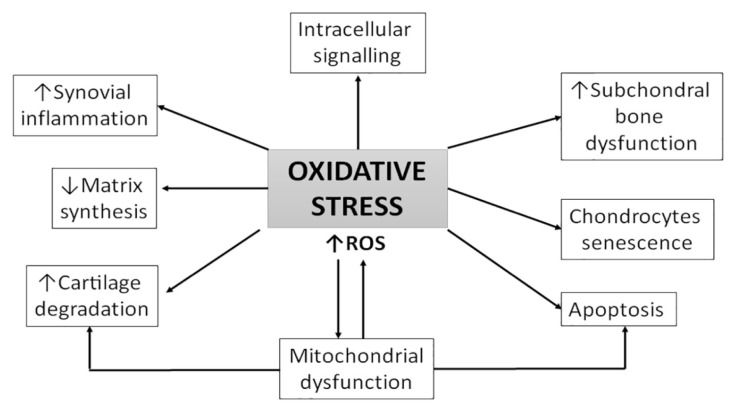
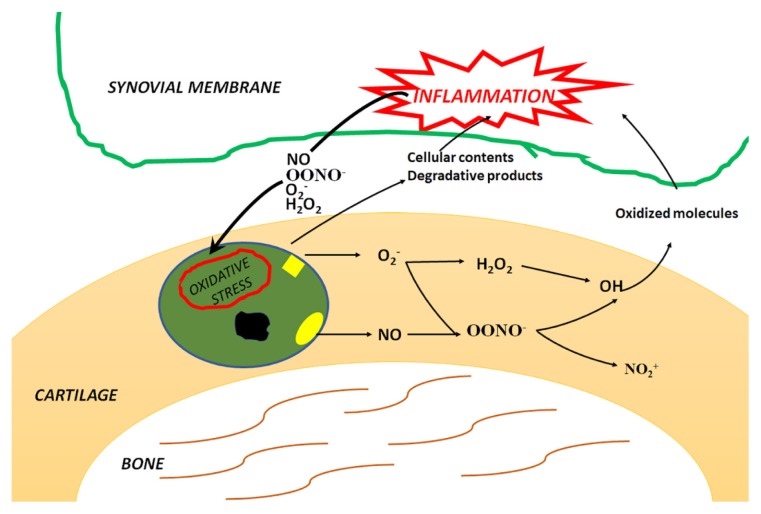
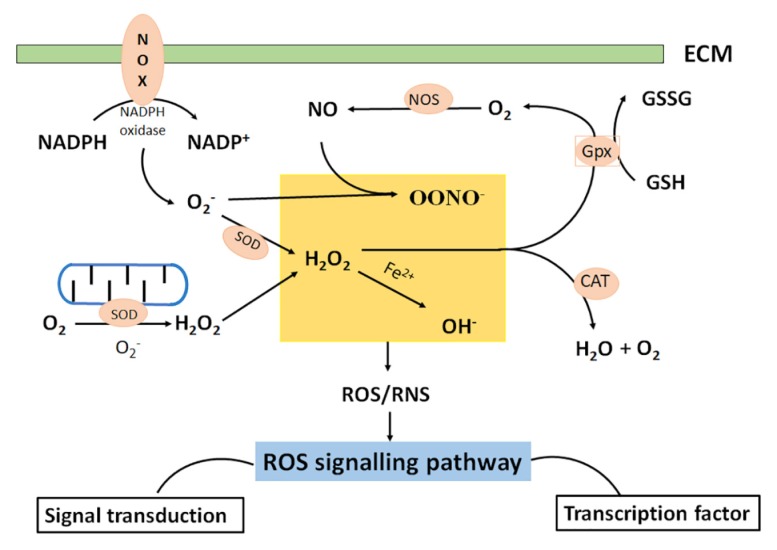
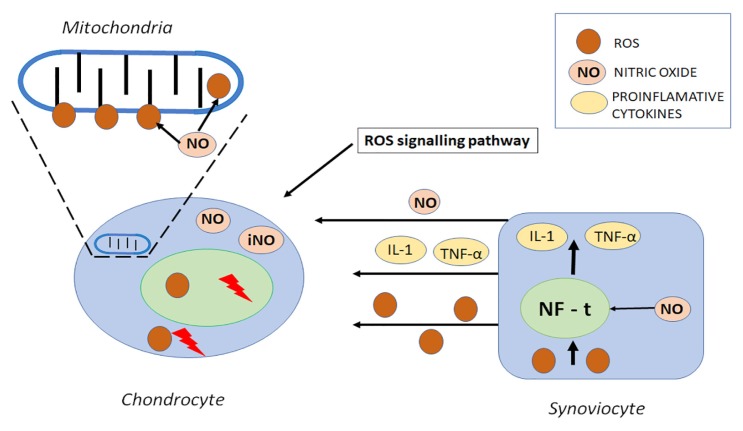
Osteoarthritis (OA) is a whole joint disease driven by abnormal biomechanics and attendant cell-derived and tissue-derived factors. The disease is multifactorial and polygenic, and its progression is significantly related to oxidative stress and reactive oxygen species (ROS). Augmented ROS generation can cause the damage of structural biomolecules of the joint and, by acting as intracellular signaling component, ROS are associated with various inflammatory responses. By activating several signaling pathways, ROS have a vital importance in the patho-physiology of OA. This review is focused on the mechanism of ROS which regulate intracellular signaling processes, chondrocyte senescence and apoptosis, extracellular matrix synthesis and degradation, along with synovial inflammation and dysfunction of the subcondral bone, targeting the complex oxidative stress signaling pathways.
骨关节炎(OA)是一种由异常生物力学以及随之而来的细胞源性和组织源性因素驱动的全关节疾病。该疾病是多因素和多基因的,其进展与氧化应激和活性氧(ROS)显著相关。ROS生成增加可导致关节结构生物分子的损伤,并且作为细胞内信号成分,ROS与各种炎症反应相关。通过激活多种信号通路,ROS在OA的病理生理学中具有至关重要的作用。本综述聚焦于ROS调节细胞内信号转导过程、软骨细胞衰老和凋亡、细胞外基质合成与降解以及滑膜炎症和软骨下骨功能障碍的机制,针对复杂的氧化应激信号通路展开探讨。