Department of Microbiology and Immunology, Institute of Biomedicine, University of Gothenburg, 405 30 Gothenburg, Sweden.
Department of Chemistry, Stony Brook University, Stony Brook, New York, 11794-3400, United States.
ACS Infect Dis. 2020 May 8;6(5):1192-1203. doi: 10.1021/acsinfecdis.0c00009. Epub 2020 Mar 19.
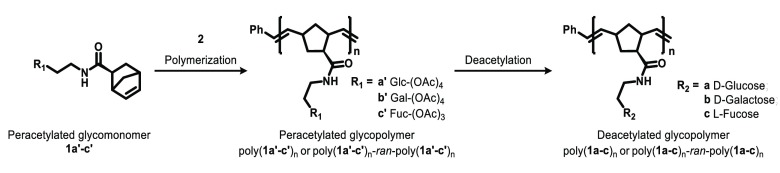
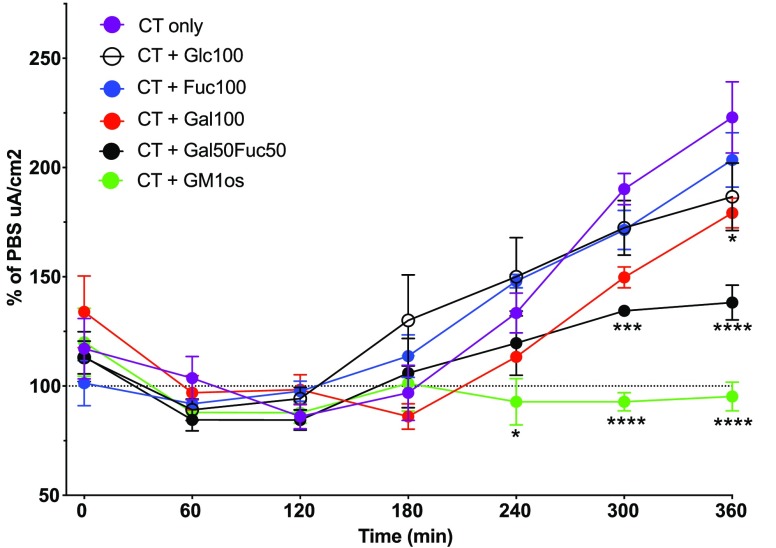
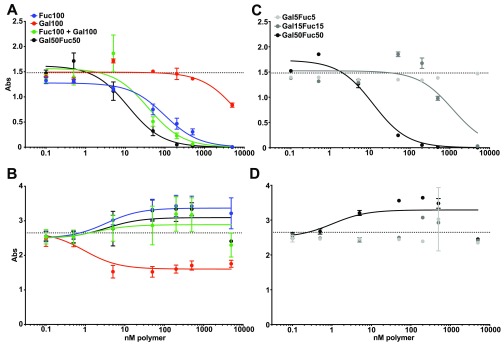
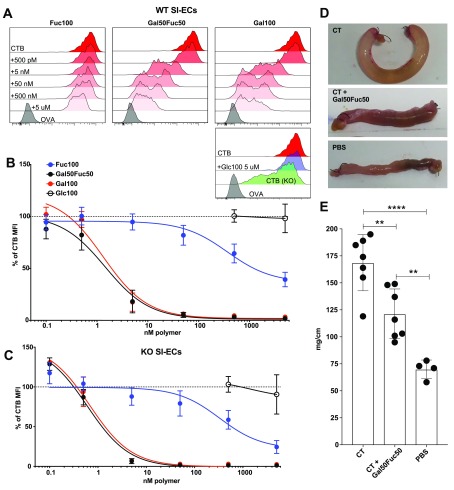
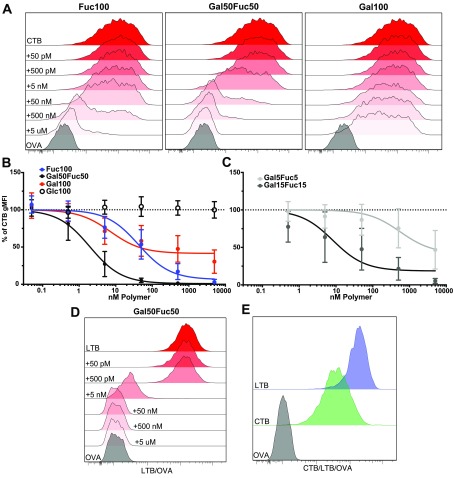
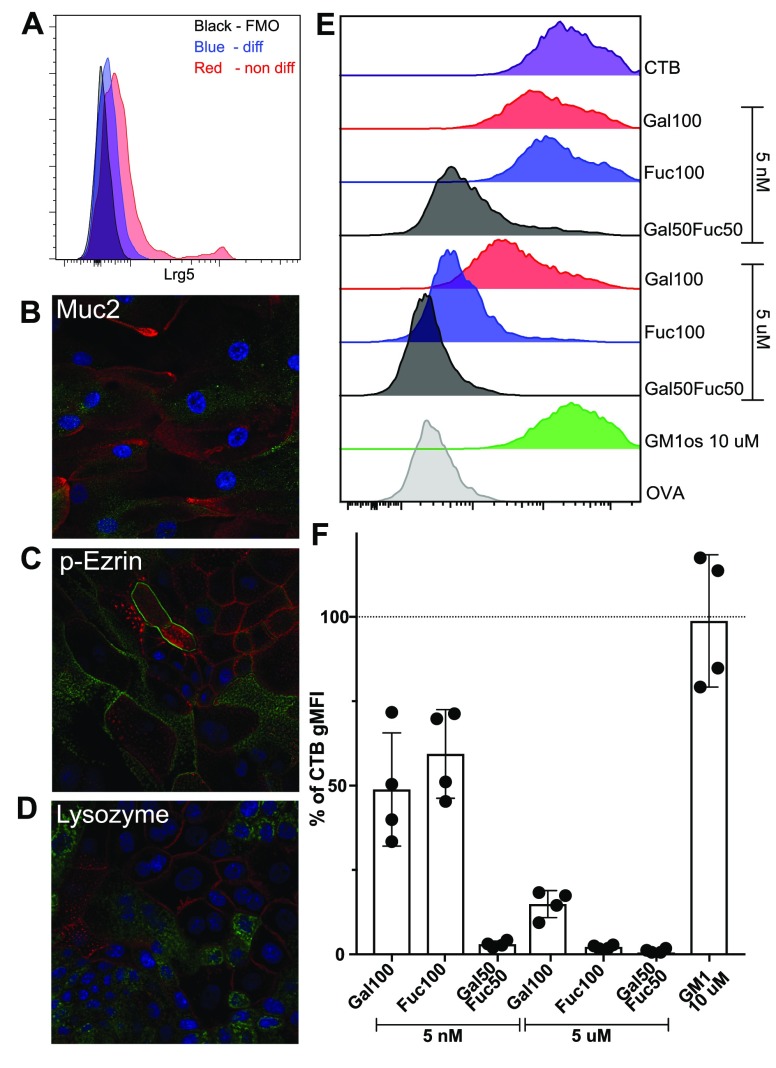
A promising strategy to limit cholera severity involves blockers mimicking the canonical cholera toxin ligand (CT) ganglioside GM1. However, to date the efficacies of most of these blockers have been evaluated in noncellular systems that lack ligands other than GM1. Importantly, the CT B subunit (CTB) has a noncanonical site that binds fucosylated structures, which in contrast to GM1 are highly expressed in the human intestine. Here we evaluate the capacity of norbornene polymers displaying galactose and/or fucose to block CTB binding to immobilized protein-linked glycan structures and also to primary human and murine small intestine epithelial cells (SI ECs). We show that the binding of CTB to human SI ECs is largely dependent on the noncanonical binding site, and interference with the canonical site has a limited effect while the opposite is observed with murine SI ECs. The galactose-fucose polymer blocks binding to fucosylated glycans but not to GM1. However, the preincubation of CT with the galactose-fucose polymer only partially blocks toxic effects on cultured human enteroid cells, while preincubation with GM1 completely blocks CT-mediated secretion. Our results support a model whereby the binding of fucose to the noncanonical site places CT in close proximity to scarcely expressed galactose receptors such as GM1 to enable binding via the canonical site leading to CT internalization and intoxication. Our finding also highlights the importance of complementing CTB binding studies with functional intoxication studies when assessing the efficacy inhibitors of CT.
一种有前途的限制霍乱严重程度的策略涉及模仿经典霍乱毒素配体 (CT) 神经节苷脂 GM1 的阻滞剂。然而,迄今为止,这些阻滞剂中的大多数的功效都在缺乏 GM1 以外配体的非细胞系统中进行了评估。重要的是,CTB 亚基 (CTB) 具有非经典结合位点,可与岩藻糖基化结构结合,与 GM1 相比,这些结构在人肠道中高度表达。在这里,我们评估了显示半乳糖和/或岩藻糖的降冰片烯聚合物阻断 CTB 与固定化蛋白连接聚糖结构结合以及与人源和鼠源小肠上皮细胞 (SIECs) 结合的能力。我们表明,CTB 与人源 SIECs 的结合在很大程度上取决于非经典结合位点,干扰经典结合位点的效果有限,而在鼠源 SIECs 中则观察到相反的效果。半乳糖-岩藻糖聚合物可阻断与岩藻糖化聚糖的结合,但不能与 GM1 结合。然而,将 CT 与半乳糖-岩藻糖聚合物预孵育仅部分阻断对培养的人类肠类器官细胞的毒性作用,而 GM1 的预孵育则完全阻断 CT 介导的分泌。我们的结果支持这样一种模型,即岩藻糖与非经典结合位点的结合使 CT 与表达稀少的半乳糖受体(如 GM1)紧密接近,从而通过经典结合位点结合,导致 CT 内化和中毒。我们的发现还强调了在评估 CT 抑制剂的功效时,将 CTB 结合研究与功能中毒研究相结合的重要性。