Kouz Karim, Hoppe Phillip, Briesenick Luisa, Saugel Bernd
Department of Anesthesiology, Center of Anesthesiology and Intensive Care Medicine, University Medical Center Hamburg-Eppendorf, Hamburg, Germany.
Outcomes Research Consortium, Cleveland, Ohio, USA.
Indian J Anaesth. 2020 Feb;64(2):90-96. doi: 10.4103/ija.IJA_939_19. Epub 2020 Feb 4.
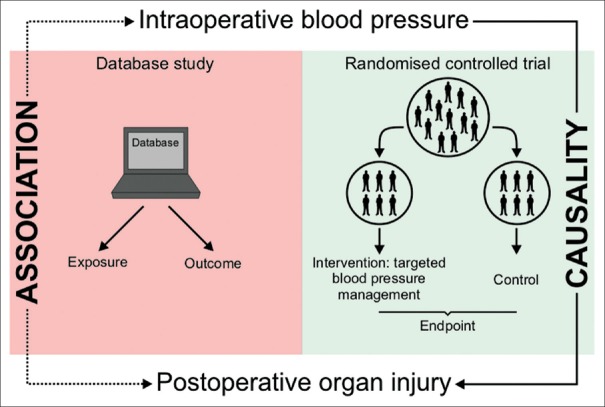
Intraoperative hypotension (IOH) i.e., low arterial blood pressure (AP) during surgery is common in patients having non-cardiac surgery under general anaesthesia. It has a multifactorial aetiology, and is associated with major postoperative complications including acute kidney injury, myocardial injury and death. Therefore, IOH may be a modifiable risk factor for postoperative complications. However, there is no uniform definition for IOH. IOH not only occurs during surgery but also after the induction of general anaesthesia before surgical incision. However, the optimal therapeutic approach to IOH remains elusive. There is evidence from one small randomised controlled trial that individualising AP targets may reduce the risk of postoperative organ dysfunction compared with standard care. More research is needed to define individual AP harm thresholds, to develop therapeutic strategies to treat and avoid IOH, and to integrate new technologies for continuous AP monitoring.
术中低血压(IOH),即在全身麻醉下进行非心脏手术的患者中,手术期间出现的动脉血压(AP)降低,是常见现象。其病因是多因素的,并且与包括急性肾损伤、心肌损伤和死亡在内的主要术后并发症相关。因此,术中低血压可能是术后并发症的一个可改变的危险因素。然而,对于术中低血压并没有统一的定义。术中低血压不仅发生在手术期间,也发生在全身麻醉诱导后、手术切口前。然而,术中低血压的最佳治疗方法仍不明确。一项小型随机对照试验的证据表明,与标准治疗相比,将动脉血压目标个体化可能会降低术后器官功能障碍的风险。需要更多的研究来确定个体动脉血压的损害阈值,制定治疗和避免术中低血压的治疗策略,并整合用于持续动脉血压监测的新技术。