Department of Infectious Diseases, Ningbo Yinzhou No.2 Hospital, Ningbo, 315100, Zhejiang, China.
J Transl Med. 2020 Mar 6;18(1):123. doi: 10.1186/s12967-020-02286-z.
Lung adenocarcinoma (LUAD) is the most frequent subtype of lung cancer. The prognostic signature could be reliable to stratify LUAD patients according to risk, which helps the management of the systematic treatments. In this study, a systematic and reliable immune signature was performed to estimate the prognostic stratification in LUAD.
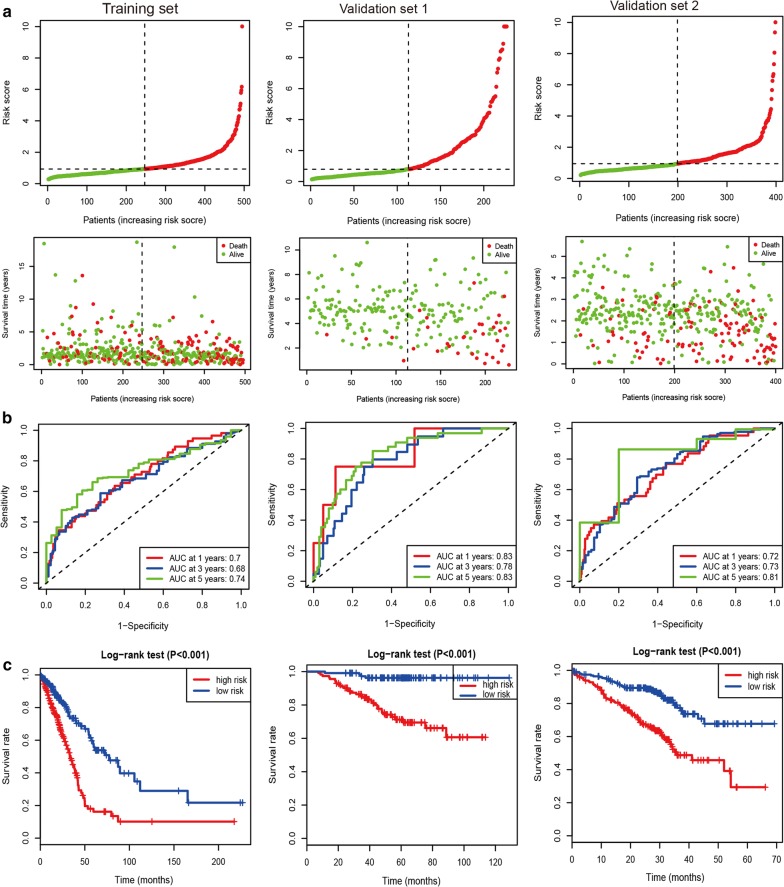
The profiles of immune-related genes for patients with LUAD were used as one TCGA training set: n = 494, other validation set 1: n = 226 and validation set 2: n = 398. Univariate Cox survival analysis was used to identify the candidate immune-related genes from each cohort. Then, the immune signature was developed and validated in the training and validation sets.
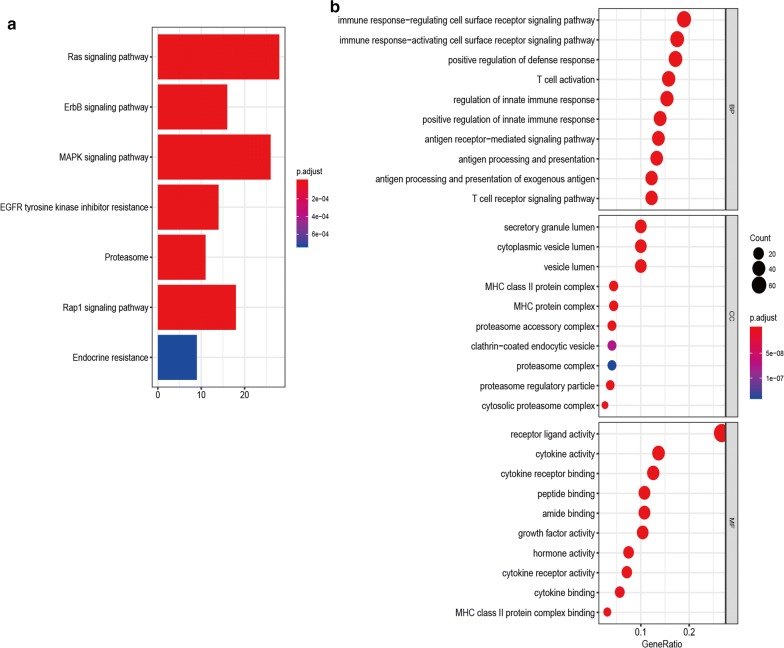
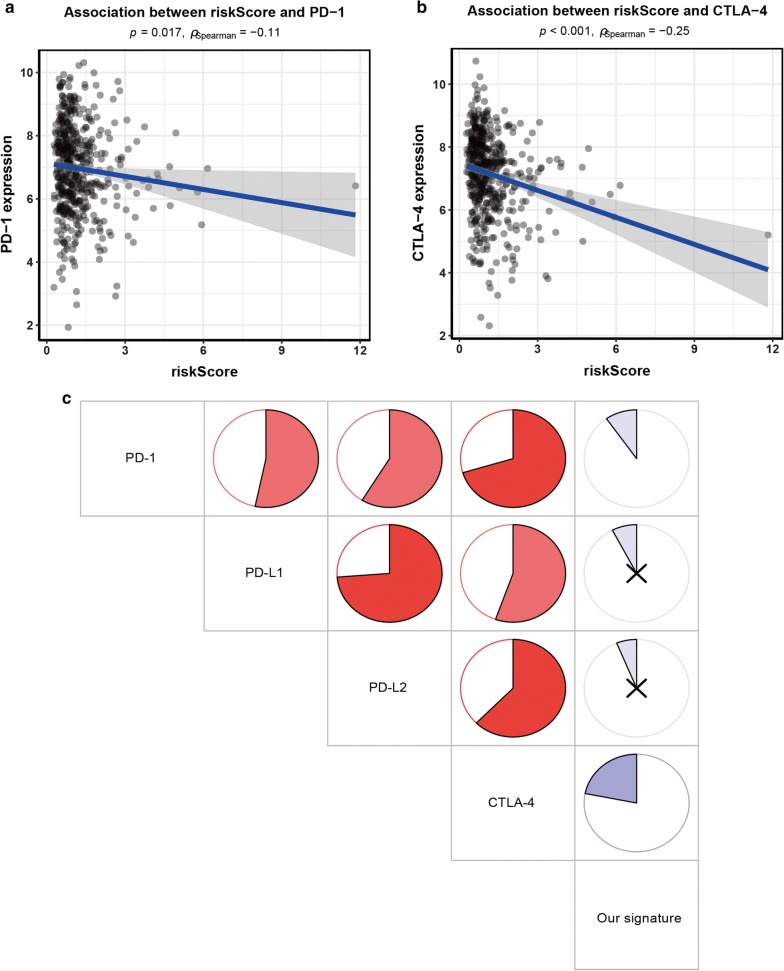
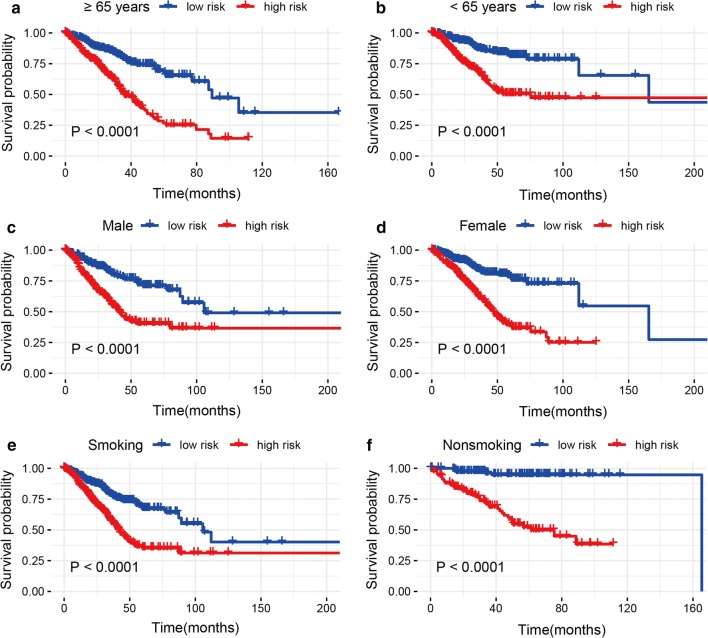
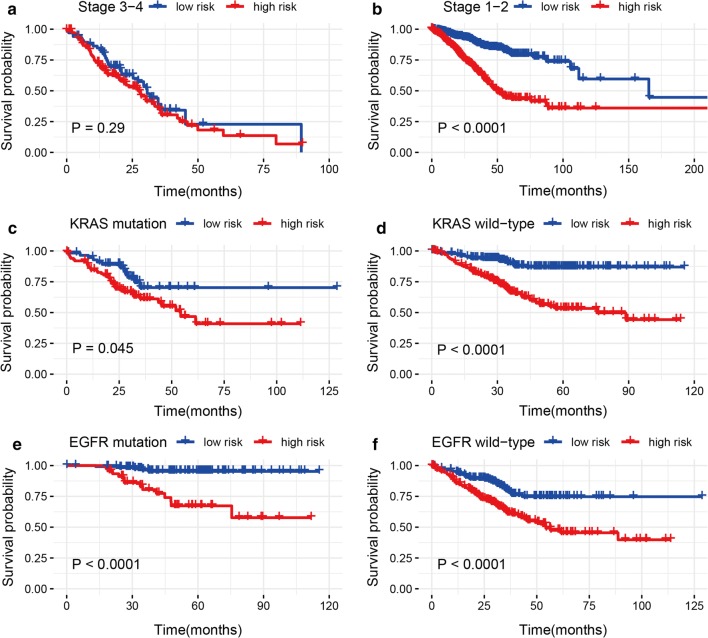
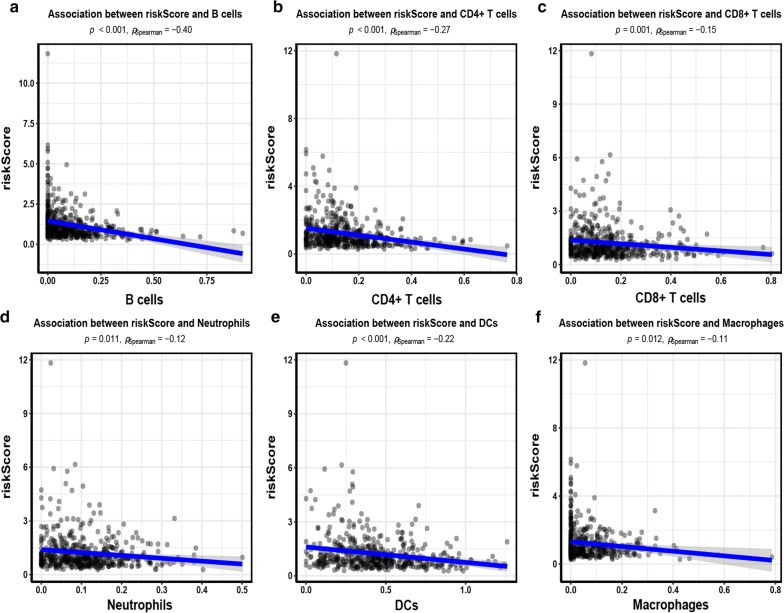
In this study, functional analysis showed that immune-related genes involved in immune regulation and MAPK signaling pathway. A prognostic signature based on 10 immune-related genes was established in the training set and patients were divided into high-risk and low-risk groups. Our 10 immune-related gene signature was significantly related to worse survival, especially during early-stage tumors. Further stratification analyses revealed that this 10 immune-related gene signature was still an effective tool for predicting prognosis in smoking or nonsmoking patients, patients with KRAS mutation or KRAS wild-type, and patients with EGFR mutation or EGFR wild-type. Our signature was negatively correlated with B cell, CD4+ T cell, CD8+ T cell, neutrophil, dendritic cell (DC), and macrophage immune infiltration, and immune checkpoint molecules PD-1 and CTLA-4 (P < 0.05).
These findings suggested that our signature was a promising biomarker for prognosis prediction and can facilitate the management of immunotherapy in LUAD.
肺腺癌(LUAD)是最常见的肺癌亚型。预后标志物可用于根据风险对 LUAD 患者进行分层,有助于系统治疗的管理。在这项研究中,我们进行了一项系统且可靠的免疫标志物研究,以评估 LUAD 的预后分层。
使用 LUAD 患者的免疫相关基因谱作为一个 TCGA 训练集:n=494,其他验证集 1:n=226 和验证集 2:n=398。使用单因素 Cox 生存分析从每个队列中识别候选免疫相关基因。然后,在训练集和验证集中开发和验证免疫标志物。
在这项研究中,功能分析表明,免疫相关基因参与免疫调节和 MAPK 信号通路。在训练集中建立了基于 10 个免疫相关基因的预后标志物,并将患者分为高风险和低风险组。我们的 10 个免疫相关基因标志物与较差的生存显著相关,尤其是在早期肿瘤中。进一步的分层分析表明,该 10 个免疫相关基因标志物仍然是预测吸烟或不吸烟患者、KRAS 突变或 KRAS 野生型患者、EGFR 突变或 EGFR 野生型患者预后的有效工具。我们的标志物与 B 细胞、CD4+T 细胞、CD8+T 细胞、中性粒细胞、树突状细胞(DC)和巨噬细胞免疫浸润以及免疫检查点分子 PD-1 和 CTLA-4 呈负相关(P<0.05)。
这些发现表明,我们的标志物是预测预后的有前途的生物标志物,并可以促进 LUAD 免疫治疗的管理。