Alabama Museum of Natural History, University of Alabama, Tuscaloosa, AL, 35487, USA.
Department of Geological Sciences, University of Alabama, Tuscaloosa, AL, 35487, USA.
Sci Rep. 2020 Mar 6;10(1):4169. doi: 10.1038/s41598-020-61089-w.
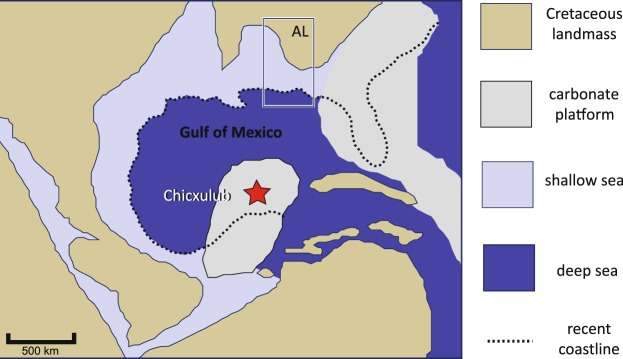
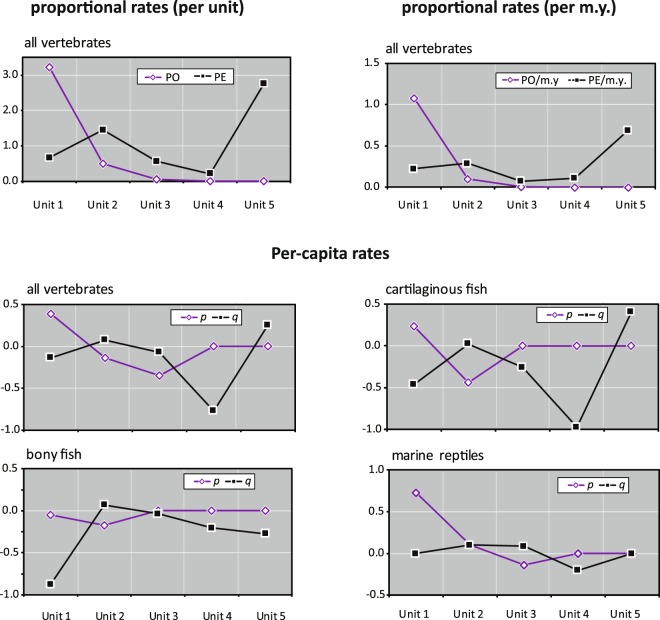
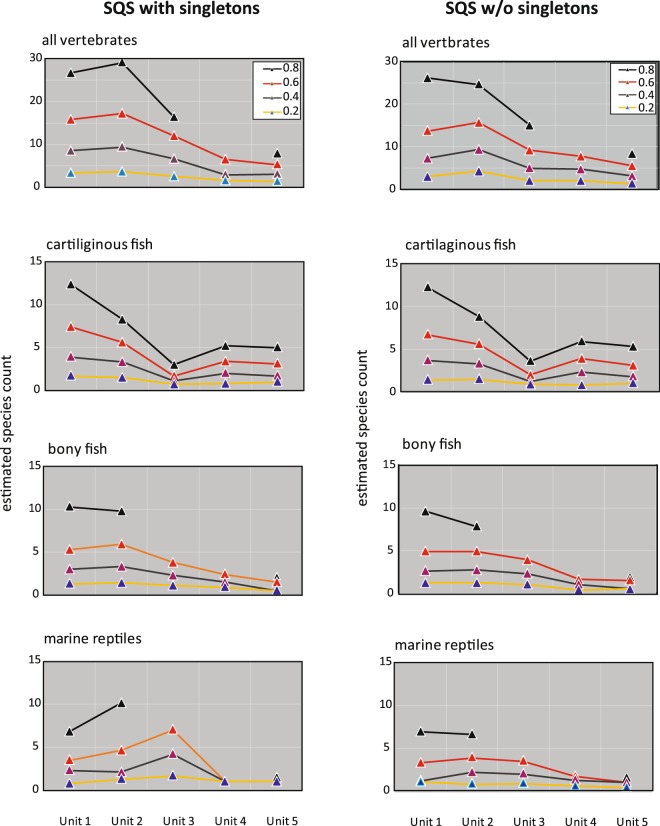
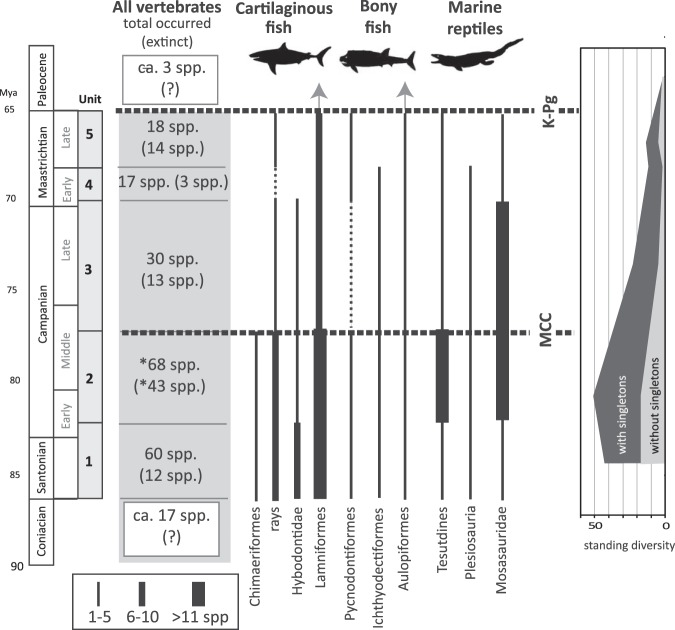
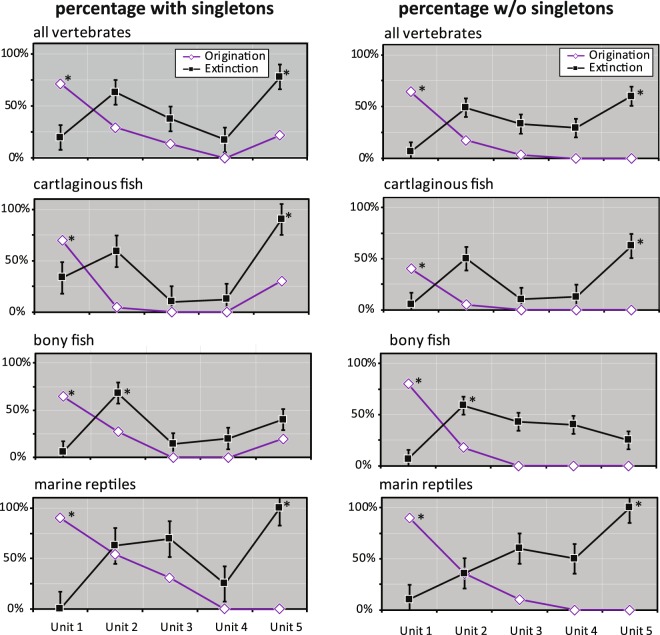
Recent studies on mass extinctions are often based on the global fossil record, but data from selected paleogeographic regions under a relatively constant paleoenvironmental setting can also provide important information. Eighty-nine marine vertebrate species, including cartilaginous and bony fish and marine reptiles, from northern Gulf of Mexico - located about 500 km from the Chicxulub crater - offer a unique opportunity to determine an extinction process during the last 20 million years of the Late Cretaceous. Our diversity data show two separate extinction events: (i) the 'Middle Campanian Crisis' (about 77 Mya) and (ii) the end-Maastrichtian (66 Mya) events. Whether this stepwise pattern of extinctions occurred locally or globally cannot be determined at present due to the lack of a dataset of the marine vertebrate record for reliable comparison. However, this stepwise pattern including the Middle Campanian and end-Maastrichtian events for, at least, a 13 million-year interval indicates long-term global marine environmental changes (e.g., regression, ocean water chemistry change). Because most Cretaceous marine vertebrates already disappeared in the Gulf of Mexico prior to the latest Maastrichtian, the Chicxulub Impact may not be considered as the most devastating extinction event for the community.
近期的大规模灭绝研究通常基于全球化石记录,但来自相对稳定古环境下特定古地理区域的数据也可以提供重要信息。来自距奇克苏鲁布陨石坑约 500 公里的墨西哥湾北部的 89 种海洋脊椎动物物种,包括软骨鱼和硬骨鱼以及海洋爬行动物,为确定白垩纪晚期最后 2000 万年的灭绝过程提供了独特的机会。我们的多样性数据显示了两次独立的灭绝事件:(i)“中坎潘期危机”(约 7700 万年前)和(ii)马斯特里赫特期末期(6600 万年前)事件。由于缺乏可靠比较的海洋脊椎动物记录数据集,目前无法确定这种逐步灭绝模式是在局部还是全球范围内发生的。然而,这种包括中坎潘期和马斯特里赫特期末期的阶段性模式,至少在 1300 万年的时间间隔内,表明了长期的全球海洋环境变化(例如,海退、海水化学变化)。由于大多数白垩纪海洋脊椎动物在马斯特里赫特期末期之前已经在墨西哥湾消失,因此奇克苏鲁布撞击事件可能不被认为是对该群落最具破坏性的灭绝事件。