Subdepartment of Evolution and Development, Department of Organismal Biology, Uppsala University, Uppsala, Sweden.
Palaeoscience Research Centre, School of Environmental and Rural Science, University of New England, Armidale, New South Wales, Australia.
PLoS Biol. 2021 Aug 10;19(8):e3001108. doi: 10.1371/journal.pbio.3001108. eCollection 2021 Aug.
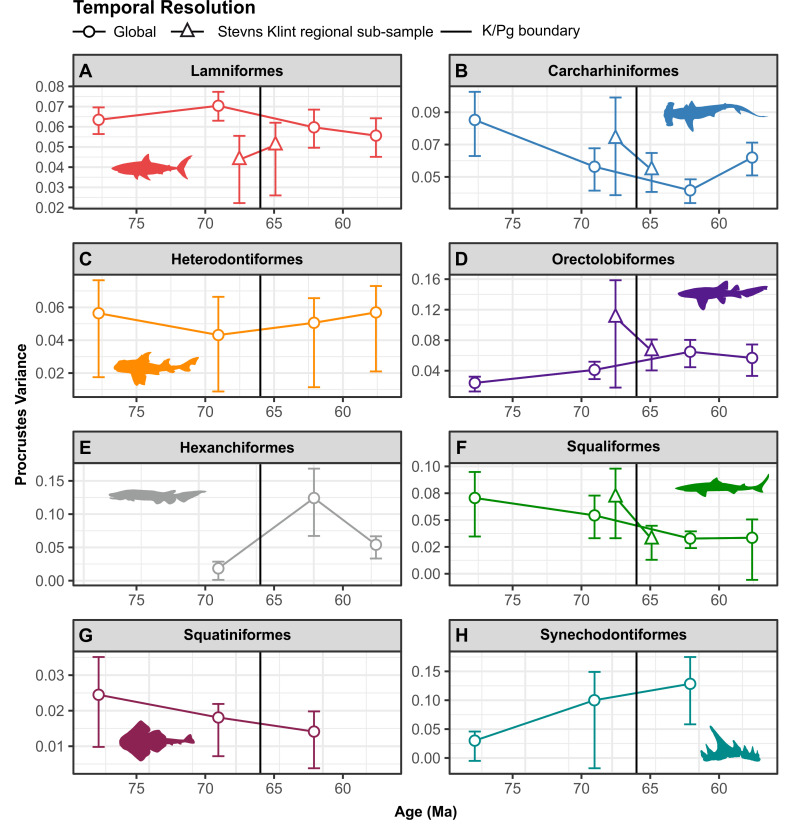
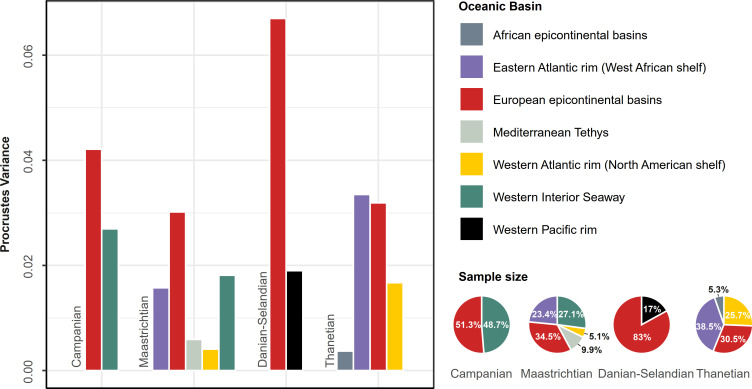
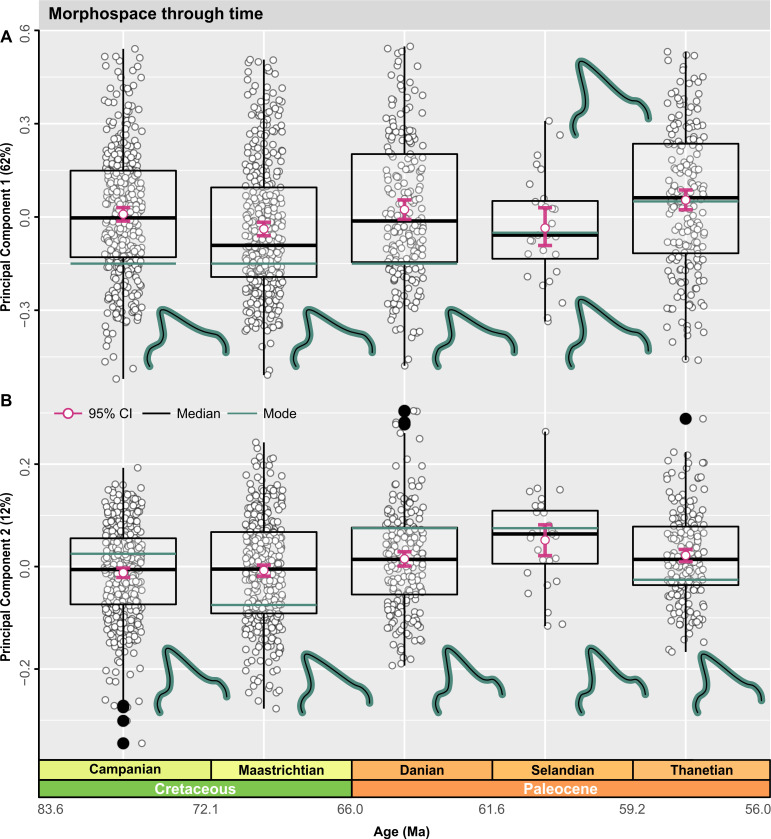
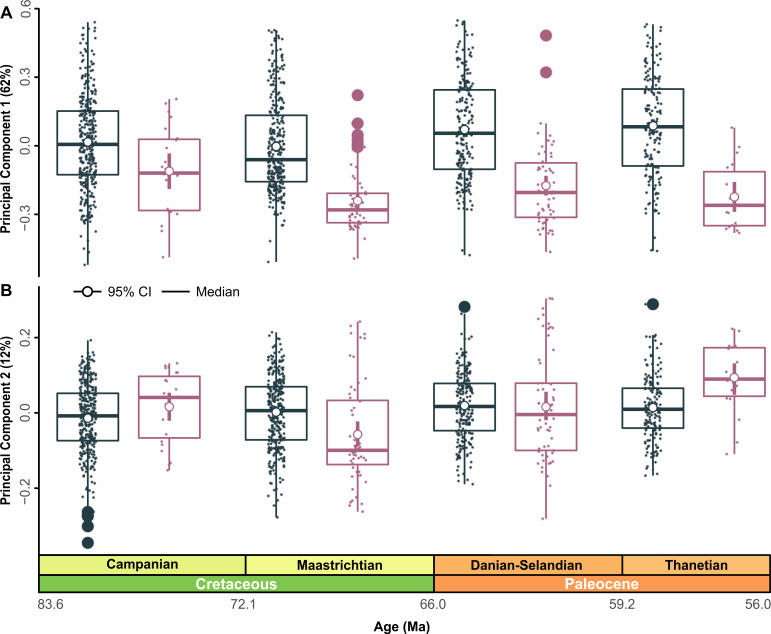
Sharks (Selachimorpha) are iconic marine predators that have survived multiple mass extinctions over geologic time. Their prolific fossil record is represented mainly by isolated shed teeth, which provide the basis for reconstructing deep time diversity changes affecting different selachimorph clades. By contrast, corresponding shifts in shark ecology, as measured through morphological disparity, have received comparatively limited analytical attention. Here, we use a geometric morphometric approach to comprehensively examine tooth morphologies in multiple shark lineages traversing the catastrophic end-Cretaceous mass extinction-this event terminated the Mesozoic Era 66 million years ago. Our results show that selachimorphs maintained virtually static levels of dental disparity in most of their constituent clades across the Cretaceous-Paleogene interval. Nevertheless, selective extinctions did impact apex predator species characterized by triangular blade-like teeth. This is particularly evident among lamniforms, which included the dominant Cretaceous anacoracids. Conversely, other groups, such as carcharhiniforms and orectolobiforms, experienced disparity modifications, while heterodontiforms, hexanchiforms, squaliforms, squatiniforms, and †synechodontiforms were not overtly affected. Finally, while some lamniform lineages disappeared, others underwent postextinction disparity increases, especially odontaspidids, which are typified by narrow-cusped teeth adapted for feeding on fishes. Notably, this increase coincides with the early Paleogene radiation of teleosts as a possible prey source, and the geographic relocation of disparity sampling "hotspots," perhaps indicating a regionally disjunct extinction recovery. Ultimately, our study reveals a complex morphological response to the end-Cretaceous mass extinction and highlights an event that influenced the evolution of modern sharks.
鲨鱼(Selachimorpha)是标志性的海洋掠食者,它们在地质时间中经历了多次大规模灭绝而幸存下来。它们丰富的化石记录主要由孤立的脱落牙齿代表,这些牙齿为重建影响不同鲨形目进化枝的深层时间多样性变化提供了基础。相比之下,鲨鱼生态的相应变化,如形态差异所衡量的,受到了相对有限的分析关注。在这里,我们使用几何形态测量方法全面检查了穿越灾难性的白垩纪末期灭绝事件(该事件结束了 6600 万年前的中生代)的多个鲨鱼谱系的牙齿形态。我们的研究结果表明,在白垩纪-古近纪期间,鲨形目大多数组成进化枝的牙齿形态差异基本保持稳定。然而,选择性灭绝确实影响了以三角形刀片状牙齿为特征的顶级捕食者物种。这在 Lamniformes 中尤为明显,其中包括占主导地位的白垩纪 Anacoracidae。相反,其他群体,如角鲨目和真鲨目,经历了形态差异的改变,而异齿鲨目、六鳃鲨目、长尾鲨目、星鲨目和† Synechodontiformes 则没有明显受到影响。最后,虽然一些 Lamniformes 谱系消失了,但其他谱系在灭绝后经历了形态差异的增加,特别是 Odontaspididae,其特征是适应捕食鱼类的窄齿尖。值得注意的是,这种增加与硬骨鱼类作为可能的猎物来源的早古近纪辐射相吻合,以及形态差异采样“热点”的地理重新定位,这可能表明存在区域性隔离的灭绝恢复。最终,我们的研究揭示了对白垩纪末期灭绝的复杂形态反应,并强调了一个影响现代鲨鱼进化的事件。