Andrology Center, Department of Urology, Peking University First Hospital; Institute of Urology, Peking University, No 8 Xishenku Street, Beijing, 100034, China.
Department of Evidence based Medicine and Clinical Epidemiology, West China Hospital, Sichuan University, No. 37 Guoxuexiang, Chengdu, 610041, China.
BMC Endocr Disord. 2020 Mar 7;20(1):33. doi: 10.1186/s12902-020-0509-6.
Testosterone deficiency (TD) may induce a series of clinical symptoms. Studies have shown that testosterone supplementation may prevent these unfavourable symptoms and improve patients' quality of life. Given the conflicting findings across studies, this systematic review aims to evaluate the effects and risks associated with testosterone supplementation in middle-aged or aging males with TD.
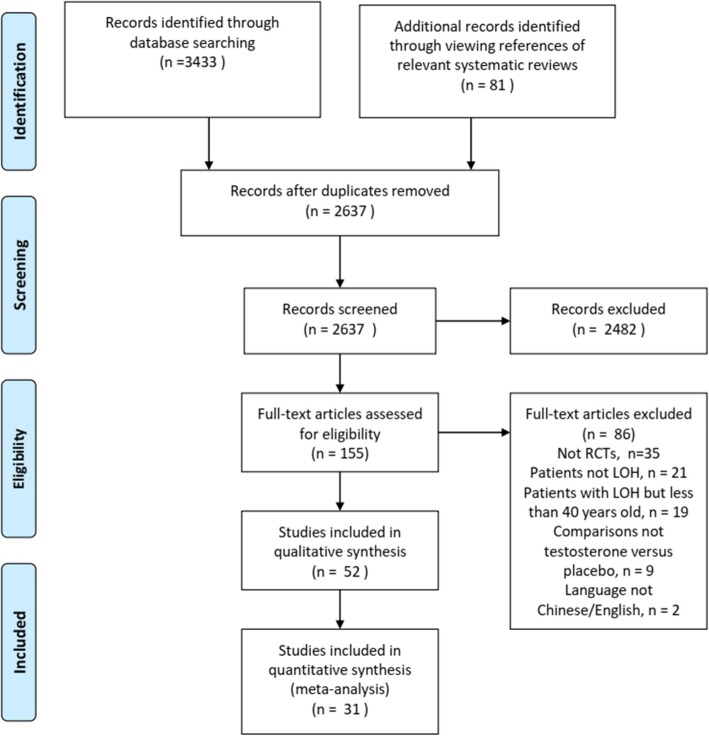
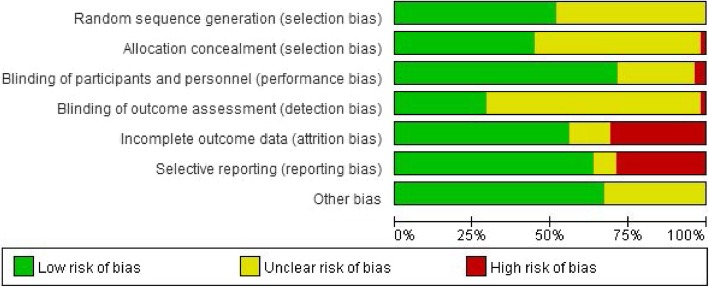
Electronic databases (MEDLINE, EMBASE, PubMed, and Cochrane. Library were searched to December 2019. The risk of bias of individual included studies and the quality of the aggregate evidence were assessed using the GRADE approach. Our primary outcome was bone mineral density (BMD). Meta-analyses were performed. This systematic review was reported according to the PRISMA statement.
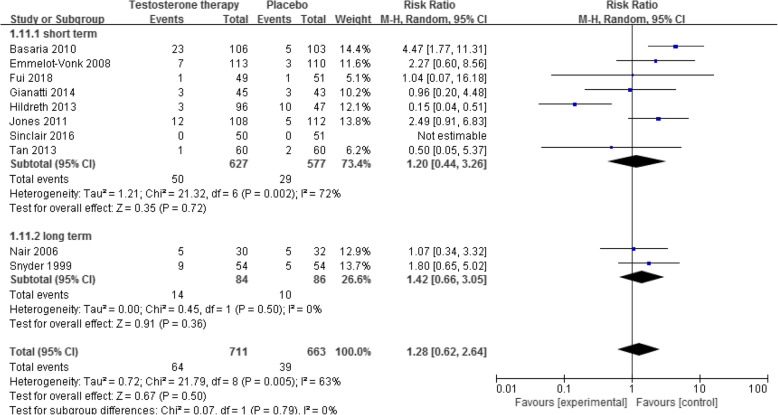
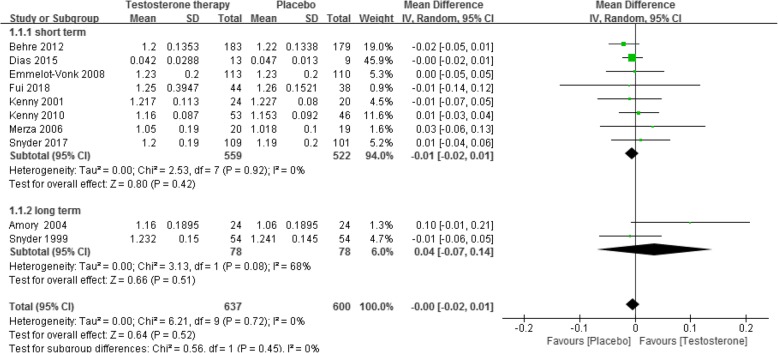
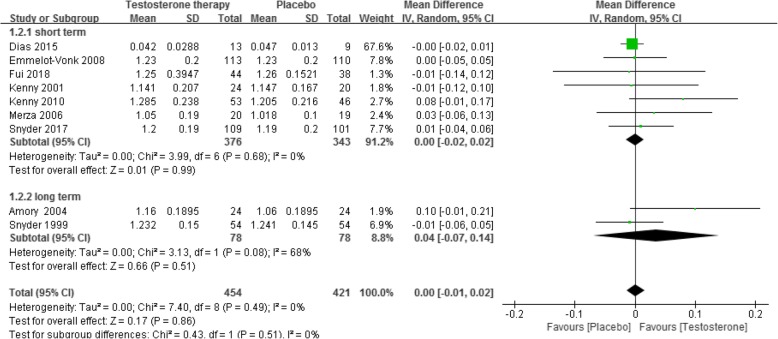
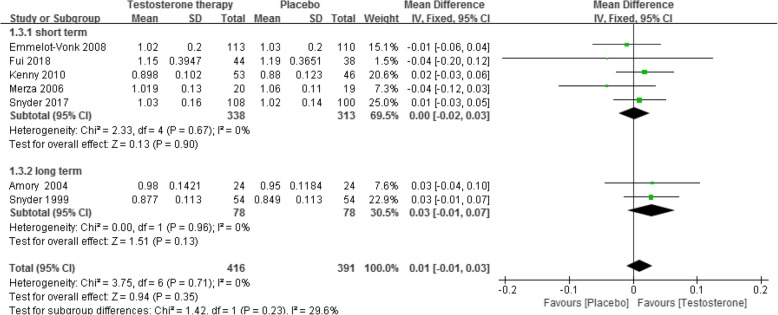
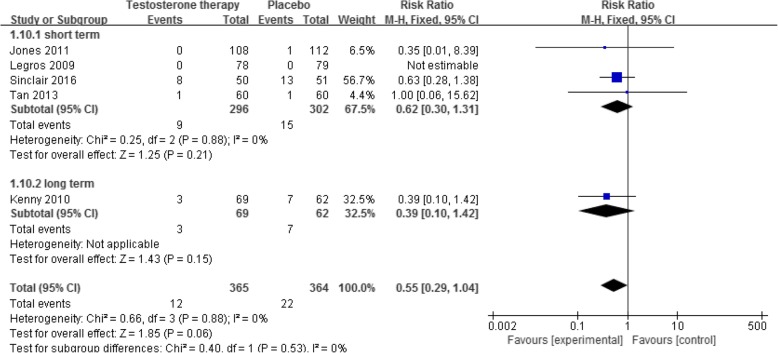
A total of 52 randomized controlled trials (RCTs) were included. When compared with placebo, testosterone supplementation did not increase total BMD (short-term: 1081 participants, MD - 0.01 g/cm, 95% CI - 0.02 g/cm to 0.01 g/cm; long-term: 156 participants, MD 0.04 g/cm, 95% CI - 0.07 g/cm to 0.14 g/cm), lumbar spine, hip, or femur neck BMD. Furthermore, testosterone supplementation did not decrease the risk of falling or fracture. Lastly, it was found that testosterone supplementation did not increase the risk of cardiovascular events (1374 participants, RR 1.28, 95% CI 0.62 to 2.64), all-cause mortality (729 participants, RR 0.55, 95% CI 0.29 to 1.04), or prostatic events. However, testosterone supplementation may improve sexual function and quality of life (1328 participants, MD -1.32, 95% CI - 2.11 to - 0.52).
The effect of testosterone supplementation on BMD and the risk of falls or fracture remains inconclusive. However, supplementation may benefit patients in the areas of sexual function and quality of life without increasing the risk of cardiovascular events, all-cause mortality, or prostatic events. RCTs with a longer follow-up period are still required.
We registered our protocol in PROSPERO (CRD42018109738).
睾丸激素缺乏(TD)可能会引起一系列临床症状。研究表明,睾丸激素补充治疗可能预防这些不利症状并提高患者的生活质量。由于不同研究的结果存在差异,因此本系统评价旨在评估补充睾丸激素对患有 TD 的中年或老年男性的影响和风险。
检索了电子数据库(MEDLINE、EMBASE、PubMed 和 Cochrane 图书馆),检索时间截至 2019 年 12 月。使用 GRADE 方法评估了纳入研究的个体偏倚风险和汇总证据的质量。我们的主要结局是骨密度(BMD)。进行了荟萃分析。本系统评价按照 PRISMA 声明进行报告。
共纳入 52 项随机对照试验(RCT)。与安慰剂相比,睾丸激素补充治疗并未增加总 BMD(短期:1081 名参与者,MD -0.01 g/cm,95%CI -0.02 g/cm 至 0.01 g/cm;长期:156 名参与者,MD 0.04 g/cm,95%CI -0.07 g/cm 至 0.14 g/cm)、腰椎、髋部或股骨颈 BMD。此外,睾丸激素补充治疗并未降低跌倒或骨折的风险。最后发现,睾丸激素补充治疗并未增加心血管事件的风险(1374 名参与者,RR 1.28,95%CI 0.62 至 2.64)、全因死亡率(729 名参与者,RR 0.55,95%CI 0.29 至 1.04)或前列腺事件。然而,睾丸激素补充治疗可能改善性功能和生活质量(1328 名参与者,MD -1.32,95%CI -2.11 至 -0.52)。
睾丸激素补充治疗对 BMD 和跌倒或骨折风险的影响仍不确定。然而,补充治疗可能有益于性功能和生活质量方面的患者,而不会增加心血管事件、全因死亡率或前列腺事件的风险。仍需要进行随访时间更长的 RCT。
我们在 PROSPERO(CRD42018109738)中注册了我们的方案。