Department of Anesthesiology, Tongji Hospital, Tongji Medical College, Huazhong University of Science and Technology, 1095 Jiefang Avenue, Wuhan, 430030 Hubei, China.
Oxid Med Cell Longev. 2020 Feb 18;2020:9018624. doi: 10.1155/2020/9018624. eCollection 2020.
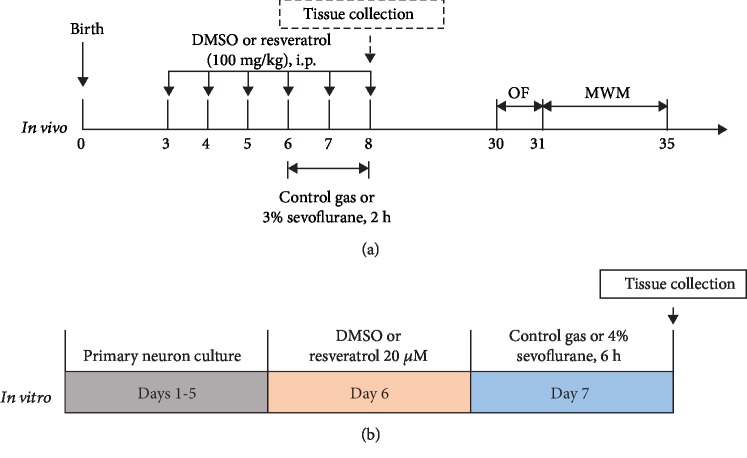
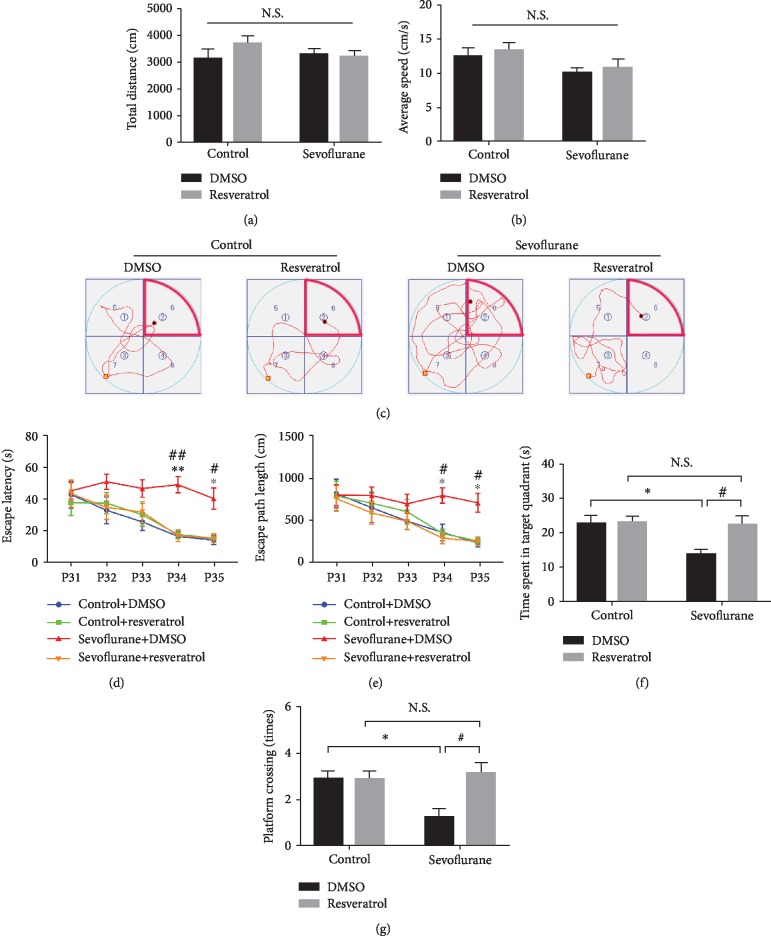
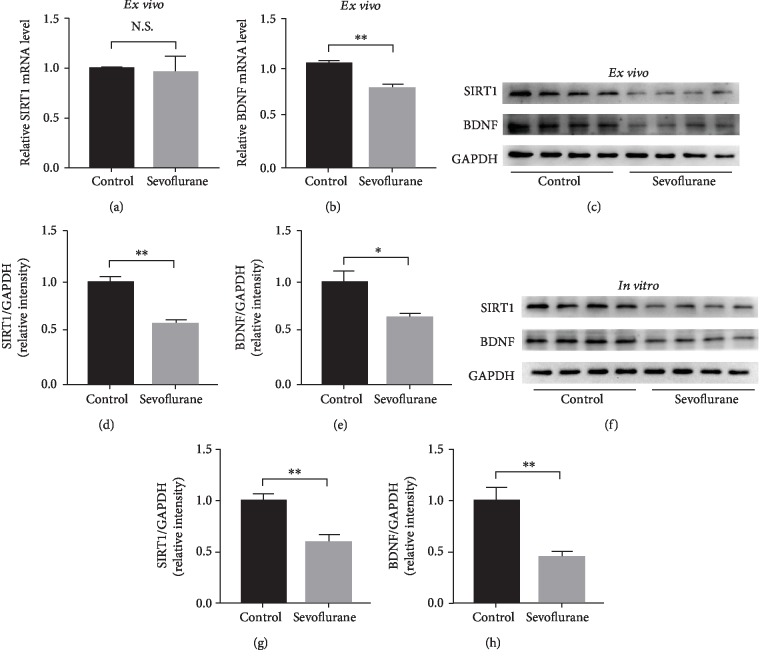
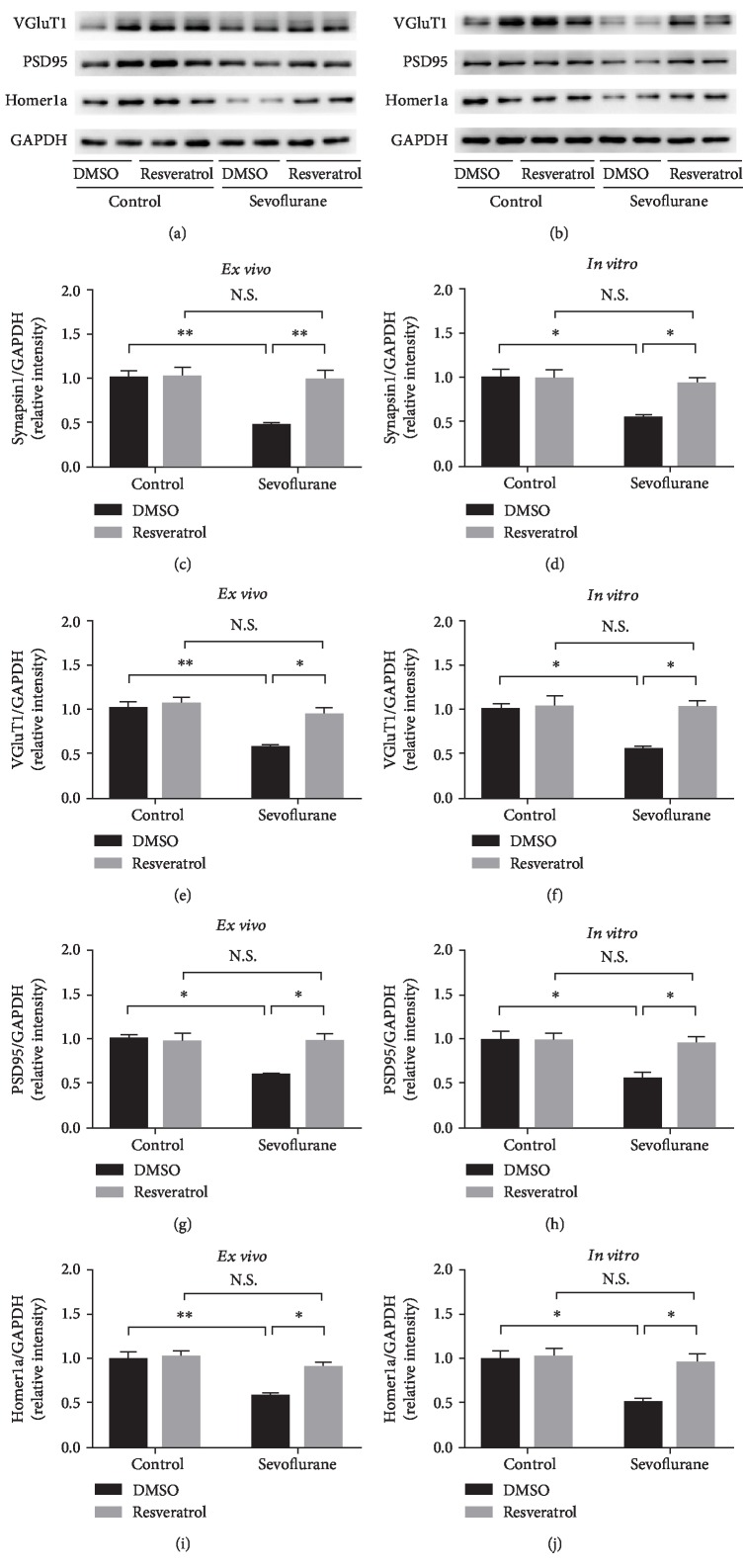
Various lines of evidence suggest that neonatal exposure to general anesthetics, especially repeatedly, results in neuropathological brain changes and long-term cognitive impairment. Although progress has been made in experimental models, the exact mechanism of GA-induced neurotoxicity in the developing brain remains to be clarified. Sirtuin 1 (SIRT1) plays an important role in synaptic plasticity and cognitive performance, and its abnormal reduction is associated with cognitive dysfunction in neurodegenerative diseases. However, the role of SIRT1 in GA-induced neurotoxicity is unclear to date. In this study, we found that the protein level of SIRT1 was inhibited in the hippocampi of developing mice exposed to sevoflurane. Furthermore, the SIRT1 inhibition in hippocampi was associated with brain-derived neurotrophic factor (BDNF) downregulation modulated by methyl-cytosine-phosphate-guanine-binding protein 2 (MeCP2) and cAMP response element-binding protein (CREB). Pretreatment of neonatal mice with resveratrol nearly reversed the reduction in hippocampal SIRT1 expression, which increased the expression of BDNF in developing mice exposed to sevoflurane. Moreover, changes in the levels of CREB and MeCP2, which were considered to interact with BDNF promoter IV, were also rescued by resveratrol. Furthermore, resveratrol improved the cognitive performance in the Morris water maze test of the adult mice with exposure to sevoflurane in the neonatal stage, without changing motor function in the open field test. Taken together, our findings suggested that SIRT1 deficiency regulated BDNF signaling via regulation of the epigenetic activity of MeCP2 and CREB, and resveratrol might be a promising agent for mitigating sevoflurane-induced neurotoxicity in developing mice.
各种证据表明,新生儿接触全身麻醉剂,特别是反复接触,会导致神经病理学脑改变和长期认知障碍。尽管在实验模型方面已经取得了进展,但全身麻醉诱导发育中大脑神经毒性的确切机制仍有待阐明。Sirtuin 1 (SIRT1) 在突触可塑性和认知表现中发挥重要作用,其异常减少与神经退行性疾病中的认知功能障碍有关。然而,迄今为止,SIRT1 在全身麻醉诱导的神经毒性中的作用尚不清楚。在这项研究中,我们发现,暴露于七氟醚的发育中小鼠海马中的 SIRT1 蛋白水平受到抑制。此外,海马中的 SIRT1 抑制与脑源性神经营养因子 (BDNF) 的下调有关,这种下调是由甲基胞嘧啶-磷酸鸟嘌呤结合蛋白 2 (MeCP2) 和 cAMP 反应元件结合蛋白 (CREB) 调节的。用白藜芦醇预处理新生小鼠几乎可以逆转海马 SIRT1 表达的减少,从而增加了暴露于七氟醚的发育中小鼠 BDNF 的表达。此外,被认为与 BDNF 启动子 IV 相互作用的 CREB 和 MeCP2 的水平变化也被白藜芦醇挽救。此外,白藜芦醇改善了在新生儿期暴露于七氟醚的成年小鼠在 Morris 水迷宫测试中的认知表现,而在旷场测试中没有改变运动功能。总之,我们的研究结果表明,SIRT1 缺乏通过调节 MeCP2 和 CREB 的表观遗传活性来调节 BDNF 信号,而白藜芦醇可能是减轻发育中小鼠全身麻醉诱导的神经毒性的有前途的药物。