Department of Microbiology and Molecular Medicine, Faculty of Medicine, University of Geneva, Geneva, Switzerland.
Institute of Pharmaceutical Sciences of Western Switzerland (ISPSO), University of Geneva, Geneva, Switzerland.
Elife. 2020 Mar 9;9:e52272. doi: 10.7554/eLife.52272.
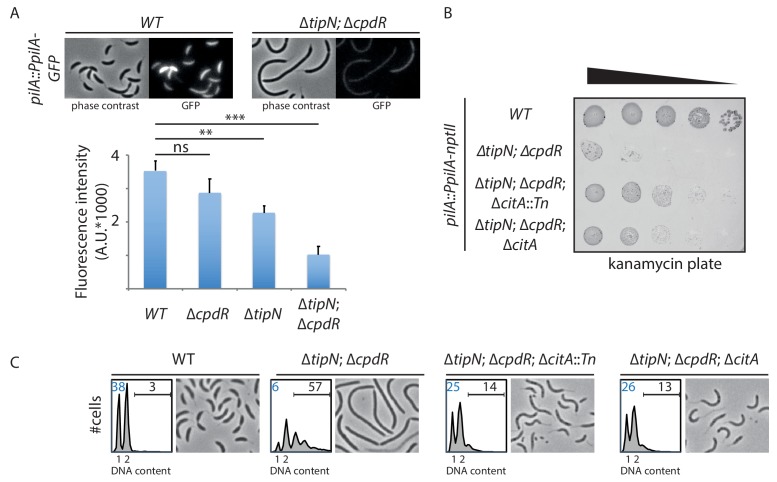
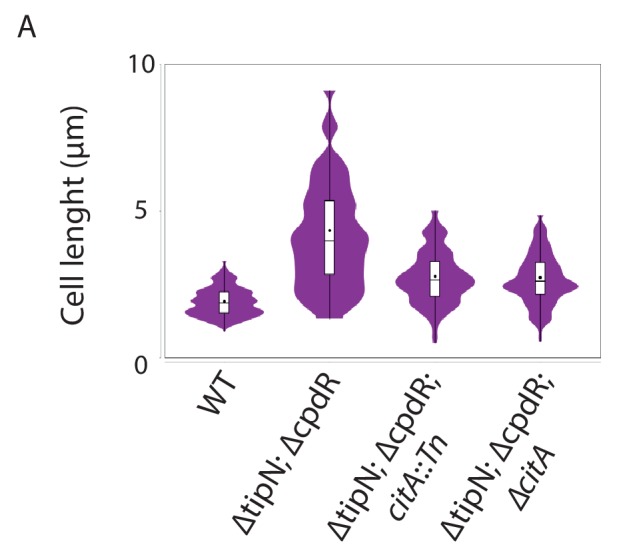
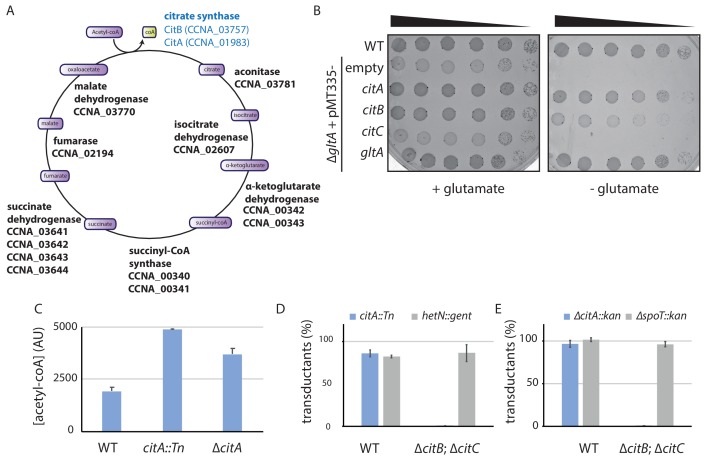
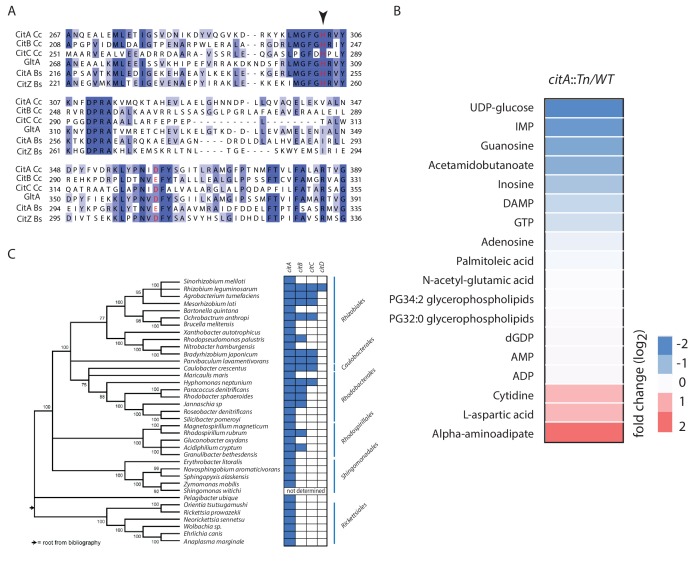
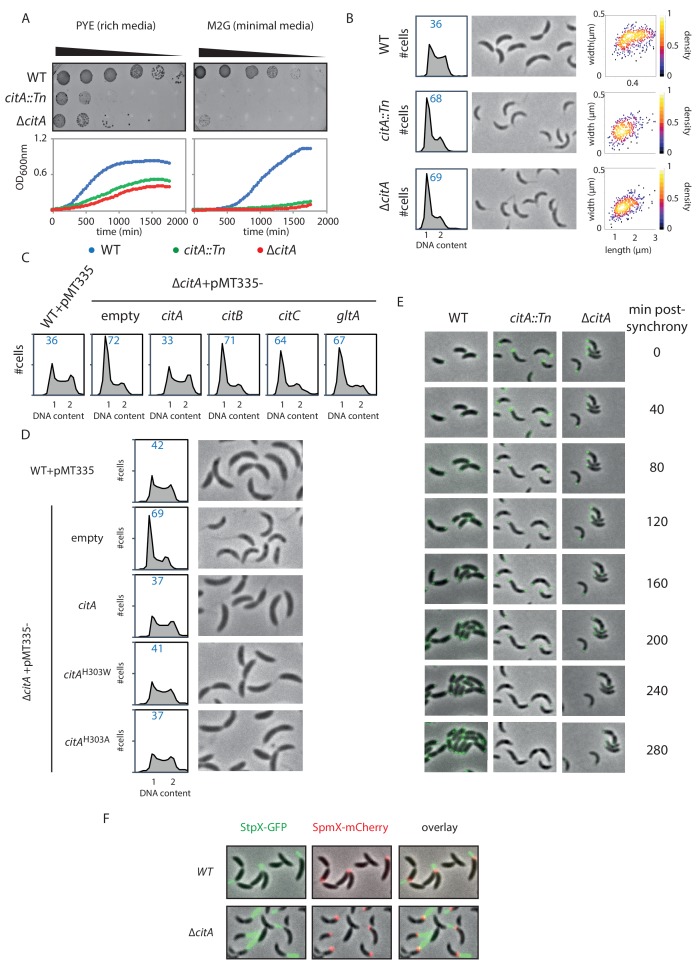
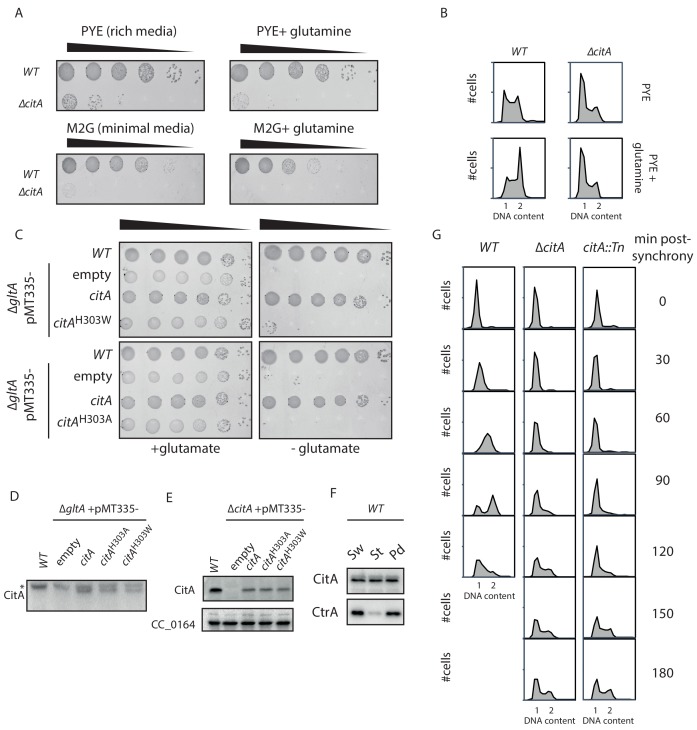
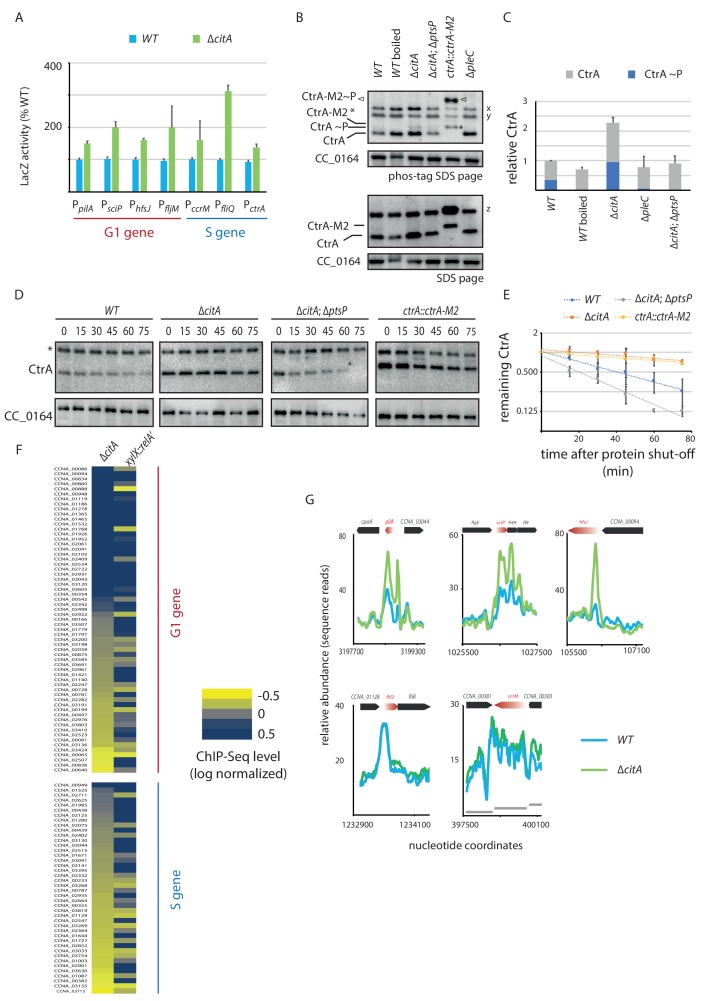
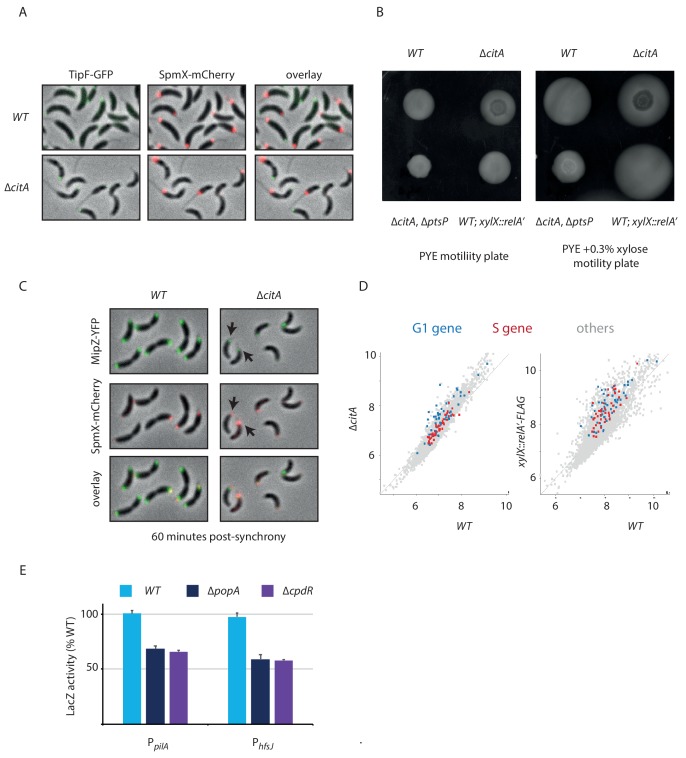
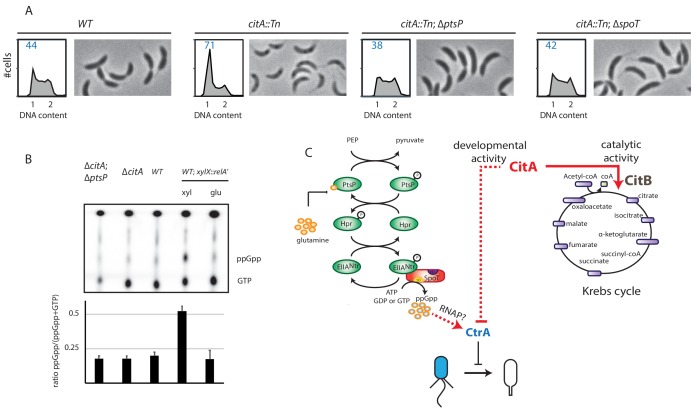
Proliferating cells must coordinate central metabolism with the cell cycle. How central energy metabolism regulates bacterial cell cycle functions is not well understood. Our forward genetic selection unearthed the Krebs cycle enzyme citrate synthase (CitA) as a checkpoint regulator controlling the G→S transition in the polarized alpha-proteobacterium , a model for cell cycle regulation and asymmetric cell division. We find that loss of CitA promotes the accumulation of active CtrA, an essential cell cycle transcriptional regulator that maintains cells in G-phase, provided that the (p)ppGpp alarmone is present. The enzymatic activity of CitA is dispensable for CtrA control, and functional citrate synthase paralogs cannot replace CitA in promoting S-phase entry. Our evidence suggests that CitA was appropriated specifically to function as a moonlighting enzyme to link central energy metabolism with S-phase entry. Control of the G-phase by a central metabolic enzyme may be a common mechanism of cellular regulation.
增殖细胞必须协调中央代谢与细胞周期。中央能量代谢如何调节细菌细胞周期功能还不太清楚。我们的正向遗传选择揭示了三羧酸循环酶柠檬酸合酶(CitA)作为检查点调节剂,控制极性α变形菌中的 G1→S 期转变,该菌是细胞周期调控和不对称细胞分裂的模型。我们发现,CitA 的缺失促进了活性 CtrA 的积累,CtrA 是一种必需的细胞周期转录调节剂,可使细胞保持在 G 期,只要存在(p)ppGpp 警报素。CitA 的酶活性对于 CtrA 的控制是可有可无的,并且功能性柠檬酸合酶同工酶不能替代 CitA 来促进 S 期进入。我们的证据表明,CitA 被专门用作多功能酶,将中央能量代谢与 S 期进入联系起来。中央代谢酶对 G 期的控制可能是细胞调节的一种常见机制。