Faculté de Médecine, EA 75-05 Education, Ethique, Santé, Université François-Rabelais, Tours, France.
Université de Nantes, Faculté d'odontologie, Nantes, France.
PLoS One. 2020 Mar 9;15(3):e0229946. doi: 10.1371/journal.pone.0229946. eCollection 2020.
To identify the differences between persons with schizophrenia (PWS) and general population in France in terms of oral health treatment (tooth scaling, dental treatment and tooth extraction) and the factors associated with these differences.
This retrospective cohort study included PWS identified from a representative sample of 1/97th of the French population (general sample of beneficiaries). PWS were identified from 2014 data by an algorithm that included: F2 diagnostic codes in the register of long-term diseases in 2014 AND {(at least three deliveries of antipsychotics in 2014) OR (F20 diagnostic codes as a main or associated diagnosis in hospital discharge abstracts in 2012 or 2013 (hospital data for medicine, surgery and obstetrics)}. Follow-up dental care was explored for all people over a period of 3 years (2014 to 2017).
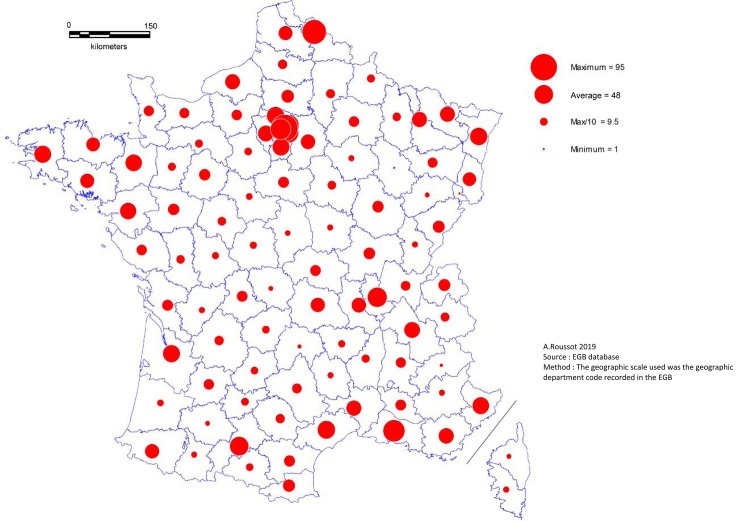
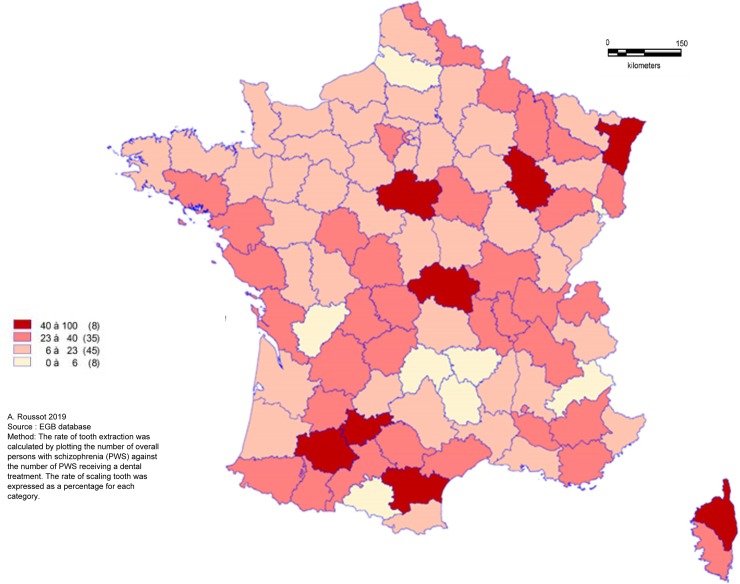
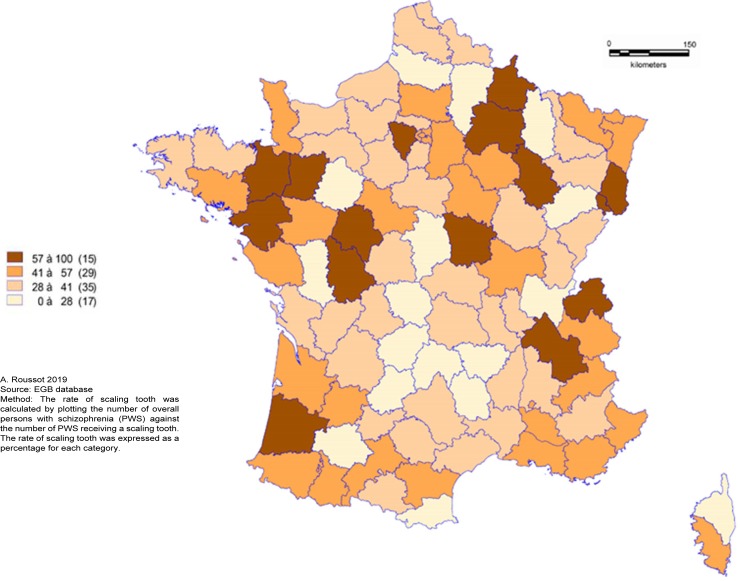
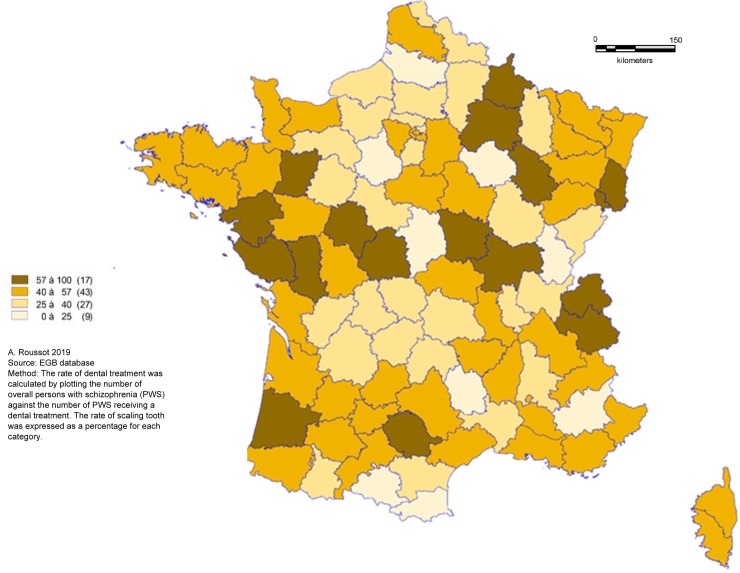
In 2014, 580,219 persons older than 15 years were identified from the 96 metropolitan departments in France; 2,213 were PWS (0.4%). Fewer PWS were found along a diagonal line from north-east to south-west France, and the highest numbers were located in urban departments. PWS were more often male (58.6% vs 48.7%, p<0.001). They were less likely to have had tooth scaling but more likely to have undergone a dental extraction. In one third of departments, more than 50% of PWS had at least one tooth scaling over a three-year period; the rate of dental extraction in these departments ranged from 6 to 23%. Then, a quarter of the departments in which 40 to 100% of PWS had had at least one dental extraction (2/8) presented a rate of tooth scaling ranging from 0 to 28% over the study period.
Compared with the general population, PWS were less likely to have had tooth scaling and dental treatment but more likely to have undergone dental extraction.
在法国,确定精神分裂症患者(PWS)与普通人群在口腔健康治疗(牙齿洁治、牙科治疗和拔牙)方面的差异,并确定与这些差异相关的因素。
这项回顾性队列研究纳入了从法国人口的 1/97 代表样本中识别出的 PWS(一般受益人群)。2014 年,通过一个包含以下内容的算法从 2014 年的数据中识别出 PWS:2014 年长期疾病登记册中的 F2 诊断代码和{(2014 年抗精神病药物至少有三次分娩)或(2012 年或 2013 年医院出院摘要中的 F20 诊断代码作为主要或辅助诊断(医院医学、外科和产科数据)。在 3 年(2014 年至 2017 年)期间,对所有人进行了随访牙科护理。
2014 年,在法国 96 个大都市地区中,从 15 岁以上的人群中识别出 580219 人;2213 人是 PWS(0.4%)。沿着从东北到西南的对角线,发现的 PWS 较少,而数量最多的位于城市部门。PWS 更多为男性(58.6%比 48.7%,p<0.001)。他们进行牙齿洁治的可能性较小,但进行拔牙的可能性较大。在三分之一的部门中,超过 50%的 PWS 在三年内至少进行了一次牙齿洁治;这些部门的拔牙率从 6%到 23%不等。然后,在四分之一的部门中,有 40%至 100%的 PWS 至少进行了一次牙科拔牙(2/8),在研究期间,牙齿洁治率从 0 到 28%不等。
与普通人群相比,PWS 进行牙齿洁治和牙科治疗的可能性较小,但拔牙的可能性较大。