The Pangenomics Group, School of Science, RMIT University, Melbourne 3083, Australia.
Shanghai Center for Plant Stress Biology, Center of Excellence for Molecular Plant Sciences, Chinese Academy of Sciences, Shanghai 200032, China.
Int J Mol Sci. 2020 Mar 5;21(5):1781. doi: 10.3390/ijms21051781.
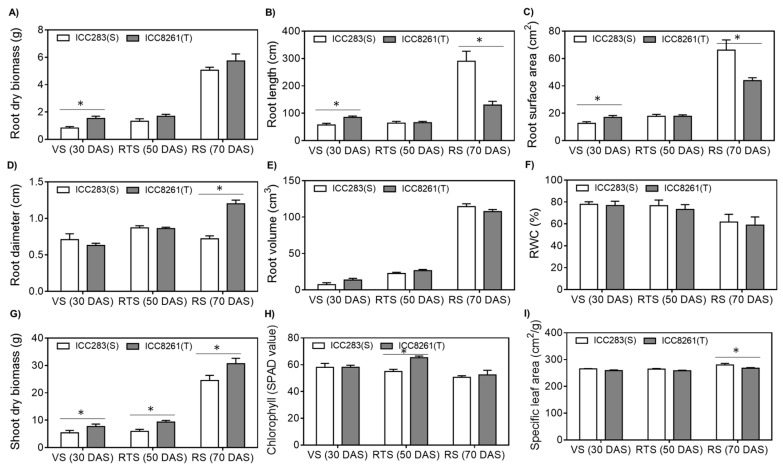
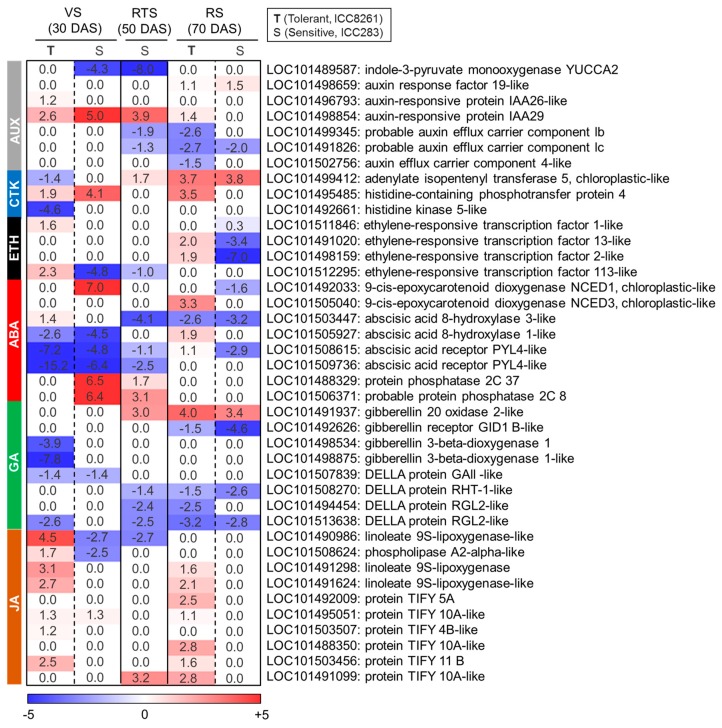
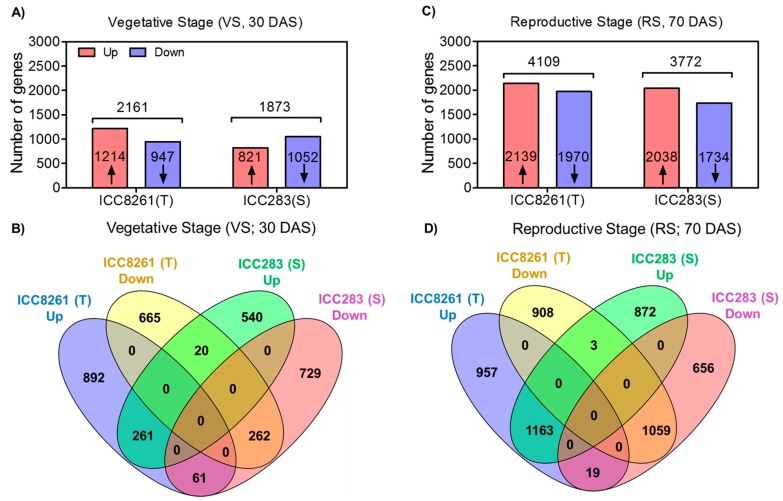
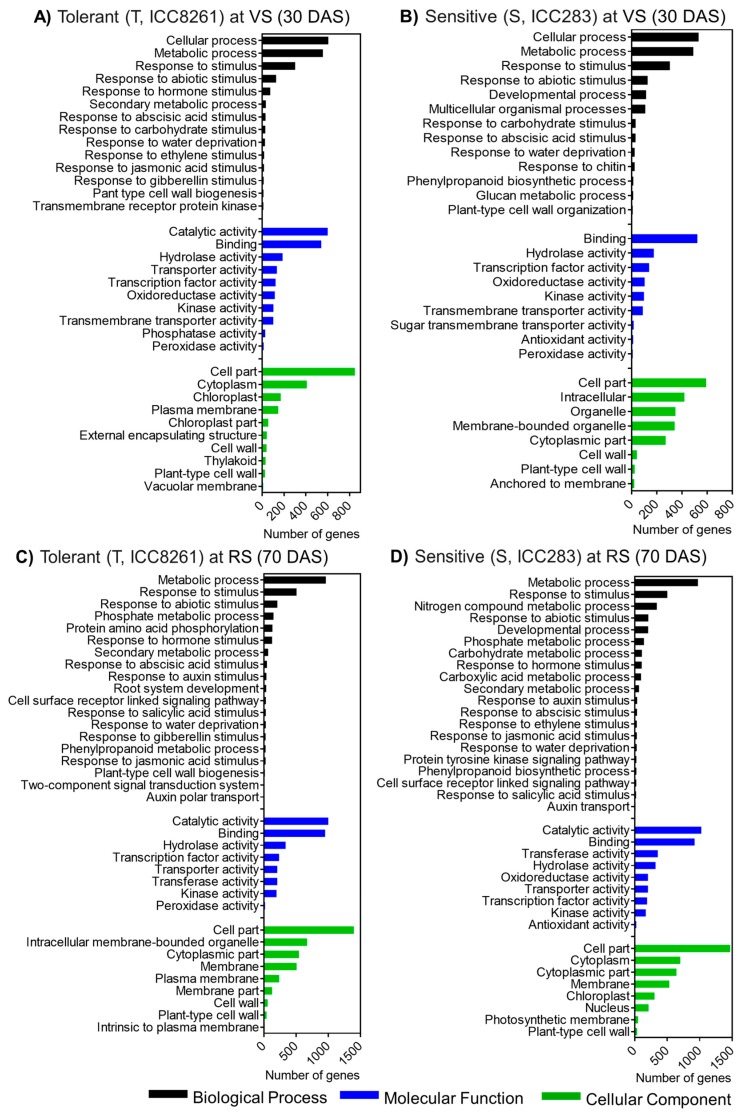
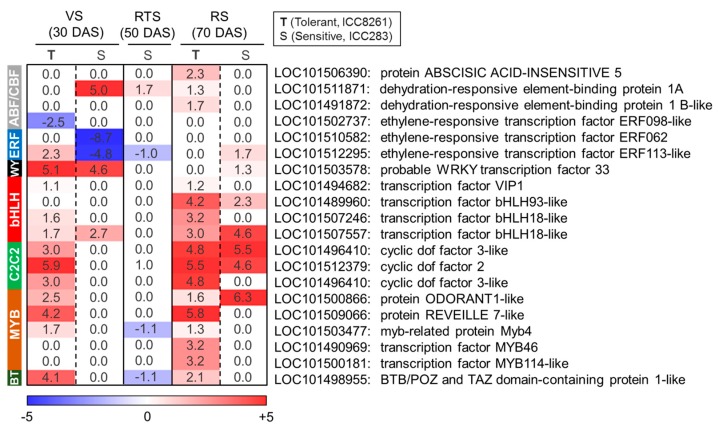
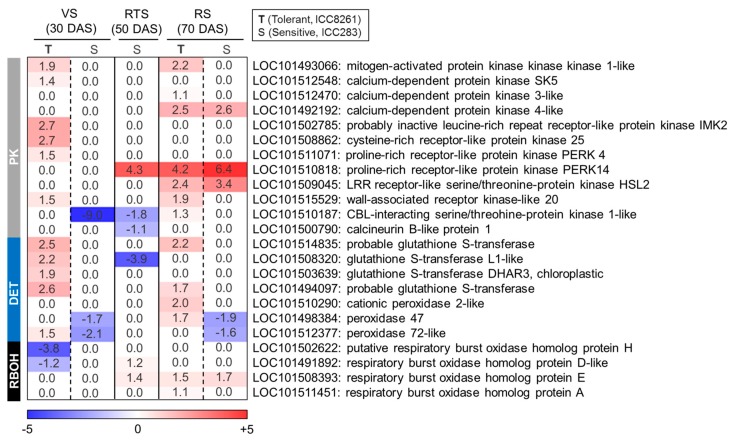
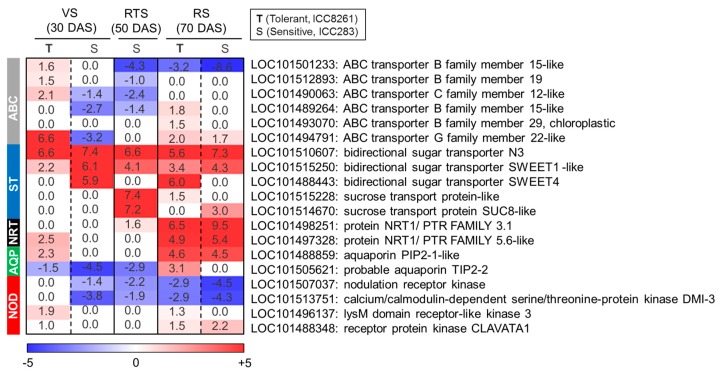
Drought adversely affects crop production across the globe. The root system immensely contributes to water management and the adaptability of plants to drought stress. In this study, drought-induced phenotypic and transcriptomic responses of two contrasting chickpea ( L.) genotypes were compared at the vegetative, reproductive transition, and reproductive stages. At the vegetative stage, drought-tolerant genotype maintained higher root biomass, length, and surface area under drought stress as compared to sensitive genotype. However, at the reproductive stage, root length and surface area of tolerant genotype was lower but displayed higher root diameter than sensitive genotype. The shoot biomass of tolerant genotype was overall higher than the sensitive genotype under drought stress. RNA-seq analysis identified genotype- and developmental-stage specific differentially expressed genes (DEGs) in response to drought stress. At the vegetative stage, a total of 2161 and 1873 DEGs, and at reproductive stage 4109 and 3772 DEGs, were identified in the tolerant and sensitive genotypes, respectively. Gene ontology (GO) analysis revealed enrichment of biological categories related to cellular process, metabolic process, response to stimulus, response to abiotic stress, and response to hormones. Interestingly, the expression of stress-responsive transcription factors, kinases, ROS signaling and scavenging, transporters, root nodulation, and oxylipin biosynthesis genes were robustly upregulated in the tolerant genotype, possibly contributing to drought adaptation. Furthermore, activation/repression of hormone signaling and biosynthesis genes was observed. Overall, this study sheds new insights on drought tolerance mechanisms operating in roots with broader implications for chickpea improvement.
干旱会对全球的作物生产产生不利影响。根系对植物的水分管理和适应干旱胁迫能力有重要贡献。在本研究中,比较了两个具有不同抗旱性的鹰嘴豆(L.)基因型在营养生长、生殖过渡和生殖阶段对干旱胁迫的表型和转录组响应。在营养生长阶段,耐旱基因型在干旱胁迫下保持较高的根生物量、长度和表面积,而敏感基因型则较低。然而,在生殖阶段,耐旱基因型的根长和表面积较低,但根直径比敏感基因型高。在干旱胁迫下,耐旱基因型的地上生物量总体上高于敏感基因型。RNA-seq 分析鉴定了基因型和发育阶段特异性的差异表达基因(DEGs)对干旱胁迫的响应。在营养生长阶段,耐旱和敏感基因型分别鉴定出 2161 个和 1873 个 DEGs,在生殖阶段分别鉴定出 4109 个和 3772 个 DEGs。GO 分析显示,与细胞过程、代谢过程、对刺激的反应、对非生物胁迫的反应和对激素的反应相关的生物学类别富集。有趣的是,在耐旱基因型中,应激响应转录因子、激酶、ROS 信号和清除、转运蛋白、根瘤和氧化脂生物合成基因的表达被强烈上调,这可能有助于其适应干旱。此外,还观察到激素信号和生物合成基因的激活/抑制。总之,本研究为根系中干旱耐受性机制提供了新的见解,对鹰嘴豆的改良具有更广泛的意义。