Yeom Jiah, Ma Seongho, Lim Young-Hee
Department of Integrated Biomedical and Life Sciences, Graduate School, Korea University, Seoul 02841, Korea.
Department of Public Health Sciences (Brain Korea 21 PLUS program), Graduate School, Korea University, Seoul 02841, Korea.
Antioxidants (Basel). 2020 Mar 5;9(3):214. doi: 10.3390/antiox9030214.
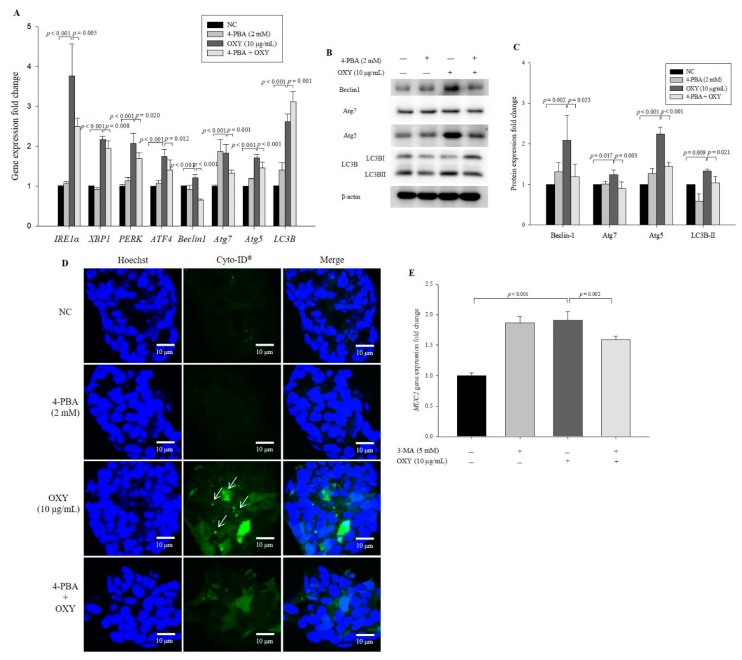
Autophagy is a cell protection system invoked to eliminate the damaged organelles and misfolded proteins that induce various stresses, including endoplasmic reticulum (ER) stress. Autophagy can control mucin secretion in goblet cells. Oxyresveratrol (OXY), an antioxidant, stimulates expression of MUC2. Thus, we investigated the effect of OXY on autophagy and found that OXY-induced autophagy stimulates MUC2 expression in human intestinal goblet cells.
Autophagy-related genes and proteins were examined by quantitative real-time PCR (qPCR) and Western blotting, respectively. Autophagy was assessed by immunocytochemistry (ICC). To analyze the protein expression profiles of OXY-treated LS 174T goblet cells, two-dimensional electrophoresis (2DE) and peptide mass fingerprinting (PMF) were performed. MUC2 expression in cells was evaluated by ICC.
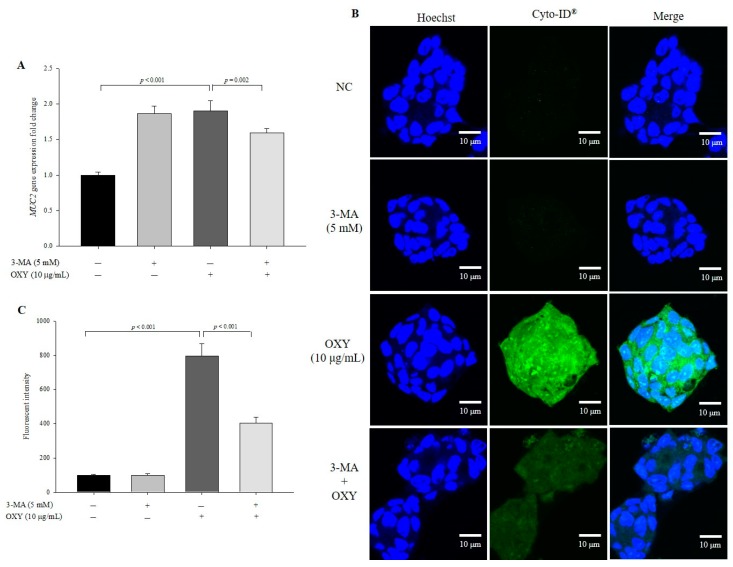
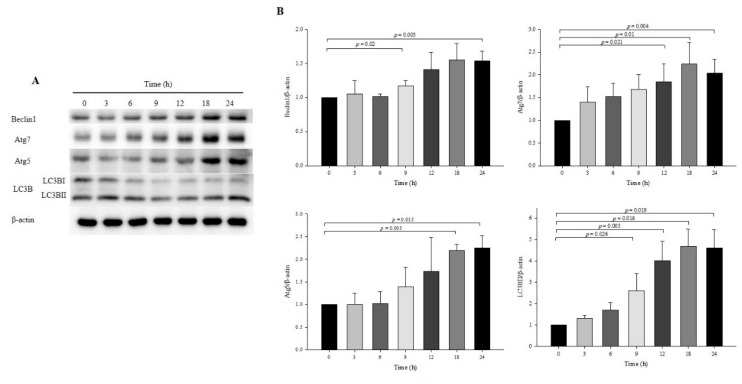
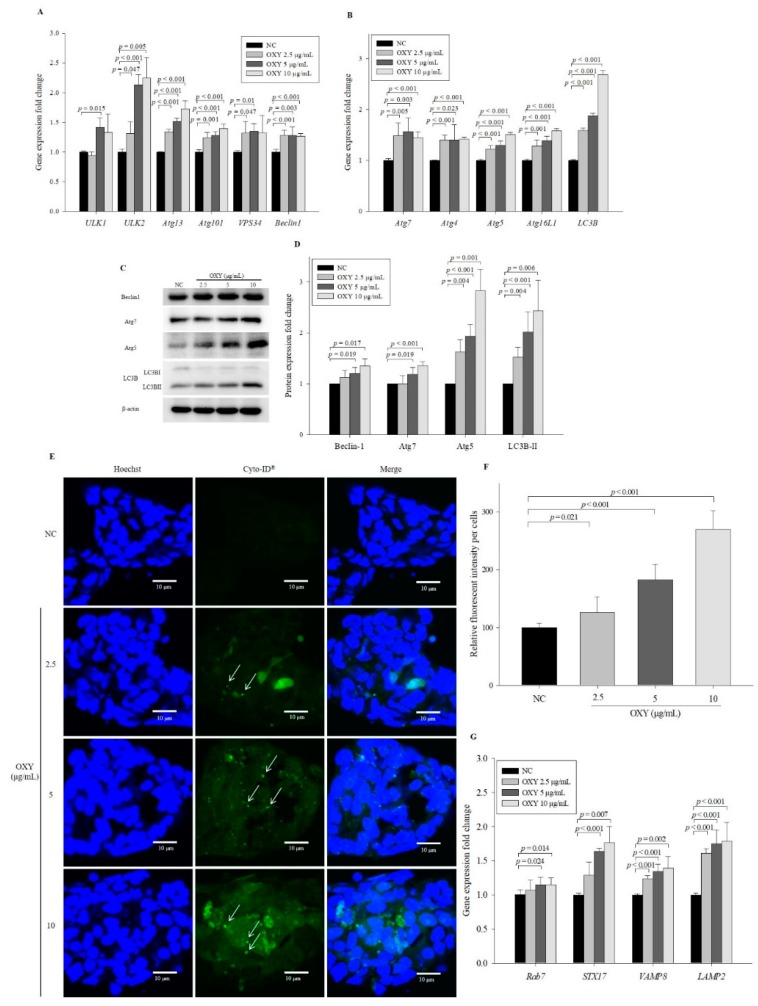
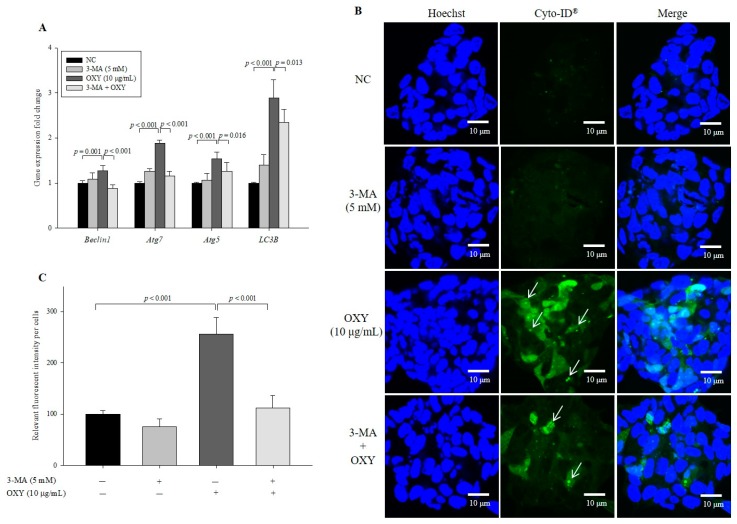
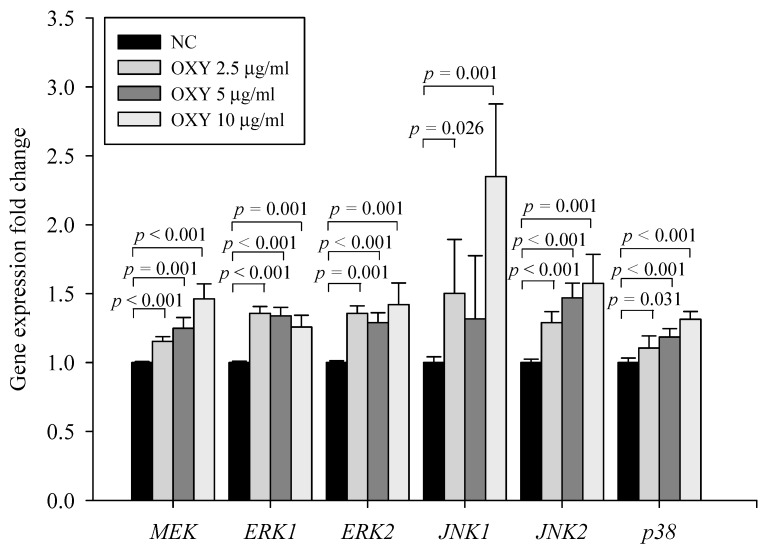
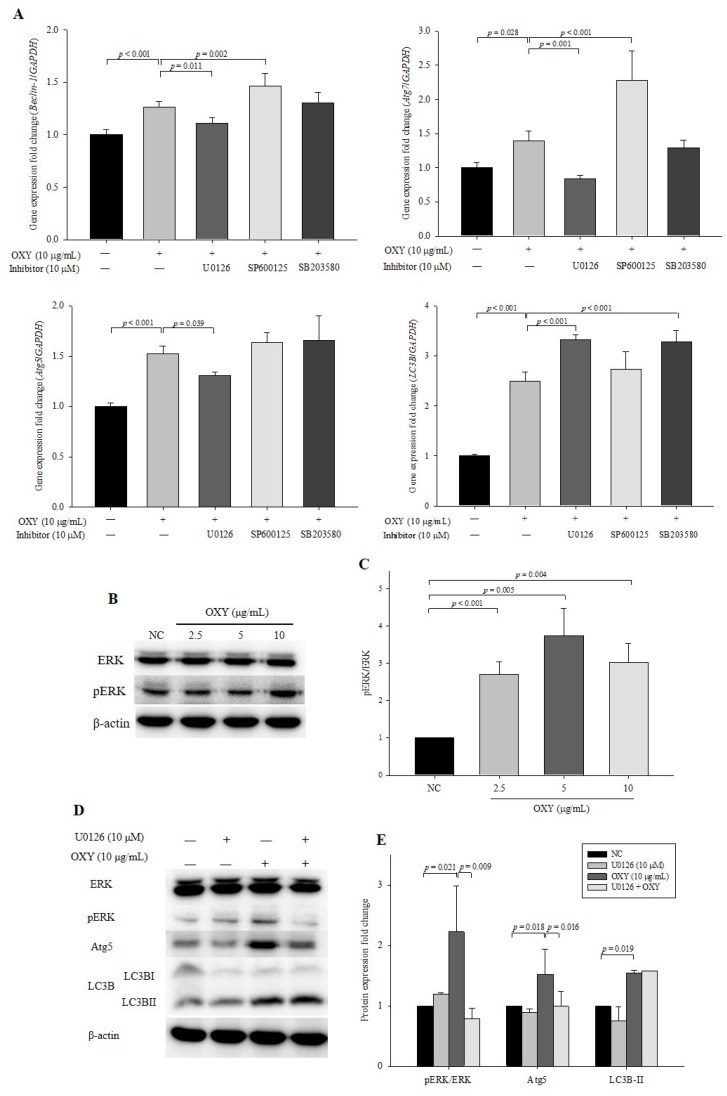
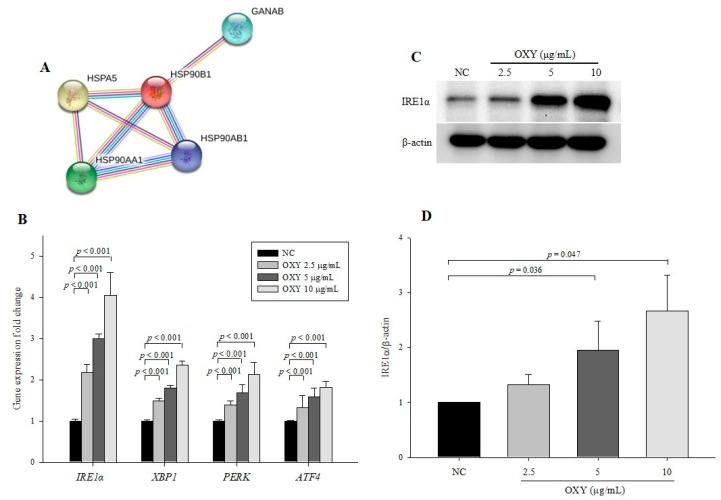
OXY significantly increased the expression levels of genes related to autophagy induction, and activated phagosome elongation resulted in the formation of autophagosomes. OXY also activated the ER stress signaling pathway and promoted MUC2 synthesis, which was inhibited by treatment with an autophagy inhibitor.
OXY induces autophagy via the ER stress signaling pathway, and OXY-induced autophagy increases MUC2 production in intestinal goblet cells.
自噬是一种细胞保护系统,用于清除受损细胞器和错误折叠的蛋白质,这些物质会引发包括内质网(ER)应激在内的各种应激反应。自噬可以控制杯状细胞中的粘蛋白分泌。氧化白藜芦醇(OXY)作为一种抗氧化剂,可刺激MUC2的表达。因此,我们研究了OXY对自噬的影响,发现OXY诱导的自噬可刺激人肠道杯状细胞中MUC2的表达。
分别通过定量实时PCR(qPCR)和蛋白质免疫印迹法检测自噬相关基因和蛋白质。通过免疫细胞化学(ICC)评估自噬。为了分析经OXY处理的LS 174T杯状细胞的蛋白质表达谱,进行了二维电泳(2DE)和肽质量指纹图谱(PMF)分析。通过ICC评估细胞中MUC2的表达。
OXY显著提高了与自噬诱导相关基因的表达水平,并激活吞噬体延伸导致自噬体形成。OXY还激活了ER应激信号通路并促进MUC2的合成,而自噬抑制剂处理可抑制这种合成。
OXY通过ER应激信号通路诱导自噬,且OXY诱导的自噬增加了肠道杯状细胞中MUC2的产生。