Connected Waters Initiative Research Centre, UNSW Sydney, Sydney, NSW, 2052, Australia.
School of Biological, Earth and Environmental Sciences, UNSW Sydney, Sydney, NSW, 2052, Australia.
Nat Commun. 2020 Mar 9;11(1):1279. doi: 10.1038/s41467-020-14946-1.
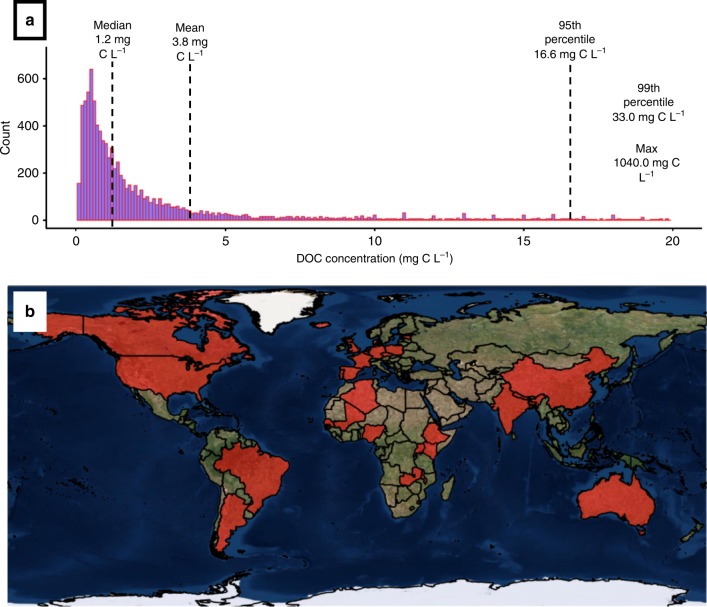
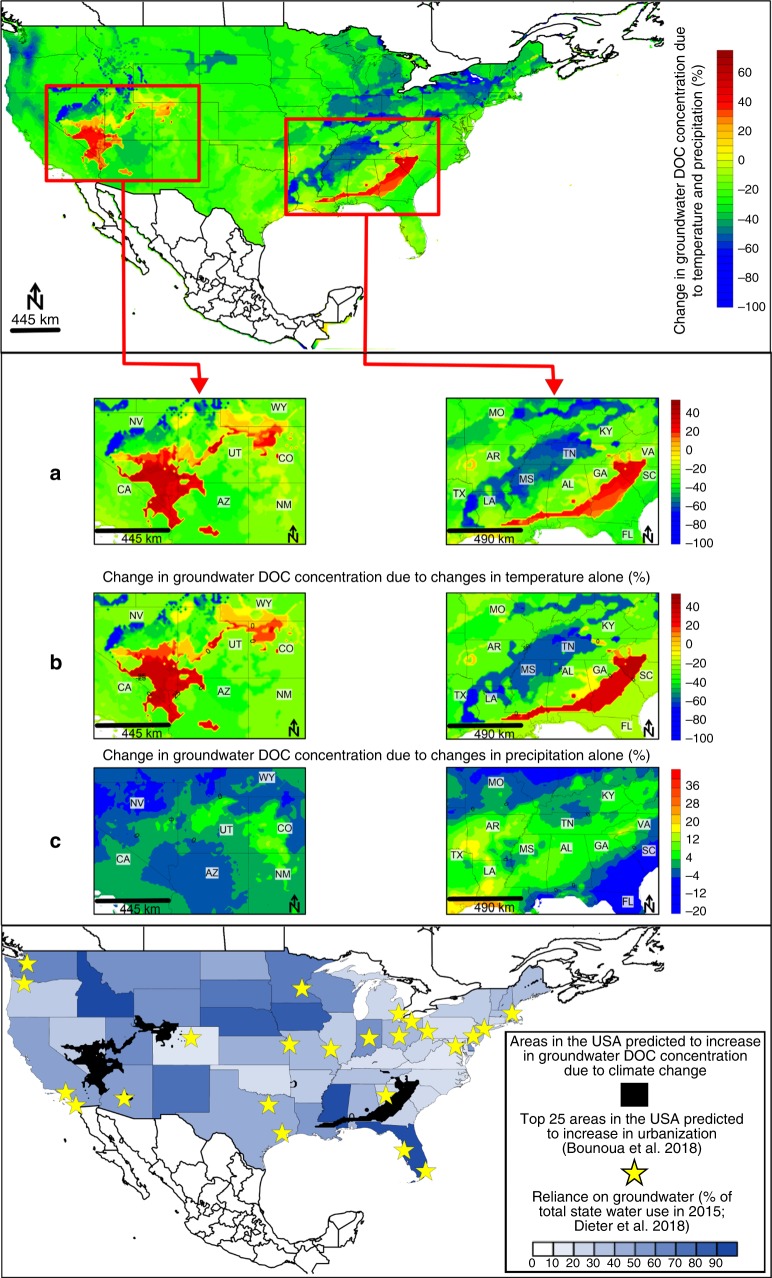
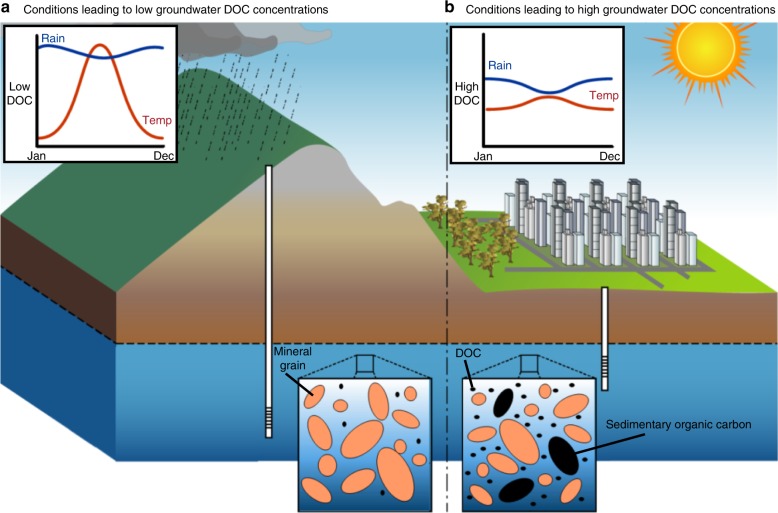
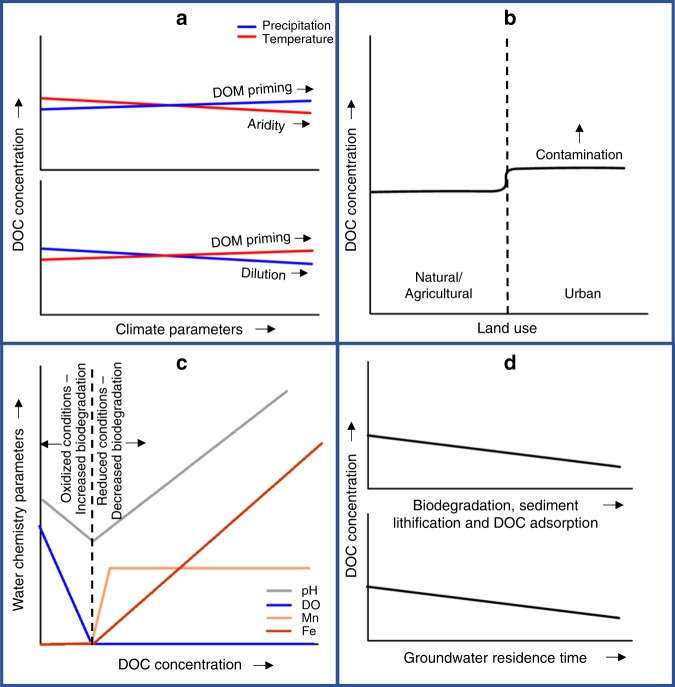
Climate change and urbanization can increase pressures on groundwater resources, but little is known about how groundwater quality will change. Here, we use a global synthesis (n = 9,404) to reveal the drivers of dissolved organic carbon (DOC), which is an important component of water chemistry and substrate for microorganisms that control biogeochemical reactions. Dissolved inorganic chemistry, local climate and land use explained ~ 31% of observed variability in groundwater DOC, whilst aquifer age explained an additional 16%. We identify a 19% increase in DOC associated with urban land cover. We predict major groundwater DOC increases following changes in precipitation and temperature in key areas relying on groundwater. Climate change and conversion of natural or agricultural areas to urban areas will decrease groundwater quality and increase water treatment costs, compounding existing constraints on groundwater resources.
气候变化和城市化会增加对地下水资源的压力,但人们对于地下水水质将会如何变化知之甚少。在这里,我们利用全球综合数据集(n=9404)揭示了溶解有机碳(DOC)的驱动因素,DOC 是水化学的重要组成部分,也是控制生物地球化学反应的微生物的基质。溶解无机物化学、当地气候和土地利用解释了地下水 DOC 观测到的变异性的约 31%,而含水层年龄则解释了另外的 16%。我们发现与城市土地覆盖相关的 DOC 增加了 19%。我们预测,在依赖地下水的关键地区,降水和温度的变化将导致地下水 DOC 大量增加。气候变化以及将自然或农业地区转变为城市地区的行为将降低地下水质量并增加水处理成本,这使得地下水资源的现有限制更加复杂。