Procter & Gamble, Mason, OH.
German Federal Institute for Risk Assessment (BfR), Department of Chemical and Product Safety, Berlin, Germany.
Mutagenesis. 2021 Apr 28;36(1):19-35. doi: 10.1093/mutage/geaa009.
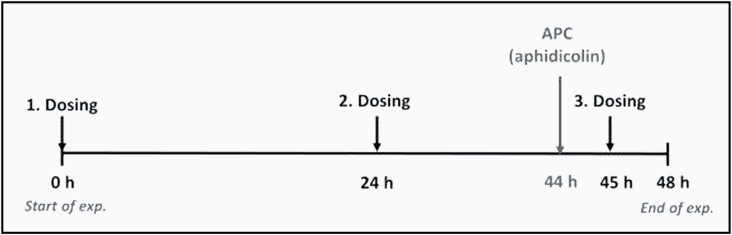
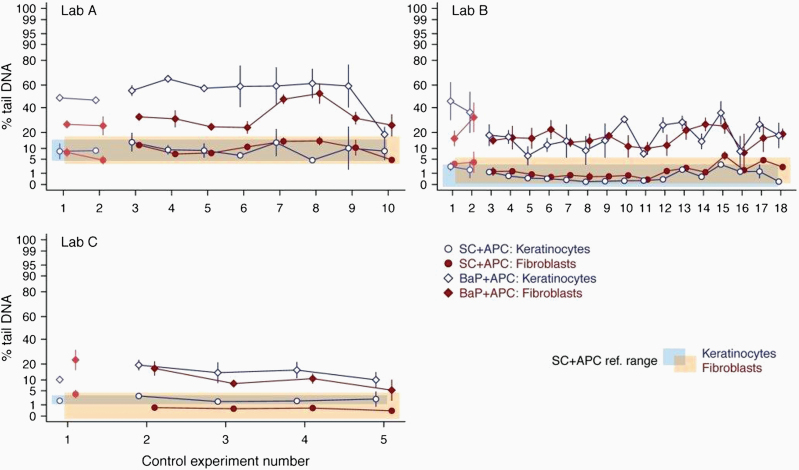
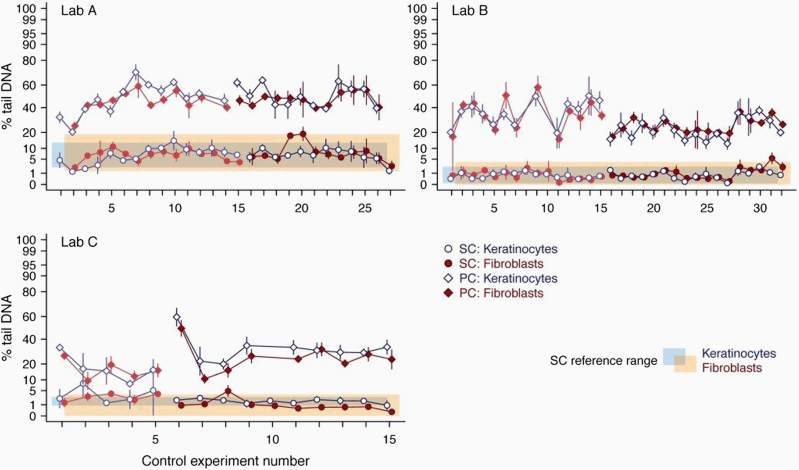
As part of the safety assessment process, all industrial sectors employ genotoxicity test batteries, starting with well-established in vitro assays. However, these batteries have limited predictive capacity for the in vivo situation, which may result in unnecessary follow-up in vivo testing or the loss of promising substances where animal tests are prohibited or not desired. To address this, a project involving regulators, academia and industry was established to develop and validate in vitro human skin-based genotoxicity assays for topically exposed substances, such as cosmetics ingredients. Here, we describe the validation of the 3D reconstructed skin (RS) Comet assay. In this multicenter study, chemicals were applied topically three times to the skin over 48 h. Isolated keratinocytes and fibroblasts were transferred to slides before electrophoresis and the resulting comet formation was recorded as % tail DNA. Before decoding, results of the validation exercise for 32 substances were evaluated by an independent statistician. There was a high predictive capacity of this assay when compared to in vivo outcomes, with a sensitivity of 77 (80)%, a specificity of 88 (97)% and an overall accuracy of 83 (92)%. The numbers reflect the calls of the performing laboratories in the coded phase, whereas those in parenthesis reflect calls according to the agreed evaluation criteria. Intra- and inter-laboratory reproducibility was also very good, with a concordance of 93 and 88%, respectively. These results generated with the Phenion® Full-Thickness skin model demonstrate its suitability for this assay, with reproducibly low background DNA damage and sufficient metabolic capacity to activate pro-mutagens. The validation outcome supports the use of the RS Comet assay to follow up positive results from standard in vitro genotoxicity assays when the expected route of exposure is dermal. Based on the available data, the assay was accepted recently into the OECD test guideline development program.
作为安全性评估过程的一部分,所有工业领域都采用遗传毒性测试组合,从成熟的体外检测开始。然而,这些组合对体内情况的预测能力有限,这可能导致不必要的后续体内测试,或者失去那些禁止或不希望进行动物测试的有前途的物质。为了解决这个问题,一个涉及监管机构、学术界和工业界的项目成立了,旨在开发和验证用于局部暴露物质(如化妆品成分)的体外人皮肤遗传毒性检测。在这里,我们描述了 3D 重建皮肤(RS)彗星检测的验证。在这项多中心研究中,化学物质在 48 小时内三次局部应用于皮肤。分离的角质形成细胞和成纤维细胞在电泳前转移到载玻片上,然后记录彗星形成的尾巴 DNA 百分比。在解码之前,由独立的统计学家评估了 32 种物质的验证结果。与体内结果相比,该检测具有很高的预测能力,其灵敏度为 77(80)%,特异性为 88(97)%,总准确率为 83(92)%。这些数字反映了在编码阶段执行实验室的结果,而括号内的数字则反映了根据商定的评估标准的结果。实验室内部和实验室之间的重现性也非常好,分别为 93%和 88%。使用 Phenion®全厚度皮肤模型获得的这些结果表明,该模型适用于该检测,具有可重复性低的背景 DNA 损伤和足够的代谢能力来激活前诱变剂。验证结果支持在预期暴露途径为皮肤时,将 RS 彗星检测用于跟进标准体外遗传毒性检测中的阳性结果。基于现有的数据,该检测最近被接受进入 OECD 测试指南开发计划。