Procter & Gamble Co., Mason, OH, USA.
Cosmetics Europe, Brussels, Belgium.
Mutagenesis. 2021 Apr 28;36(1):1-17. doi: 10.1093/mutage/geaa035.
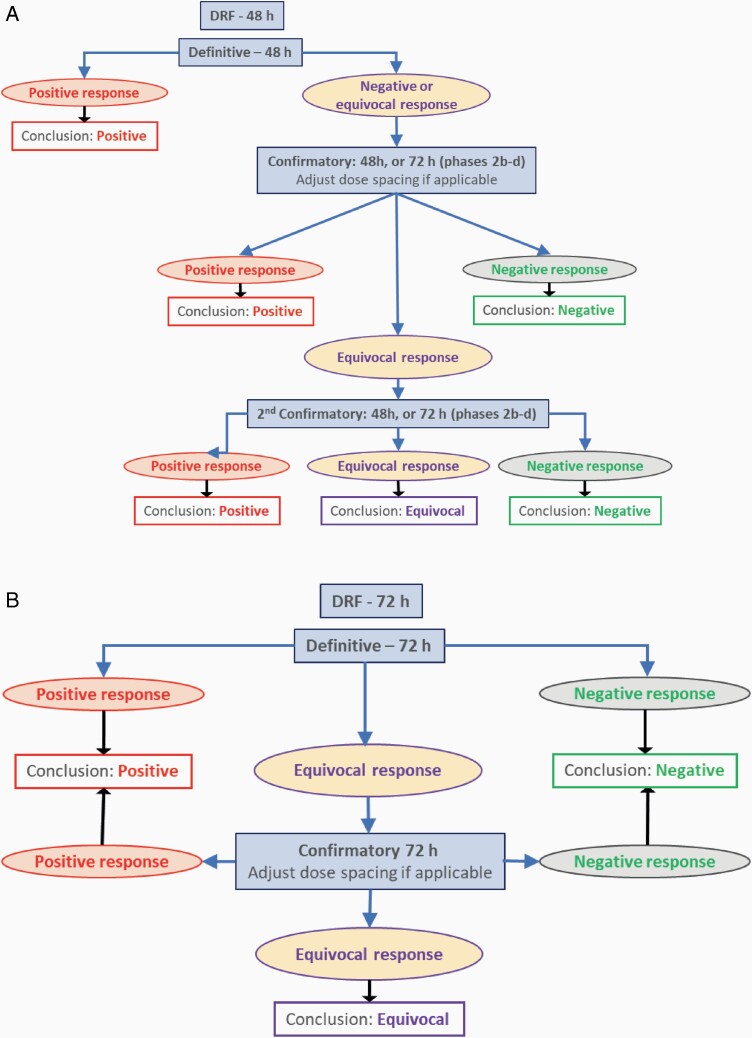
In vitro test batteries have become the standard approach to determine the genotoxic potential of substances of interest across industry sectors. While useful for hazard identification, standard in vitro genotoxicity assays in 2D cell cultures have limited capability to predict in vivo outcomes and may trigger unnecessary follow-up animal studies or the loss of promising substances where animal tests are prohibited or not desired. To address this problem, a team of regulatory, academia and industry scientists was established to develop and validate 3D in vitro human skin-based genotoxicity assays for use in testing substances with primarily topical exposure. Validation of the reconstructed human skin micronucleus (RSMN) assay in MatTek Epi-200™ skin models involved testing 43 coded chemicals selected by independent experts, in four US/European laboratories. The results were analysed by an independent statistician according to predefined criteria. The RSMN assay showed a reproducibly low background micronucleus frequency and exhibited sufficient capacity to metabolise pro-mutagens. The overall RSMN accuracy when compared to in vivo genotoxicity outcomes was 80%, with a sensitivity of 75% and a specificity of 84%, and the between- and within-laboratory reproducibility was 77 and 84%, respectively. A protocol involving a 72-h exposure showed increased sensitivity in detecting true positive chemicals compared to a 48-h exposure. An analysis of a test strategy using the RSMN assay as a follow-up test for substances positive in standard in vitro clastogenicity/aneugenicity assays and a reconstructed skin Comet assay for substances with positive results in standard gene mutation assays results in a sensitivity of 89%. Based on these results, the RSMN assay is considered sufficiently validated to establish it as a 'tier 2' assay for dermally exposed compounds and was recently accepted into the OECD's test guideline development program.
体外测试电池已成为跨行业确定感兴趣物质遗传毒性潜力的标准方法。虽然标准的 2D 细胞培养体外遗传毒性检测对于危害识别很有用,但它们预测体内结果的能力有限,并且可能会触发不必要的后续动物研究,或者导致那些禁止或不希望进行动物测试的有前途的物质流失。为了解决这个问题,一个由监管机构、学术界和行业科学家组成的团队成立了,旨在开发和验证用于测试主要局部暴露物质的 3D 体外人皮肤遗传毒性检测方法。在 MatTek Epi-200™皮肤模型中验证重建人类皮肤微核(RSMN)检测法涉及到对 43 种由独立专家选择的编码化学品进行测试,这 43 种化学品在四个美国/欧洲实验室中进行测试。结果由独立的统计学家根据预定义的标准进行分析。RSMN 检测法显示出可重复的低背景微核频率,并表现出足够的代谢前诱变剂的能力。与体内遗传毒性结果相比,RSMN 检测法的整体准确性为 80%,灵敏度为 75%,特异性为 84%,实验室间和实验室内部的重现性分别为 77%和 84%。与 48 小时暴露相比,为期 72 小时的暴露显示出检测真正阳性化学物质的更高灵敏度。对使用 RSMN 检测法作为标准体外断裂/致畸性检测阳性物质的后续检测以及对标准基因突变检测阳性物质的重建皮肤彗星检测法的测试策略进行分析,其灵敏度为 89%。基于这些结果,RSMN 检测法被认为足够有效,可将其确立为皮肤暴露化合物的“第 2 层”检测法,并最近被纳入 OECD 的测试指南开发计划。