Lee Seul Gee, Lee Seung Jun, Lee Jung Jae, Kim Jung Sun, Lee Oh Hyun, Kim Choong Ki, Kim Darae, Lee Yong Ho, Oh Jaewon, Park Seil, Jeon Ok Hee, Hong Sung Jin, Ahn Chul Min, Kim Byeong Keuk, Ko Young Guk, Choi Donghoon, Hong Myeong Ki, Jang Yangsoo
Yonsei Cardiovascular Research Institute, Yonsei University College of Medicine, Seoul, Korea.
Cardiology Division, Severance Cardiovascular Hospital, Yonsei University College of Medicine, Seoul, Korea.
Korean Circ J. 2020 May;50(5):443-457. doi: 10.4070/kcj.2019.0296. Epub 2020 Feb 12.
We sought to investigate an anti-atherosclerotic and anti-inflammatory effect of sodium-glucose cotransporter-2 (SGLT-2) inhibitors in normoglycemic atherosclerotic rabbit model.
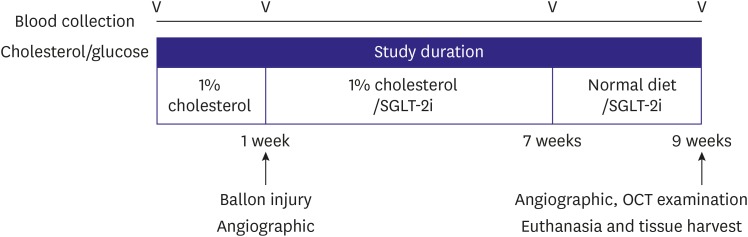
Male New Zealand white rabbits (n=26) were fed with a 1% high-cholesterol diet for 7 weeks followed by normal diet for 2 weeks. After balloon catheter injury, the rabbits were administered with the Dapagliflozin (1mg/kg/day) or control-medium for 8 weeks (n=13 for each group). All lesions were assessed with angiography, optical coherence tomography (OCT), and histological assessment.
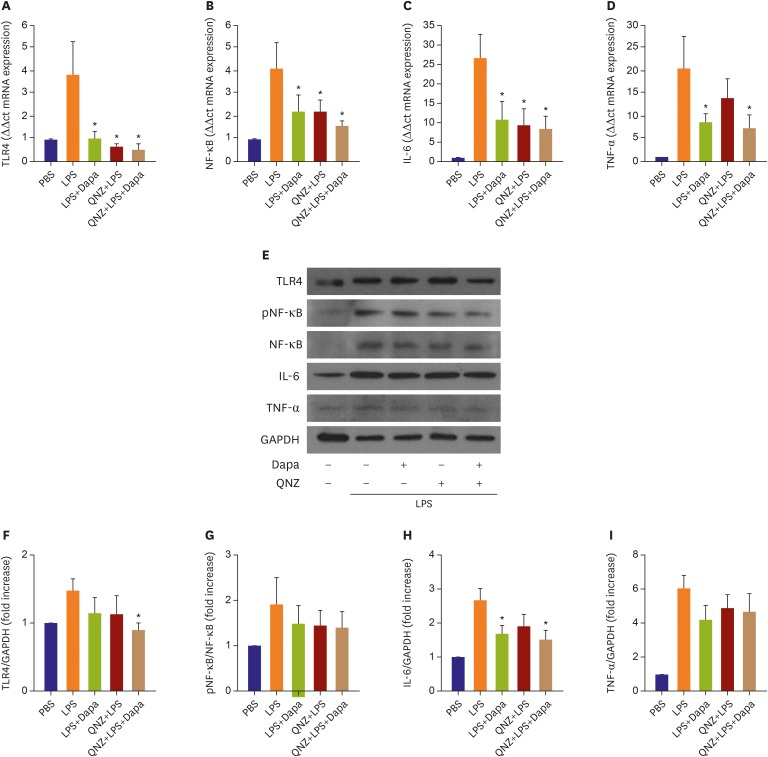
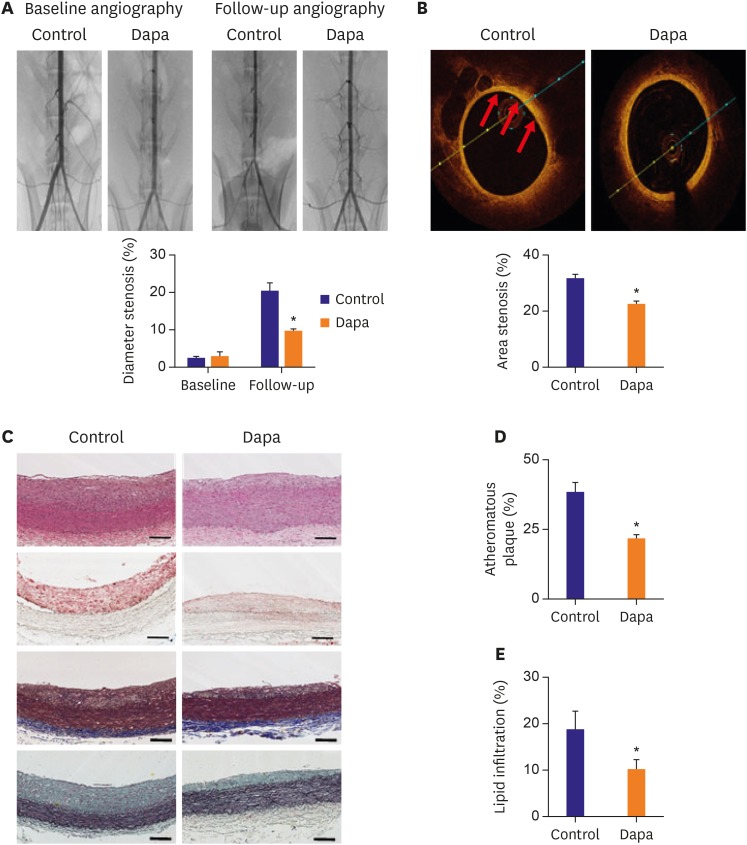
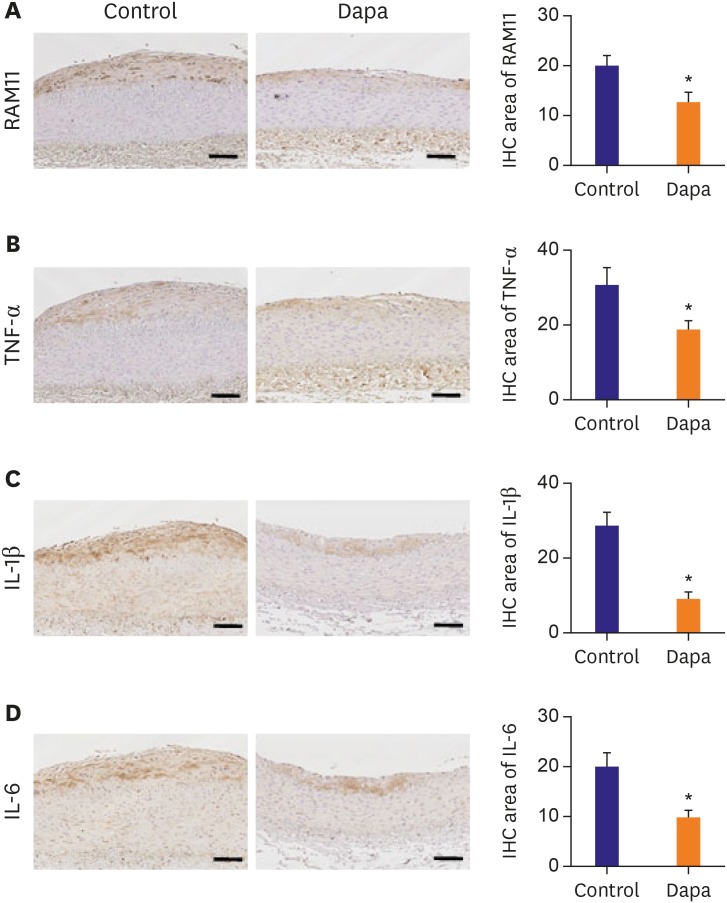
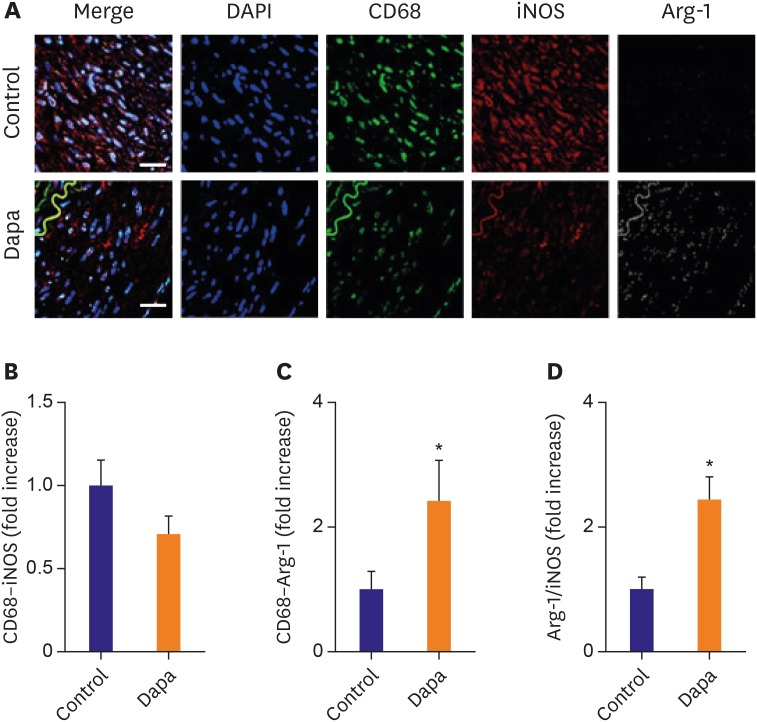
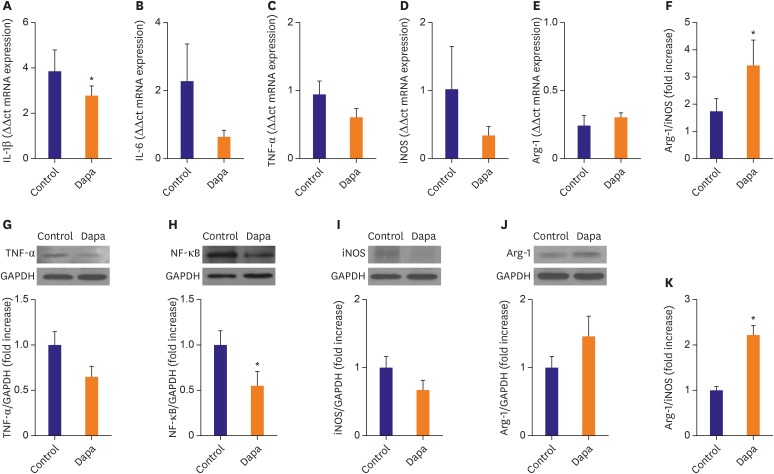
Atheroma burden (38.51±3.16% vs. 21.91±1.22%, p<0.01) and lipid accumulation (18.90±3.63% vs. 10.20±2.03%, p=0.047) was significantly decreased by SGLT-2 inhibitor treatment. The SGLT-2 inhibitor group showed lower macrophage infiltration (20.23±1.89% vs. 12.72±1.95%, p=0.01) as well as tumor necrosis factor (TNF)-α expression (31.17±4.40% vs. 19.47±2.10%, p=0.025). Relative area of inducible nitric oxide synthase⁺ macrophages was tended to be lower in the SGLT-2 inhibitor-treated group (1.00±0.16% vs. 0.71±0.10%, p=0.13), while relative proportion of Arg1⁺ macrophage was markedly increased (1.00±0.27% vs. 2.43±0.64%, p=0.04). As a result, progression of atherosclerosis was markedly attenuated in SGLT-2 inhibitor treated group (OCT area stenosis, 32.13±1.20% vs. 22.77±0.88%, p<0.01). Mechanistically, SGLT-2 treatment mitigated the inflammatory responses in macrophage. Especially, Toll-like receptor 4/nuclear factor-kappa B signaling pathway, and their downstream effectors such as interleukin-6 and TNF-α were markedly suppressed by SGLT-2 inhibitor treatment.
These results together suggest that SGLT-2 inhibitor exerts an anti-atherosclerotic effect through favorable modulation of inflammatory response as well as macrophage characteristics in non-diabetic situation.
我们试图在血糖正常的动脉粥样硬化兔模型中研究钠-葡萄糖协同转运蛋白2(SGLT-2)抑制剂的抗动脉粥样硬化和抗炎作用。
雄性新西兰白兔(n = 26)先喂食1%高胆固醇饮食7周,随后正常饮食2周。球囊导管损伤后,给兔子分别给予达格列净(1mg/kg/天)或对照介质,持续8周(每组n = 13)。所有病变均通过血管造影、光学相干断层扫描(OCT)和组织学评估。
SGLT-2抑制剂治疗可显著降低动脉粥样硬化斑块负担(38.51±3.16% 对 21.91±1.22%,p<0.01)和脂质蓄积(18.90±3.63% 对 10.20±2.03%,p = 0.047)。SGLT-2抑制剂组巨噬细胞浸润较低(20.23±1.89% 对 12.72±1.95%,p = 0.01),肿瘤坏死因子(TNF)-α表达也较低(31.17±4.40% 对 19.47±2.10%,p = 0.025)。SGLT-2抑制剂治疗组诱导型一氧化氮合酶⁺巨噬细胞的相对面积有降低趋势(1.00±0.16% 对 0.71±0.10%,p = 0.13),而精氨酸酶1⁺巨噬细胞的相对比例显著增加(1.00±0.27% 对 2.43±0.64%,p = 0.04)。结果,SGLT-2抑制剂治疗组动脉粥样硬化进展明显减轻(OCT面积狭窄,32.13±1.20% 对 22.77±0.88%,p<0.01)。机制上,SGLT-2治疗减轻了巨噬细胞中的炎症反应。特别是,Toll样受体4/核因子-κB信号通路及其下游效应分子如白细胞介素-6和TNF-α被SGLT-2抑制剂治疗显著抑制。
这些结果共同表明,SGLT-2抑制剂在非糖尿病情况下通过有利地调节炎症反应以及巨噬细胞特性发挥抗动脉粥样硬化作用。