Santos Silva Marta, Rodrigues-Pinto Ricardo, Barros Luís H, Sousa Arnaldo, Muras José
Departamento de Ortopedia, Centro Hospitalar do Porto, Hospital de Santo António, Porto, Portugal.
Instituto de Ciências Biomédicas Abel Salazar, Porto, Portugal.
Rev Bras Ortop (Sao Paulo). 2020 Feb;55(1):40-47. doi: 10.1055/s-0039-1700815. Epub 2020 Mar 2.
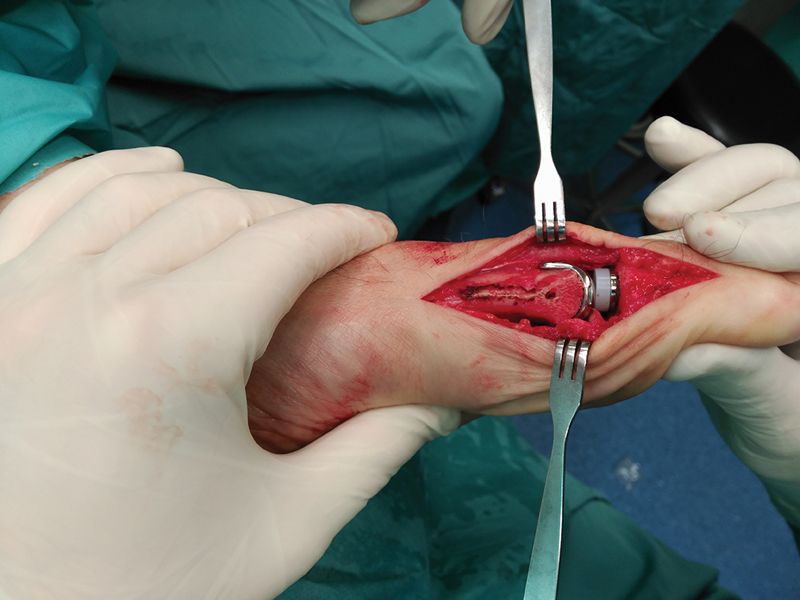
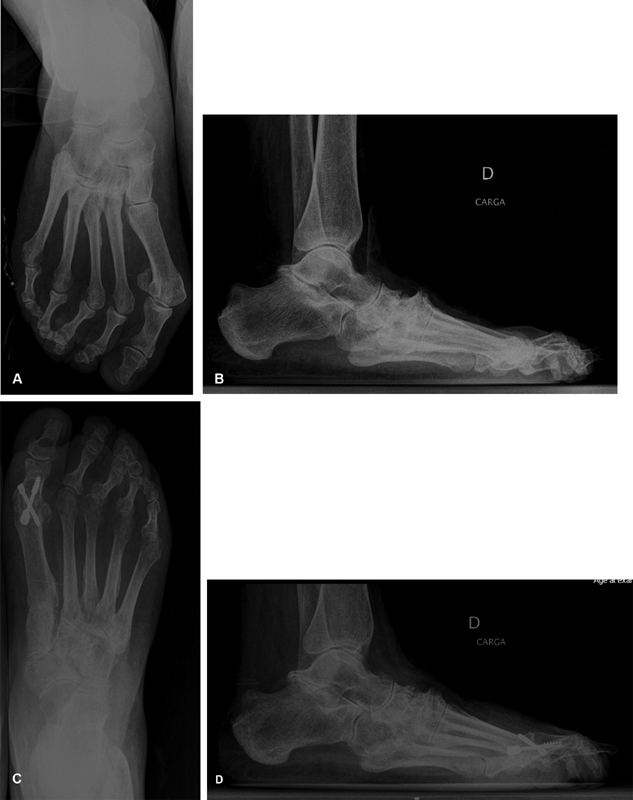
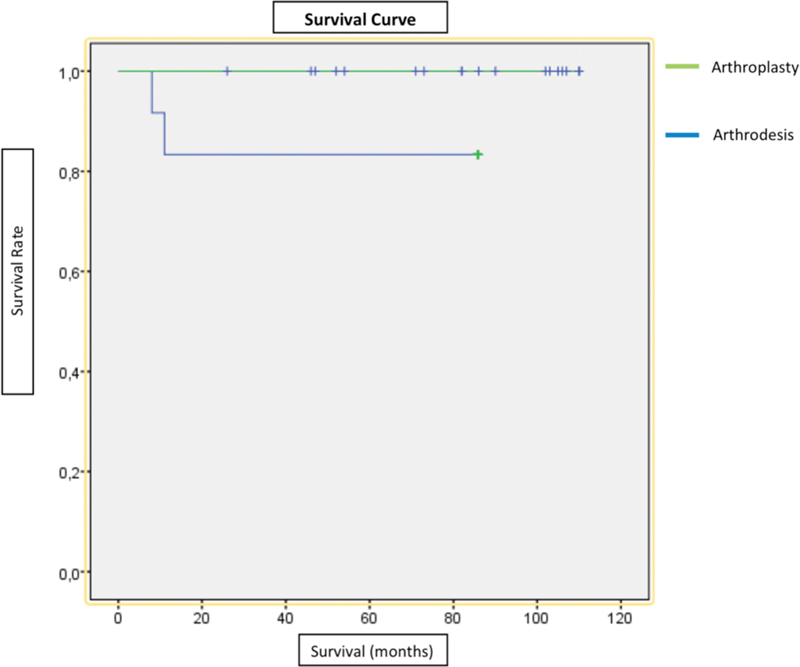
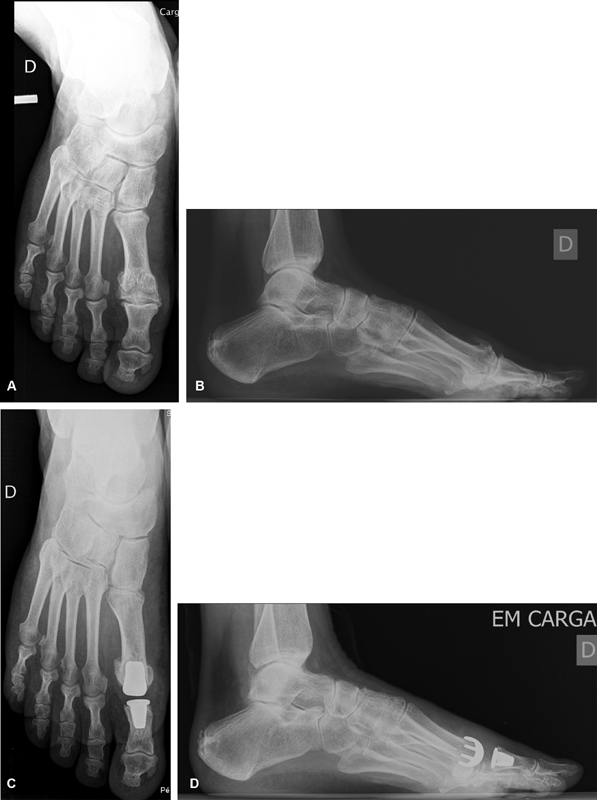
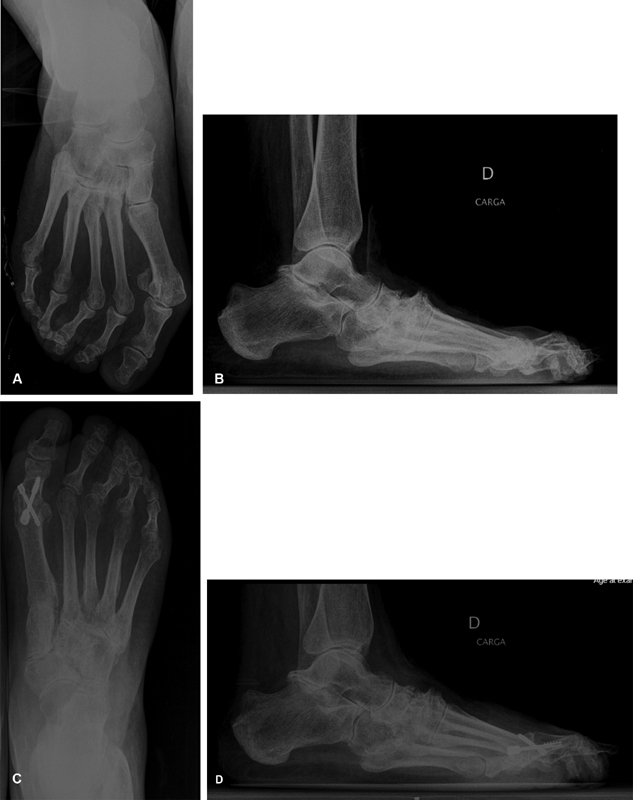
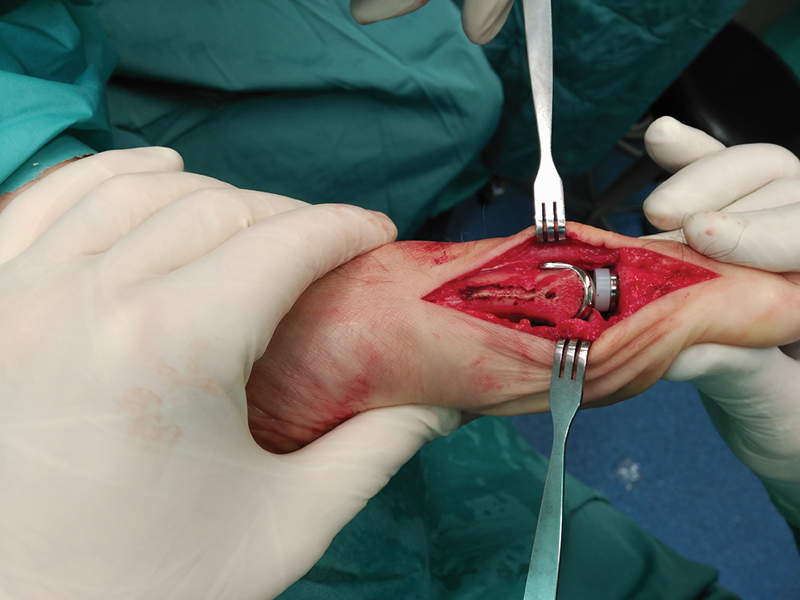
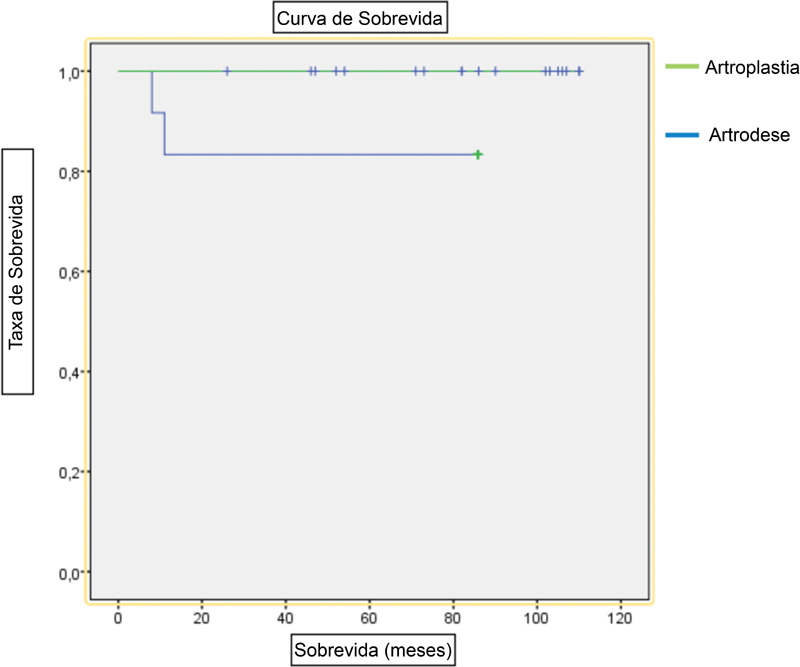
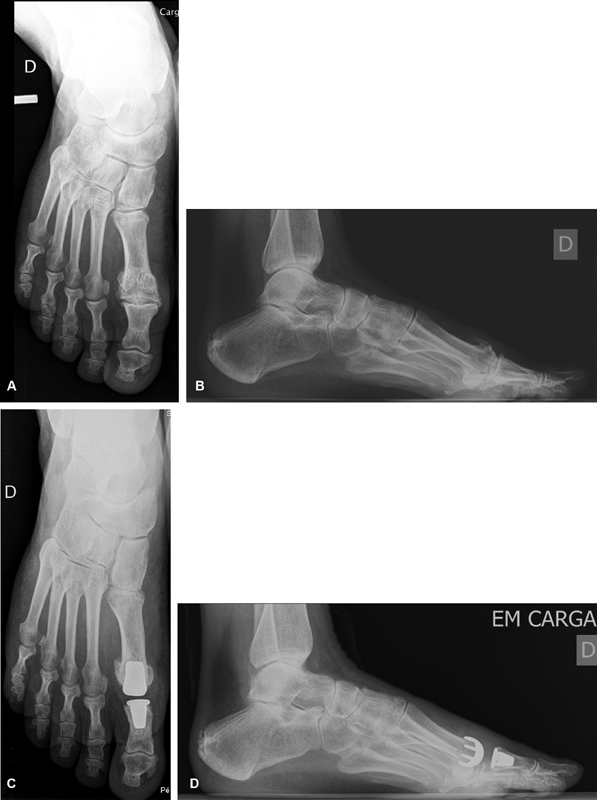
Historical results of arthroplasty of the first metatarsophalangeal joint (1MTP) are relatively poor; however, improvements in the understanding of the normal foot biomechanics, implant materials and design currently make arthroplasty a reasonable option in appropriately selected patients. The present study aimed to compare the clinical and radiographic results of 1MTP arthrodesis and arthroplasty in the treatment of and to present a rationale for patient selection for arthroplasty. A total of 36 patients (38 feet) with submitted to surgery (12 arthrodesis and 26 arthroplasties) were prospectively included in the study. Pain was assessed using the visual analogue scale (VAS) and the functional status was assessed using the American Orthopedic Foot and Ankle Society Hallux Metatarsophalangeal-Interphalangeal (AOFAS-HMI) scale. Complications and radiographic results were also analyzed, and survival rates were calculated for both procedures. All of the patients reported significant improvement in pain and functional status after surgery. Patients submitted to arthroplasty had better functional results on the AOFAS-HMI scale (89.7 versus 65.7 points; < 0.001) and better pain relief (VAS 1.6 versus 3.9 points; = 0.002) when compared with the group submitted to arthrodesis. There was one case of infection in the arthroplasty group and 2 cases of pseudarthrosis in the arthrodesis group. Arthrodesis provides pain relief and satisfactory results but alters the biomechanics of gait. Like arthrodesis, arthroplasty improves pain significantly, being a more physiological alternative to preserve the biomechanics of the foot. While the two surgical methods yielded good clinical results, selected patients submitted to arthroplasty had better clinical scores and lower revision rates.
第一跖趾关节(1MTP)置换术的历史结果相对较差;然而,对正常足部生物力学、植入材料和设计的理解有所改进,目前置换术在适当选择的患者中是一个合理的选择。本研究旨在比较1MTP关节融合术和置换术在治疗[具体疾病未提及]中的临床和影像学结果,并为置换术的患者选择提供理论依据。
共有36例患者(38只足)因[具体疾病未提及]接受手术(12例行关节融合术,26例行置换术),被前瞻性纳入本研究。使用视觉模拟量表(VAS)评估疼痛,并使用美国矫形足踝协会拇趾跖趾-趾间关节(AOFAS-HMI)量表评估功能状态。还分析了并发症和影像学结果,并计算了两种手术的生存率。
所有患者术后疼痛和功能状态均有显著改善。与接受关节融合术的组相比,接受置换术患者的AOFAS-HMI量表功能结果更好(89.7分对65.7分;P<0.001),疼痛缓解更好(VAS 1.6分对3.9分;P = 0.002)。置换术组有1例感染,关节融合术组有2例假关节形成。
关节融合术可缓解疼痛并取得满意结果,但会改变步态生物力学。与关节融合术一样,置换术能显著改善疼痛,是保留足部生物力学的更符合生理的替代方法。虽然两种手术方法均取得了良好的临床结果,但接受置换术的特定患者临床评分更好,翻修率更低。