Yan Wenqiang, Xu Xingquan, Xu Qian, Sun Ziying, Jiang Qing, Shi Dongquan
State Key Laboratory of Pharmaceutical Biotechnology, Department of Sports Medicine and Adult Reconstructive Surgery, Nanjing Drum Tower Hospital, The Affiliated Hospital of Nanjing University Medical School, 321 Zhongshan Road, Nanjing 210008, Jiangsu, China.
Laboratory for Bone and Joint Disease, Model Animal Research Center (MARC), Nanjing University, Nanjing 210093, Jiangsu, China.
Regen Biomater. 2020 Feb;7(1):77-90. doi: 10.1093/rb/rbz039. Epub 2019 Nov 21.
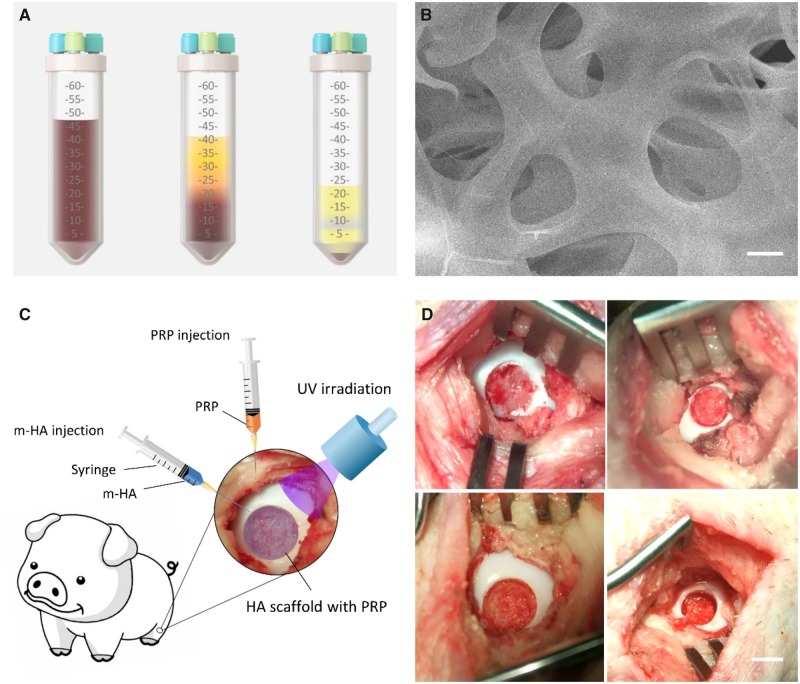
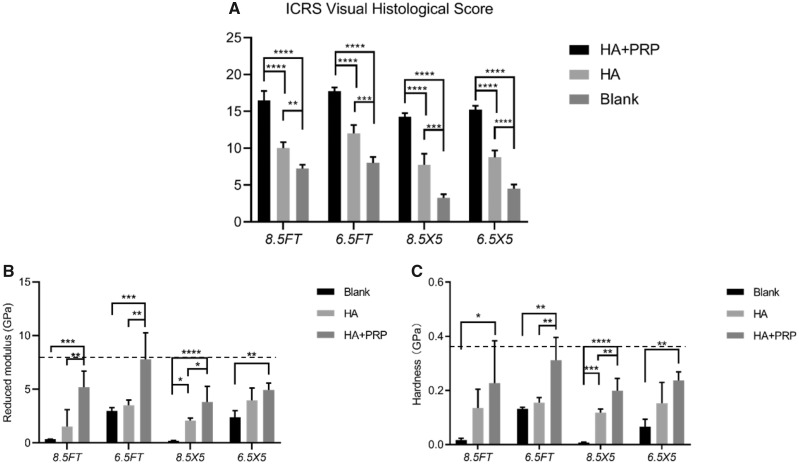
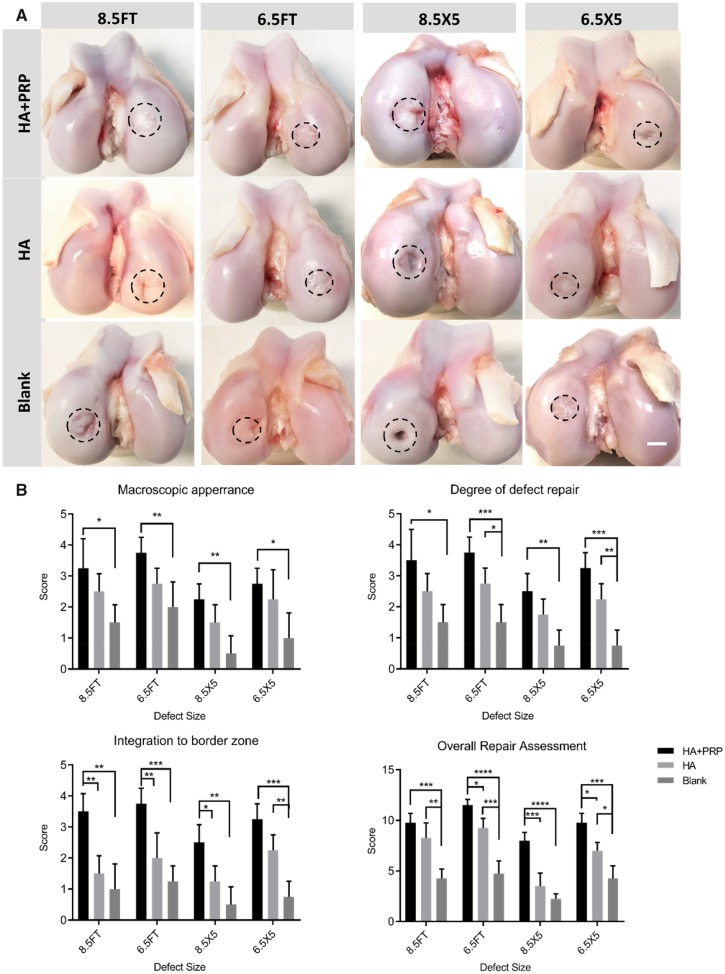
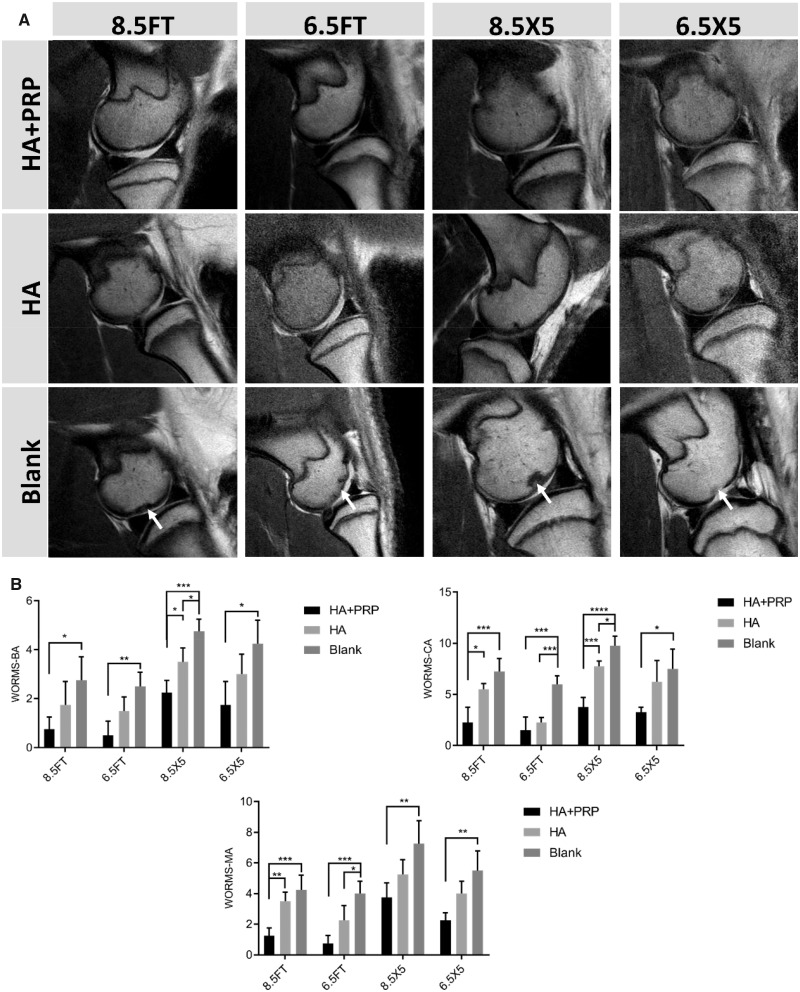
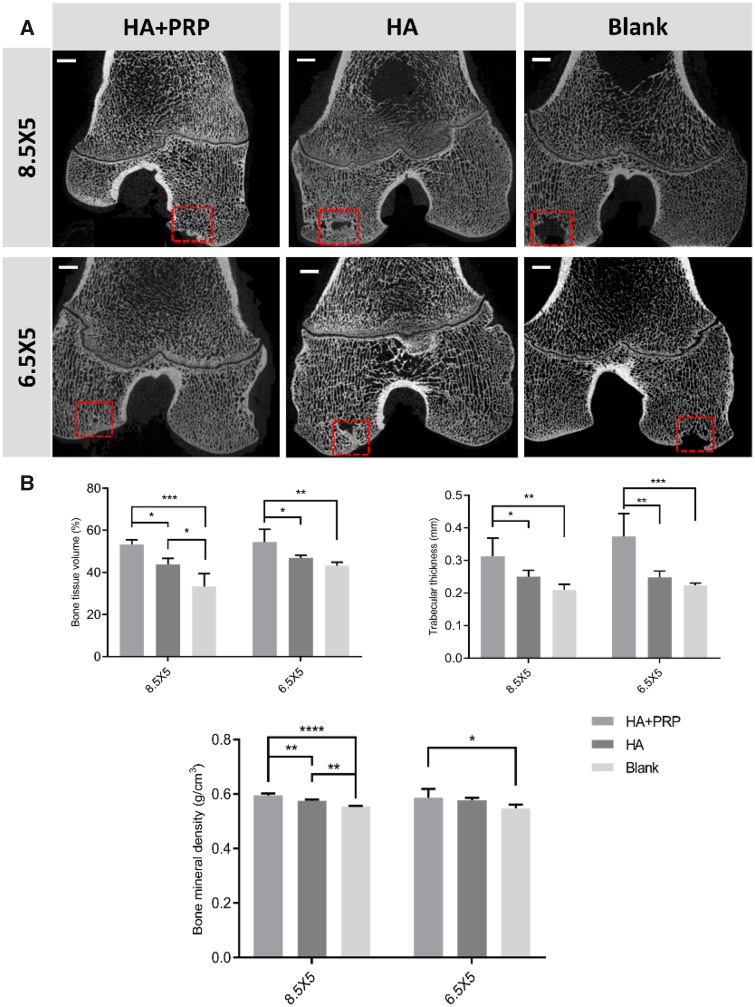
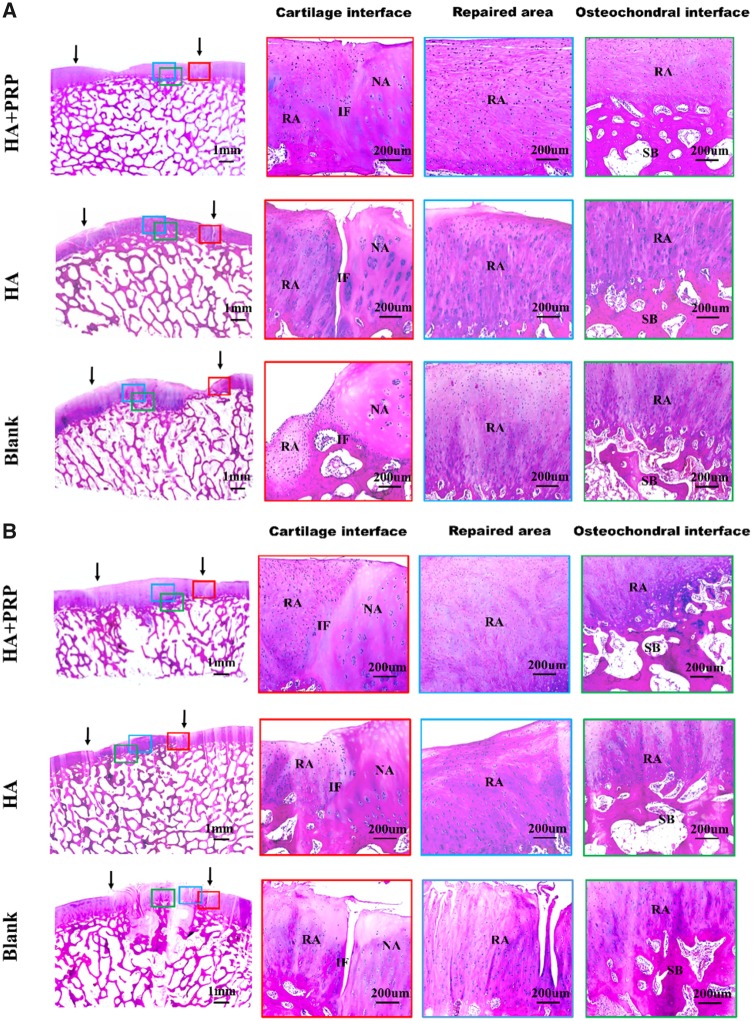
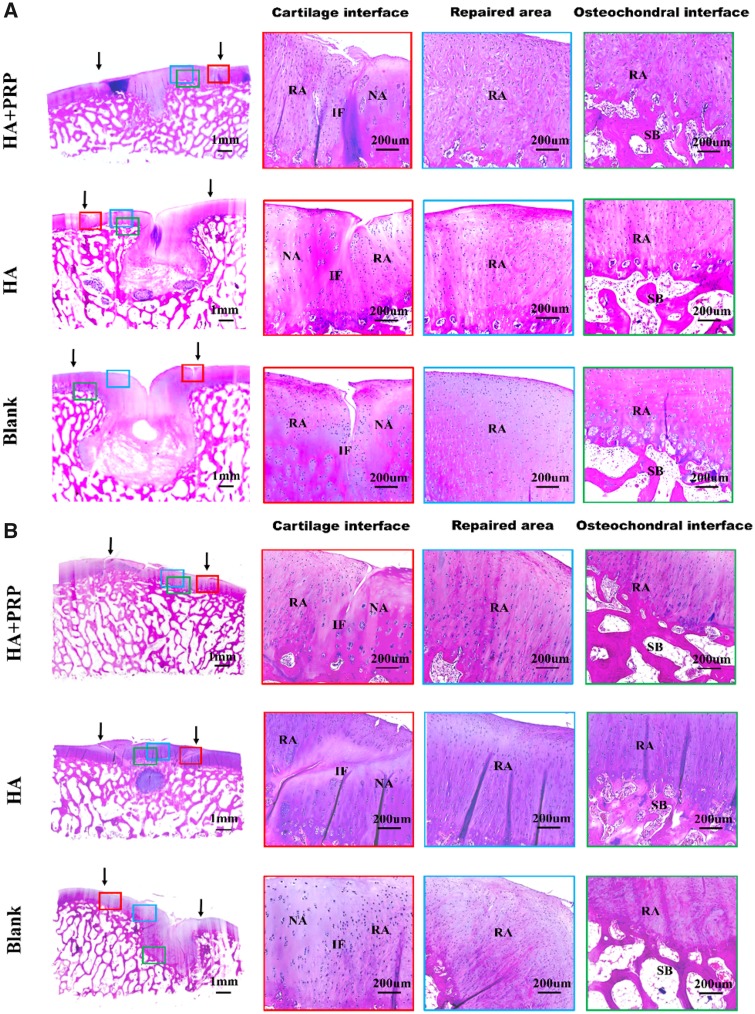
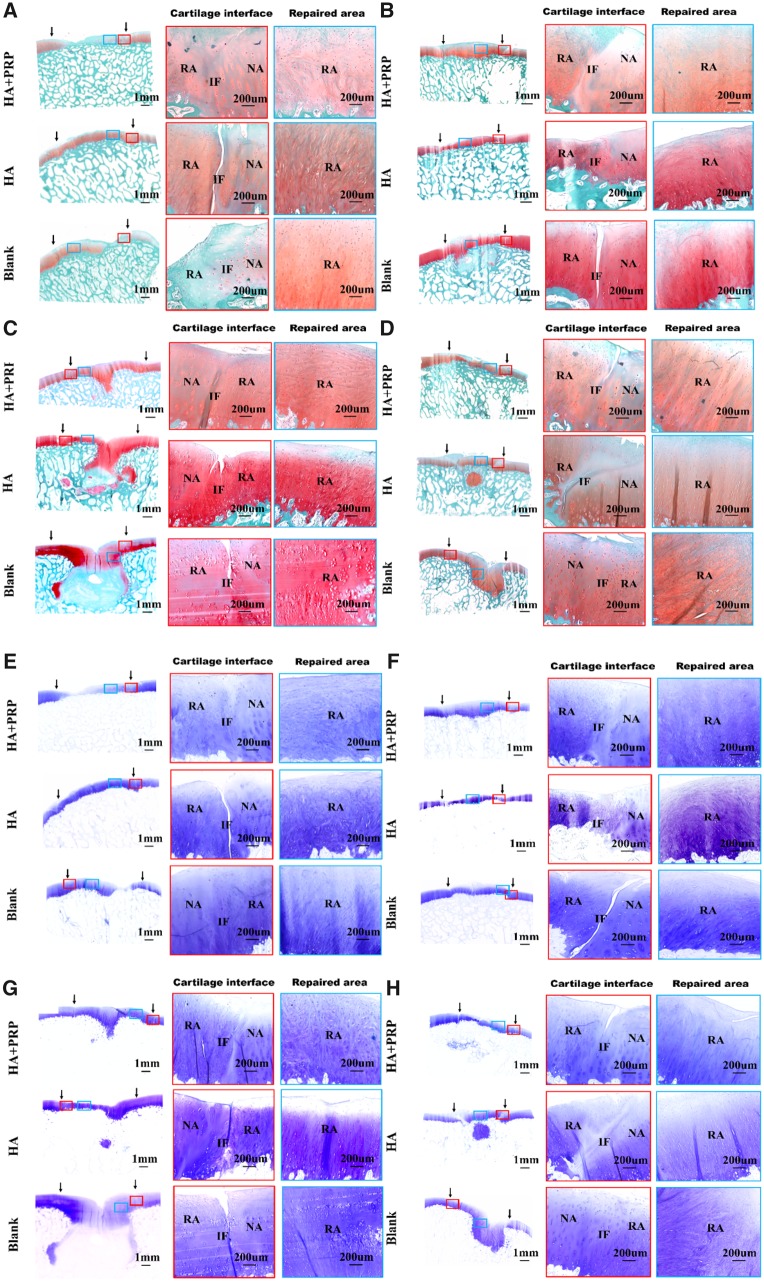
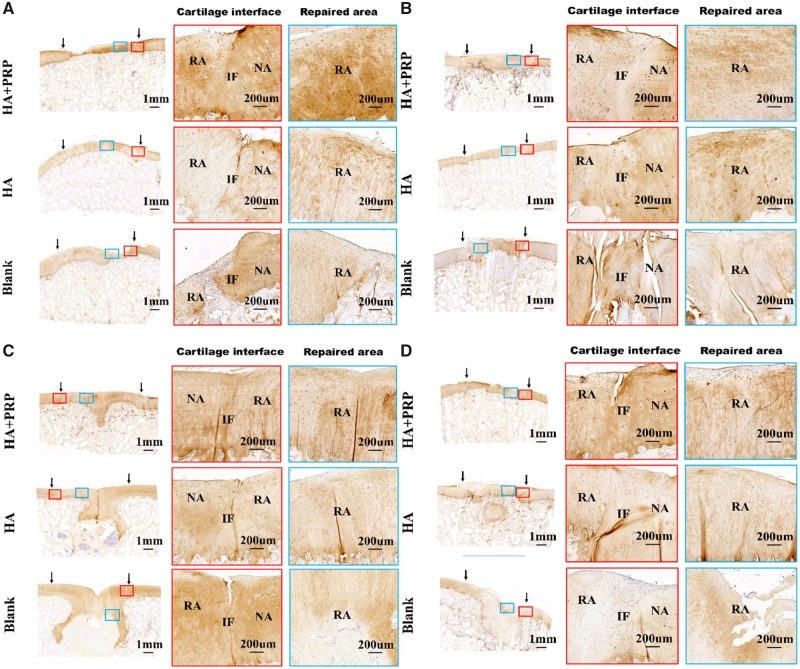
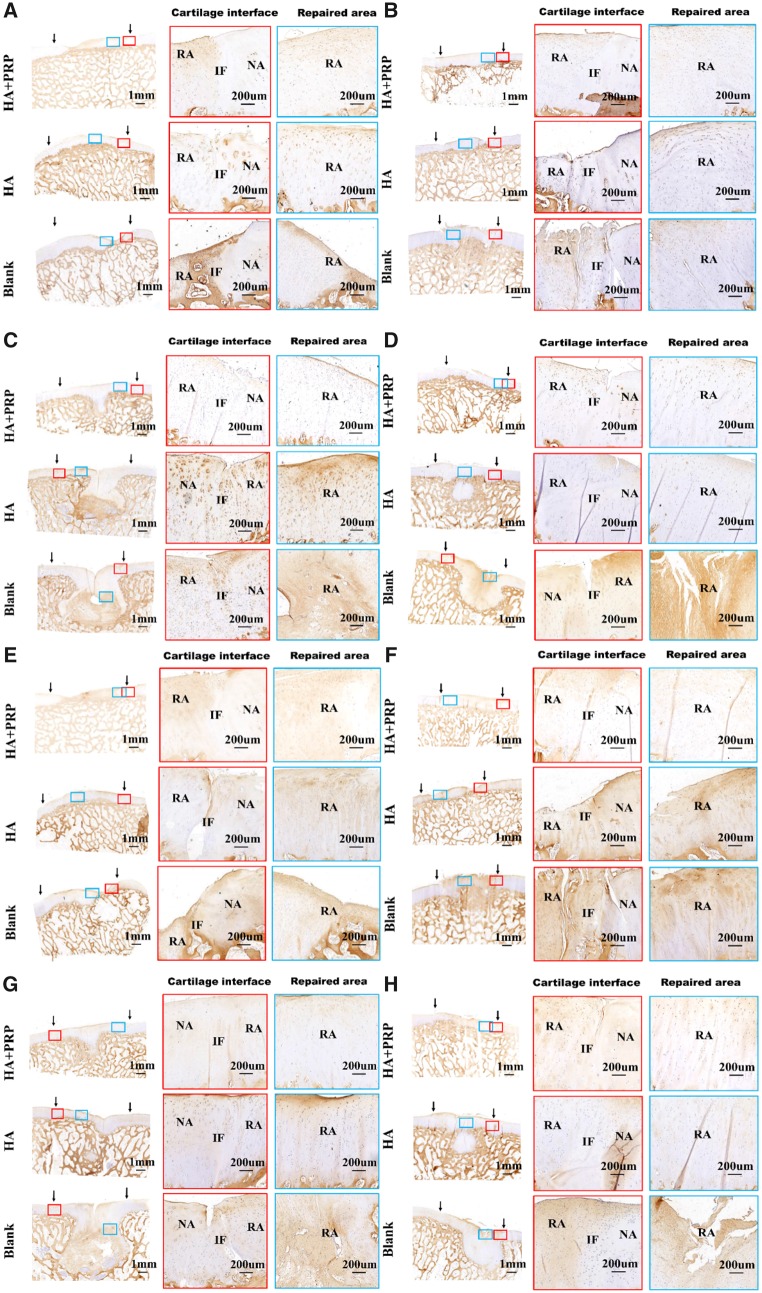
Based on our previous study, the utilization of an ultraviolet light photo-cross-linkable hyaluronic acid (HA) hydrogel integrated with a small molecule kartogenin-encapsulated nanoparticles obtained good reconstruction of osteochondral defects in a rabbit model, indicating the superiority of injectable hydrogel-based scaffolds in cartilage tissue engineering. Platelet-rich plasma (PRP), rich in various growth factors, proteins and cytokines, is considered to facilitate cartilage healing by stimulating cell proliferation and inducing chondrogenesis in cartilage defect site. The aim of this study was to test the therapeutic feasibility of autologous PRP combined with injectable HA hydrogel on cartilage repair. The focal cartilage defects with different critical sizes in the medial femoral condyle of a porcine model were used. At 6 months, the minipigs were sacrificed for assessment of macroscopic appearance, magnetic resonance imaging, micro-computed tomography, histology staining and biomechanics. The HA hydrogel combined with PRP-treated group showed more hyaline-like cartilage exhibited by macroscopic appearance and histological staining in terms of extracellular matrix and type II collagen without formation of hypertrophic cartilage, indicating its capacity to improve cartilage healing in the minipig model evaluated at 6 months, with full-thickness cartilage defect of 8.5 mm diameter and osteochondral defect of 6.5 mm diameter, 5 mm depth exhibiting apparent regeneration.
基于我们之前的研究,将紫外线光可交联透明质酸(HA)水凝胶与包裹小分子卡托金宁的纳米颗粒相结合,在兔模型中能很好地修复骨软骨缺损,这表明可注射水凝胶基支架在软骨组织工程中具有优越性。富含多种生长因子、蛋白质和细胞因子的富血小板血浆(PRP),被认为可通过刺激细胞增殖和诱导软骨缺损部位软骨形成来促进软骨愈合。本研究的目的是测试自体PRP联合可注射HA水凝胶对软骨修复的治疗可行性。使用了猪模型股骨内侧髁具有不同临界尺寸的局灶性软骨缺损。6个月时,处死小型猪以评估宏观外观、磁共振成像、微型计算机断层扫描、组织学染色和生物力学。HA水凝胶联合PRP治疗组在宏观外观和组织学染色方面显示出更多类似透明软骨的表现,在细胞外基质和II型胶原方面均无肥大软骨形成,表明其在6个月评估的小型猪模型中具有改善软骨愈合的能力,对于直径8.5毫米的全层软骨缺损和直径6.5毫米、深度5毫米的骨软骨缺损表现出明显的再生。