Department of Neurosciences, Biomedicine and Movement Sciences, University of Verona, Strada Le Grazie 8, 37134 Verona, Italy.
Int J Mol Sci. 2024 Apr 3;25(7):3975. doi: 10.3390/ijms25073975.
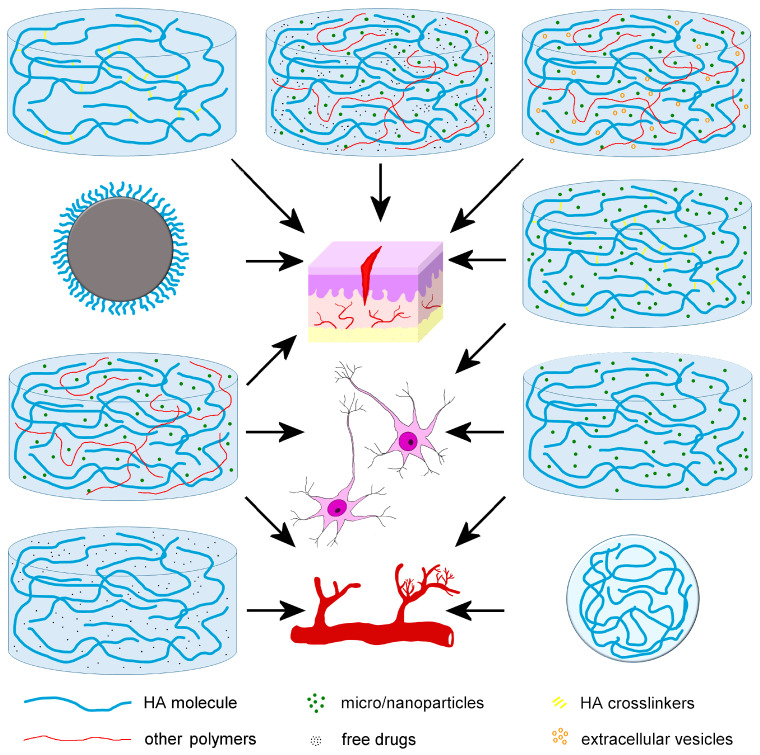
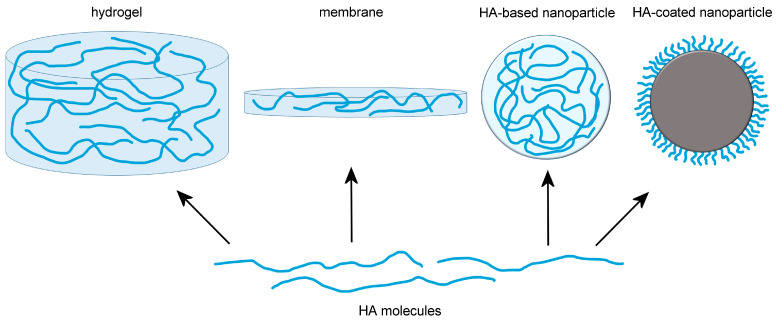
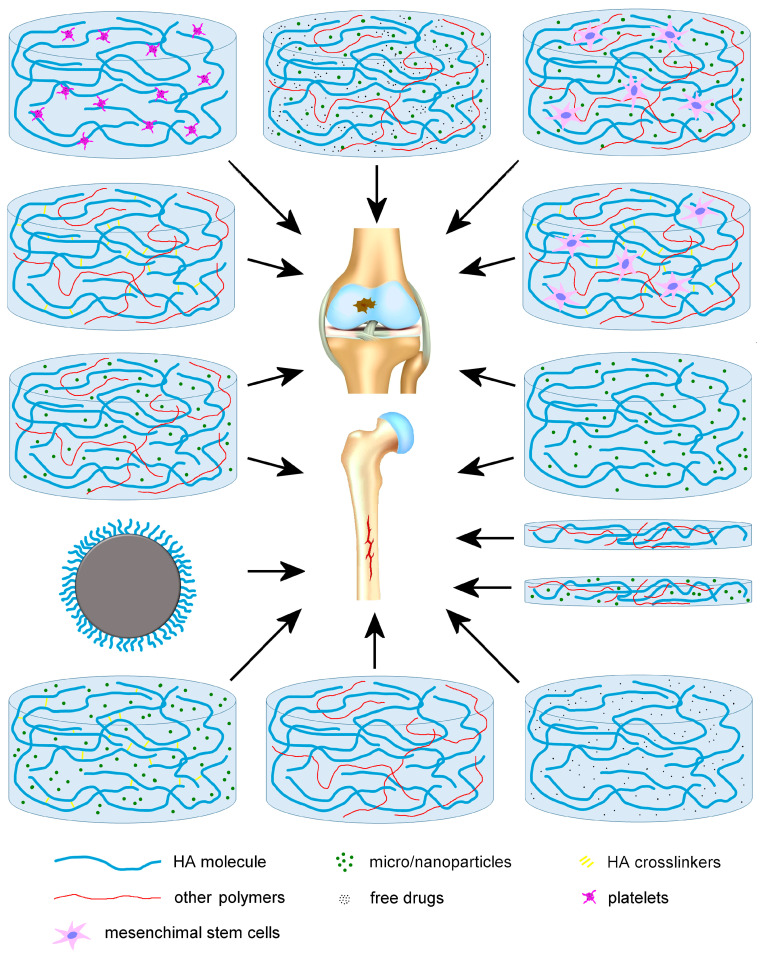
Hyaluronic acid (HA) is a linear, anionic, non-sulfated glycosaminoglycan occurring in almost all body tissues and fluids of vertebrates including humans. It is a main component of the extracellular matrix and, thanks to its high water-holding capacity, plays a major role in tissue hydration and osmotic pressure maintenance, but it is also involved in cell proliferation, differentiation and migration, inflammation, immunomodulation, and angiogenesis. Based on multiple physiological effects on tissue repair and reconstruction processes, HA has found extensive application in regenerative medicine. In recent years, nanotechnological research has been applied to HA in order to improve its regenerative potential, developing nanomedical formulations containing HA as the main component of multifunctional hydrogels systems, or as core component or coating/functionalizing element of nanoconstructs. This review offers an overview of the various uses of HA in regenerative medicine aimed at designing innovative nanostructured devices to be applied in various fields such as orthopedics, dermatology, and neurology.
透明质酸(HA)是一种线性、阴离子、非硫酸化的糖胺聚糖,存在于脊椎动物的几乎所有组织和体液中,包括人类。它是细胞外基质的主要成分,由于其高持水能力,在组织水合和渗透压维持方面发挥着重要作用,但它也参与细胞增殖、分化和迁移、炎症、免疫调节和血管生成。基于对组织修复和重建过程的多种生理作用,HA 在再生医学中得到了广泛的应用。近年来,纳米技术研究已应用于 HA,以提高其再生潜力,开发含有 HA 作为主要成分的多功能水凝胶系统的纳米医药制剂,或作为纳米结构的核心成分或涂层/功能化元素。本文综述了 HA 在再生医学中的各种用途,旨在设计创新的纳米结构装置,应用于骨科、皮肤科和神经科等多个领域。