Bi Yanran, Zheng Ruiling, Hu Jiahao, Shi Ruiqing, Shi Junfeng, Wang Yutao, Wang Peng, Jiang Wenyi, Kim Gyudong, Liu Zhiguo, Li Xiaokun, Lin Li
School of Pharmaceutical Science, Wenzhou Medical University, Wenzhou, Zhejiang 325035, China.
College of Pharmacy and Research Institute of Drug Development, Chonnam National University, Gwangju 61186, Republic of Korea.
Genes Dis. 2023 Apr 3;11(1):479-494. doi: 10.1016/j.gendis.2023.02.035. eCollection 2024 Jan.
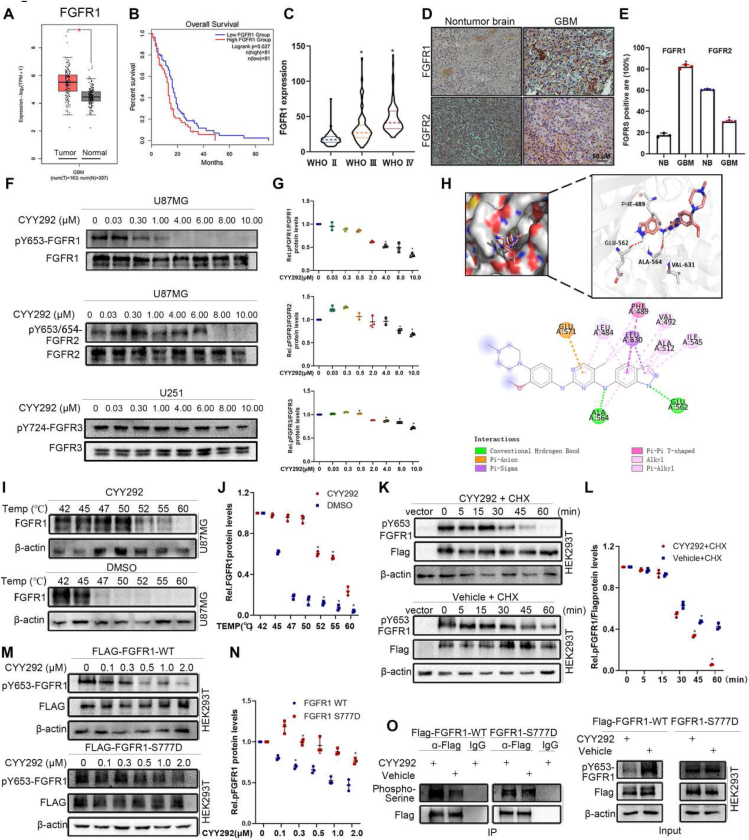
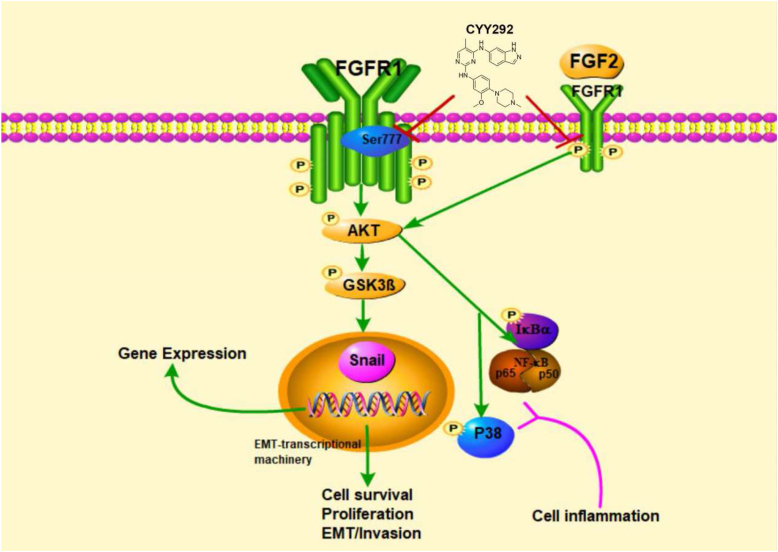
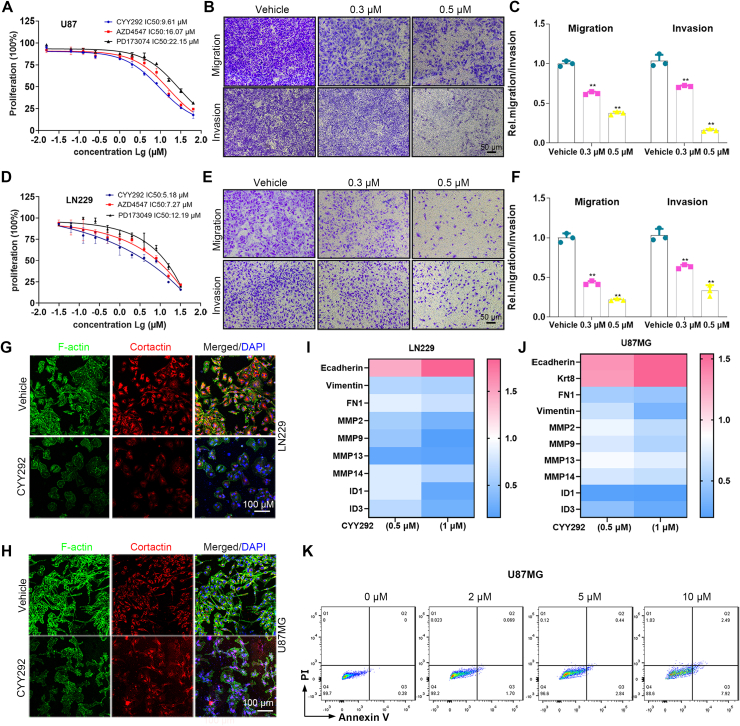
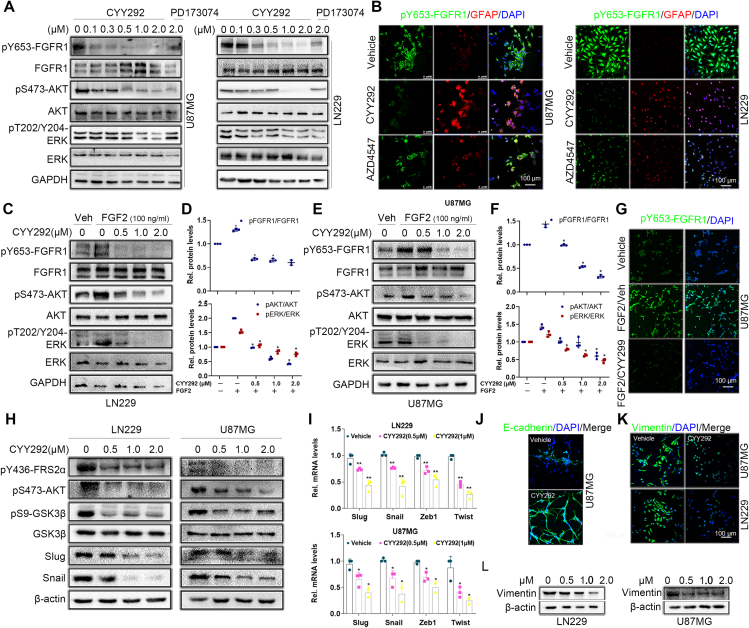
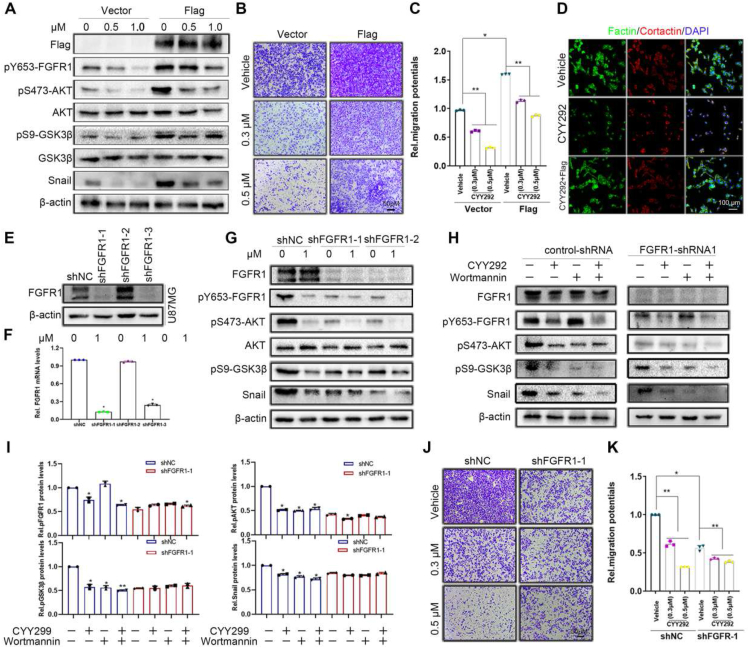
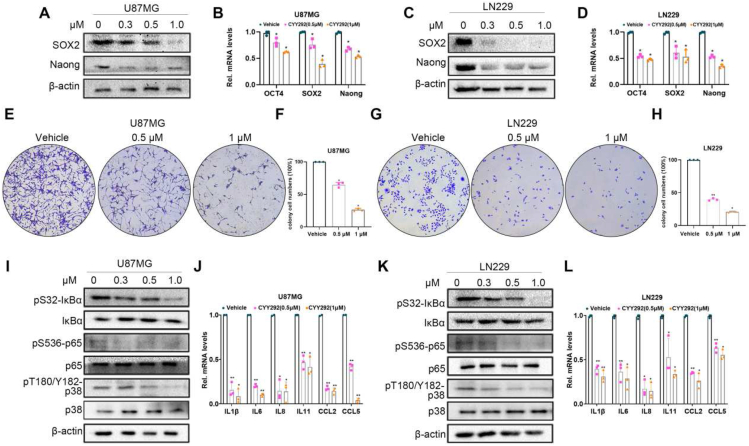
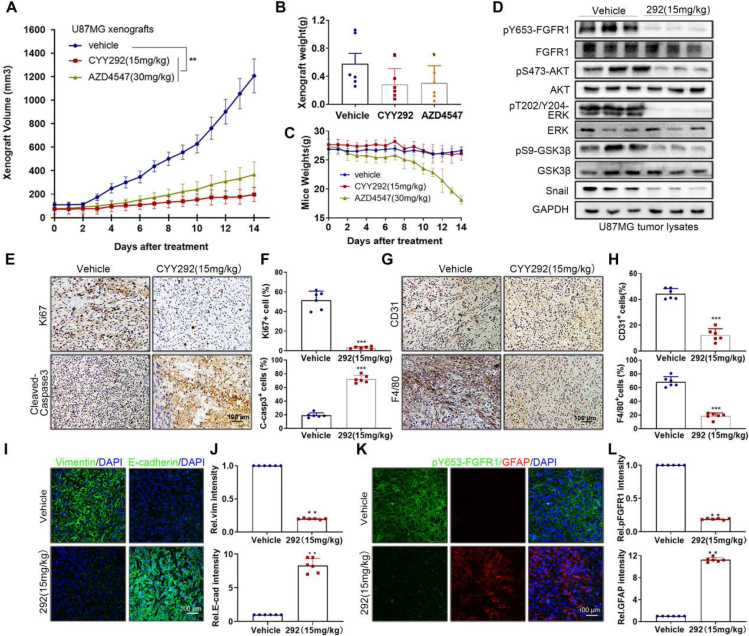
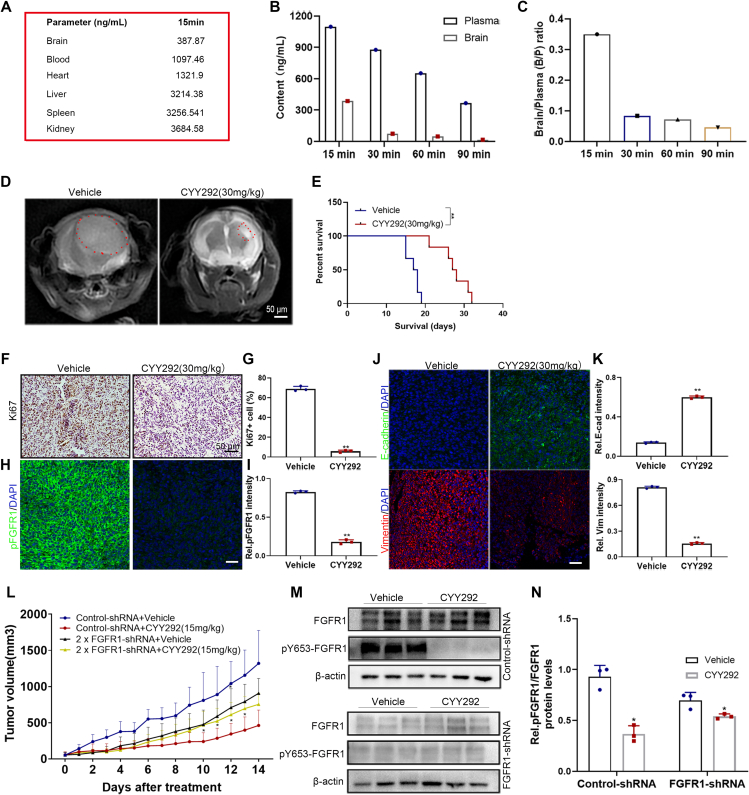
Glioblastoma (GBM) is a malignant brain tumor that grows quickly, spreads widely, and is resistant to treatment. Fibroblast growth factor receptor (FGFR)1 is a receptor tyrosine kinase that regulates cellular processes, including proliferation, survival, migration, and differentiation. FGFR1 was predominantly expressed in GBM tissues, and FGFR1 expression was negatively correlated with overall survival. We rationally designed a novel small molecule CYY292, which exhibited a strong affinity for the FGFR1 protein in GBM cell lines . CYY292 also exerted an effect on the conserved Ser777 residue of . CYY292 dose-dependently inhibited cell proliferation, epithelial-mesenchymal transition, stemness, invasion, and migration by specifically targeting the FGFR1/AKT/Snail pathways in GBM cells, and this effect was prevented by pharmacological inhibitors and critical gene knockdown. experiments revealed that CYY292 inhibited U87MG tumor growth more effectively than AZD4547. CYY292 also efficiently reduced GBM cell proliferation and increased survival in orthotopic GBM models. This study further elucidates the function of FGFR1 in the GBM and reveals the effect of CYY292, which targets FGFR1, on downstream signaling pathways directly reducing GBM cell growth, invasion, and metastasis and thus impairing the recruitment, activation, and function of immune cells.
胶质母细胞瘤(GBM)是一种恶性脑肿瘤,生长迅速、广泛扩散且对治疗具有抗性。成纤维细胞生长因子受体(FGFR)1是一种受体酪氨酸激酶,可调节包括增殖、存活、迁移和分化在内的细胞过程。FGFR1在GBM组织中主要表达,且FGFR1表达与总生存期呈负相关。我们合理设计了一种新型小分子CYY292,其对GBM细胞系中的FGFR1蛋白表现出强烈亲和力。CYY292还对……的保守丝氨酸777残基产生作用。CYY292通过特异性靶向GBM细胞中的FGFR1/AKT/蜗牛途径,剂量依赖性地抑制细胞增殖、上皮-间质转化、干性、侵袭和迁移,且这种作用可被药理学抑制剂和关键基因敲低所阻断。实验表明,CYY292比AZD4547更有效地抑制U87MG肿瘤生长。CYY292在原位GBM模型中还能有效降低GBM细胞增殖并提高生存率。本研究进一步阐明了FGFR1在GBM中的功能,并揭示了靶向FGFR1的CYY292对下游信号通路的影响,直接降低GBM细胞生长、侵袭和转移,从而损害免疫细胞的募集、激活和功能。