Xing Jun, Bhuria Vikas, Bui Khac Cuong, Nguyen Mai Ly Thi, Hu Zexi, Hsieh Chih-Jen, Wittstein Kathrin, Stadler Marc, Wilkens Ludwig, Li Jun, Kalesse Markus, Bozko Przemyslaw, Plentz Ruben R
Department of Internal Medicine I, Medical University Hospital, Eberhard Karls Universität Tübingen, 72076 Tubingen, Germany.
The First Affiliated Hospital of USTC, Division of Life Sciences and Medicine, University of Science and Technology of China, Hefei 230001, China.
Cancers (Basel). 2020 Mar 6;12(3):615. doi: 10.3390/cancers12030615.
Hepatocellular carcinoma (HCC) represents a major health burden with limited curative treatment options. There is a substantial unmet need to develop innovative approaches to impact the progression of advanced HCC. Haprolid is a novel natural component isolated from myxobacteria. Haprolid has been reported as a potent selective cytotoxin against a panel of tumor cells in recent studies including HCC cells. The aims of this study are to evaluate the antitumor effect of haprolid in HCC and to understand its underlying molecular mechanisms.
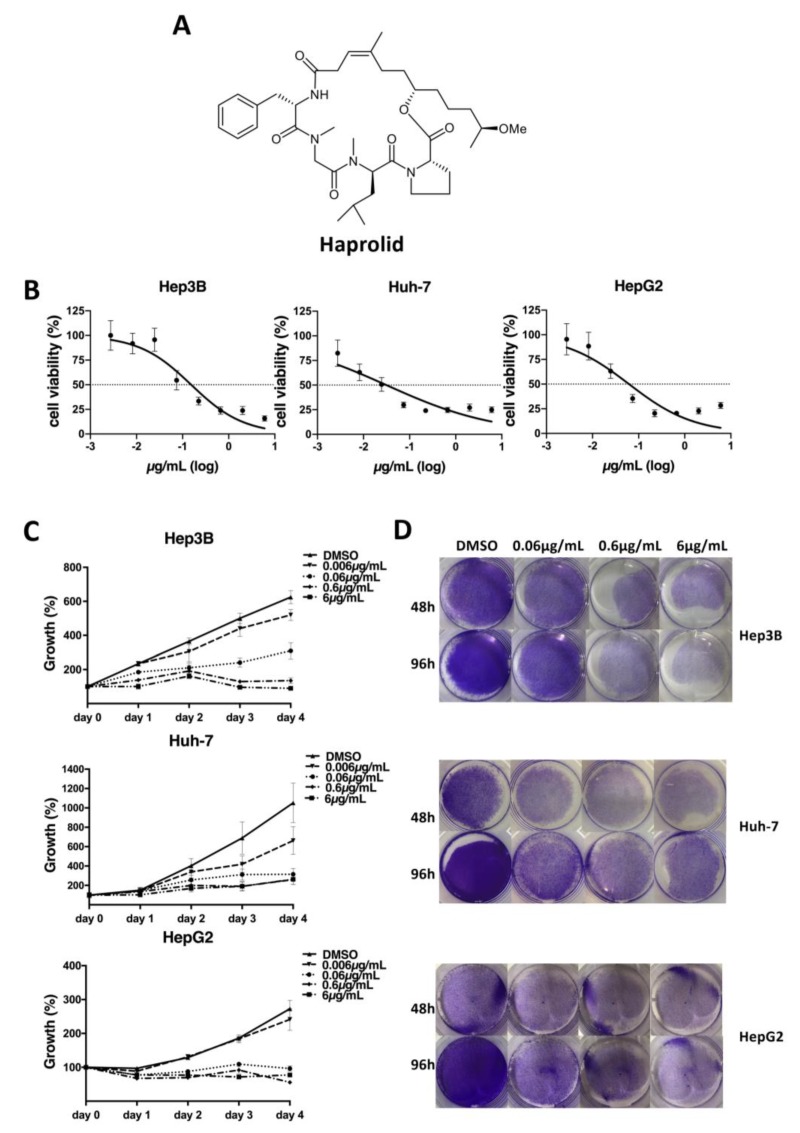
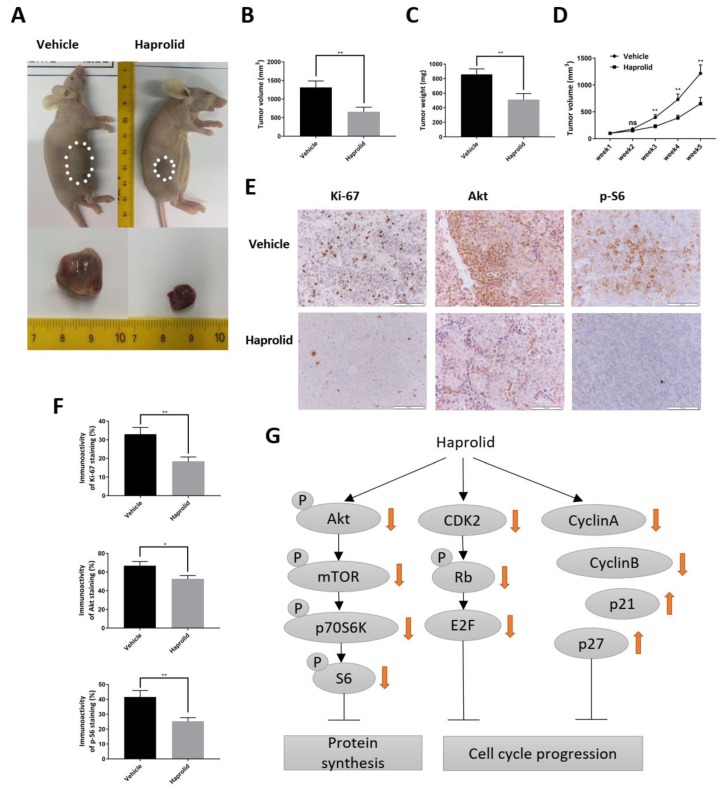
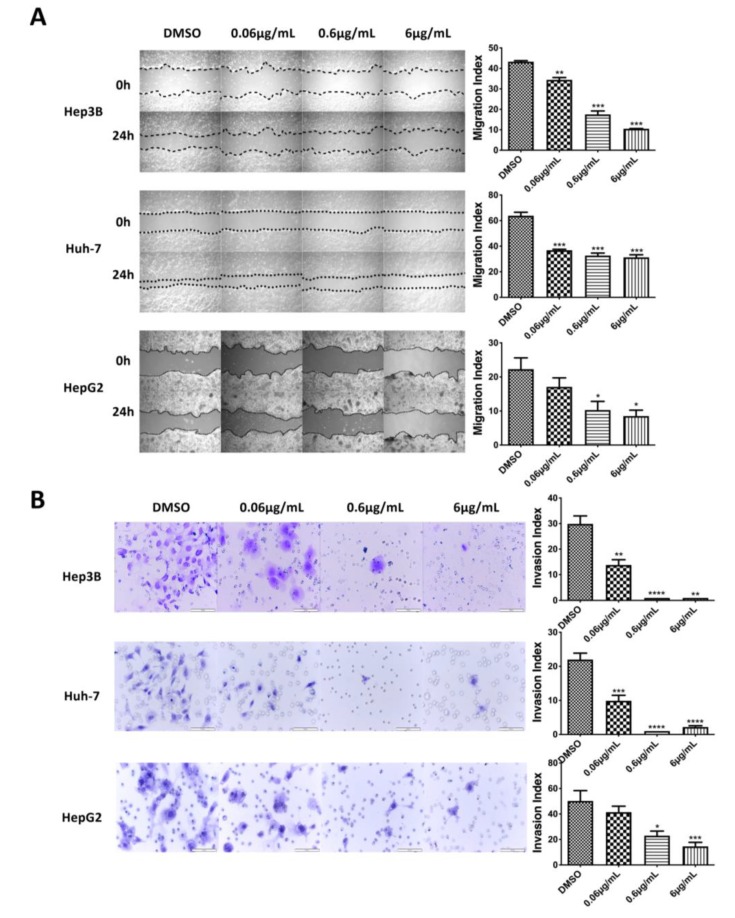
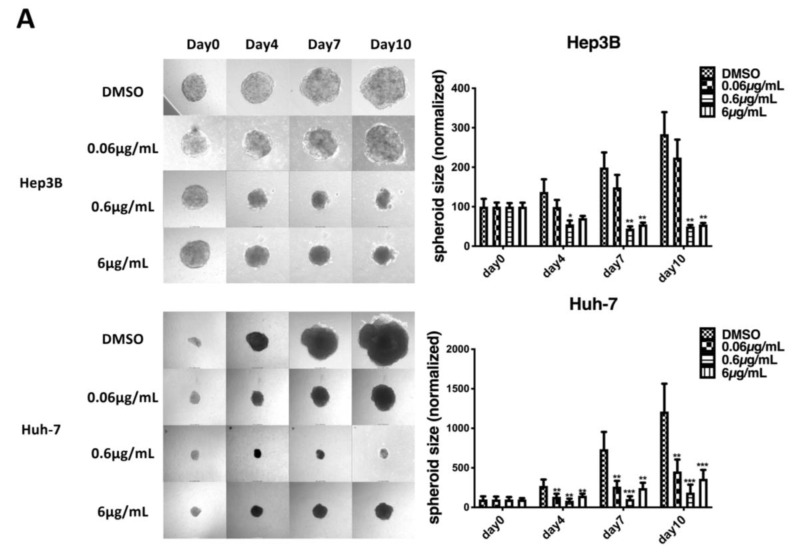
The efficacy of haprolid was evaluated in human HCC cell lines (Huh-7, Hep3B and HepG2) and xenograft tumors (NMRI-Foxn1 mice with injection of Hep3B cells). Cytotoxic activity of haprolid was determined by the WST-1 and crystal violet assay. Wound healing, transwell and tumorsphere assays were performed to investigate migration and invasion of HCC cells. Apoptosis and cell-cycle distribution were measured by flow cytometry. The effects of haprolid on the Rb/E2F and Akt/mTOR pathway were examined by immunoblotting and immunohistochemistry.
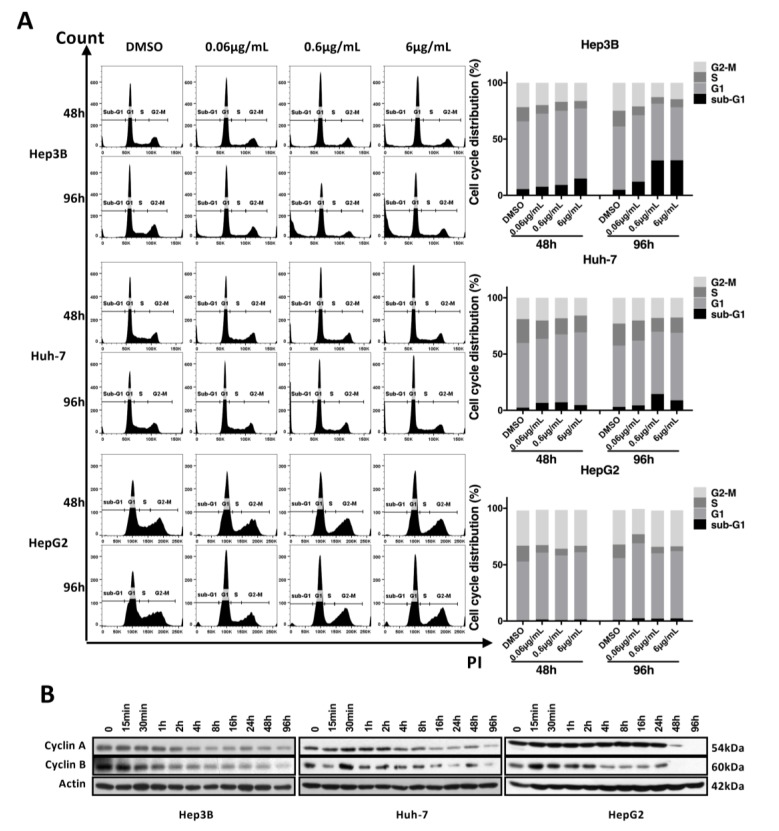
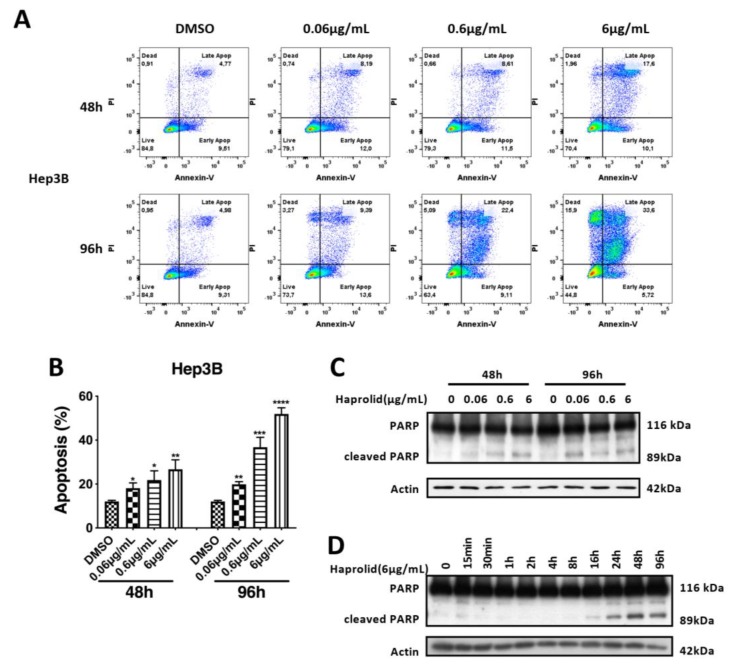
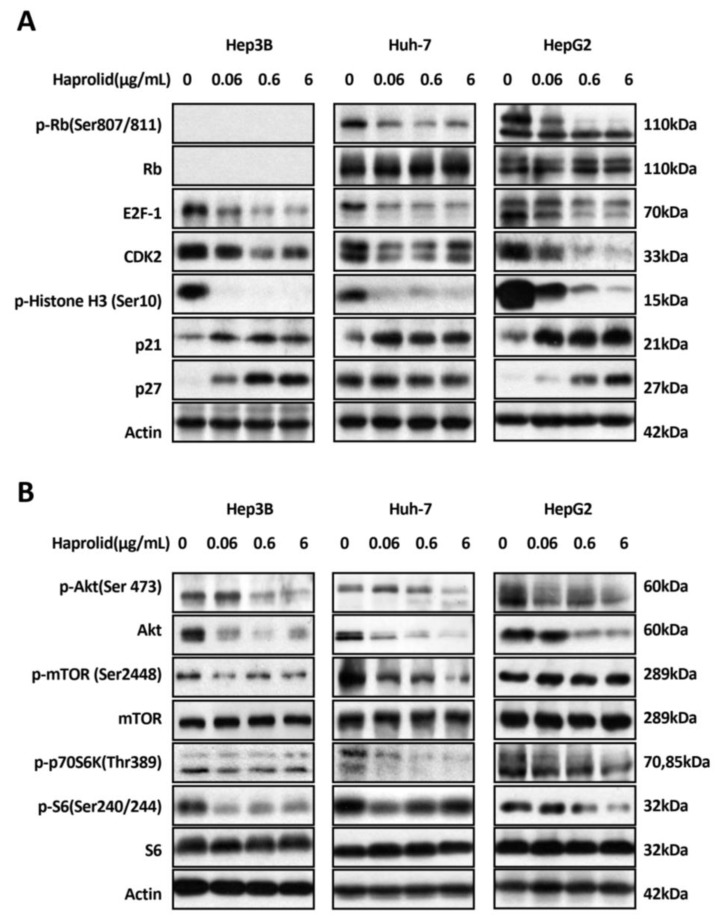
haprolid treatment significantly inhibited cell proliferation, migration and invasion in vitro. The epithelial-mesenchymal transition (EMT) was impaired by haprolid treatment and the expression level of N-cadherin, vimentin and Snail was downregulated. Moreover, growth of HCC cells in vitro was suppressed by inhibition of G1/S transition, and partially by induction of apoptosis. The drug induced downregulation of cell cycle regulatory proteins cyclin A, cyclin B and CDK2 and induced upregulation of p21 and p27. Further evidence showed that these effects of haprolid were associated with Rb/E2F downregulation and Akt/mTOR inhibition. Finally, in vivo nude mice experiments demonstrated significant inhibition of tumor growth upon haprolid treatment.
Our results show that haprolid inhibits the growth of HCC through dual inhibition of Rb/E2F and Akt/mTOR pathways Therefore, haprolid might be considered as a new and promising candidate for the palliative therapy of HCC.
肝细胞癌(HCC)是一项重大的健康负担,治愈性治疗选择有限。开发创新方法以影响晚期HCC的进展存在大量未满足的需求。哈普罗利德是一种从粘细菌中分离出的新型天然成分。在最近的研究中,包括对HCC细胞的研究,哈普罗利德已被报道为对一组肿瘤细胞有强效的选择性细胞毒素。本研究的目的是评估哈普罗利德在HCC中的抗肿瘤作用,并了解其潜在的分子机制。
在人HCC细胞系(Huh-7、Hep3B和HepG2)和异种移植肿瘤(注射Hep3B细胞的NMRI-Foxn1小鼠)中评估哈普罗利德的疗效。通过WST-1和结晶紫测定法测定哈普罗利德的细胞毒性活性。进行伤口愈合、Transwell和肿瘤球测定以研究HCC细胞的迁移和侵袭。通过流式细胞术测量细胞凋亡和细胞周期分布。通过免疫印迹和免疫组织化学检查哈普罗利德对Rb/E2F和Akt/mTOR途径的影响。
哈普罗利德治疗显著抑制体外细胞增殖、迁移和侵袭。哈普罗利德治疗损害上皮-间质转化(EMT),N-钙黏蛋白、波形蛋白和Snail的表达水平下调。此外,体外HCC细胞的生长通过抑制G1/S期转变受到抑制,并部分通过诱导细胞凋亡受到抑制。该药物诱导细胞周期调节蛋白细胞周期蛋白A、细胞周期蛋白B和细胞周期蛋白依赖性激酶2的下调,并诱导p21和p27的上调。进一步的证据表明,哈普罗利德的这些作用与Rb/E2F下调和Akt/mTOR抑制有关。最后,体内裸鼠实验表明哈普罗利德治疗后肿瘤生长受到显著抑制。
我们的结果表明,哈普罗利德通过双重抑制Rb/E2F和Akt/mTOR途径抑制HCC的生长。因此,哈普罗利德可能被认为是HCC姑息治疗的一种新的有前景的候选药物。