Department SAIMLAL Section of Human Anatomy, Laboratory of Electron Microscopy "Pietro M. Motta", Sapienza University of Rome, Via Alfonso Borelli 50, 00161 Rome, Italy.
Department NESMOS, Neurosurgery Unit, Sapienza University of Rome, Via di Grottarossa 1039, 00189 Rome, Italy.
Scanning. 2020 Feb 15;2020:9371516. doi: 10.1155/2020/9371516. eCollection 2020.
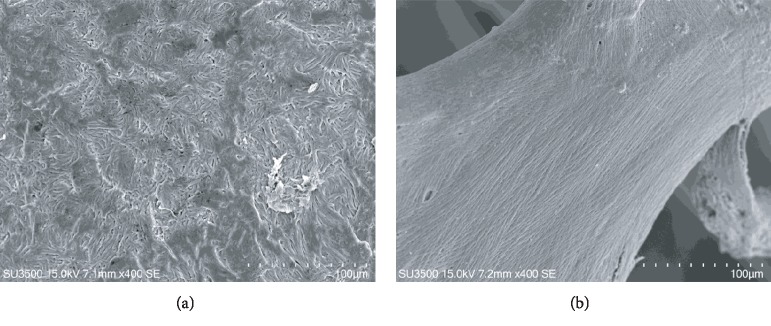
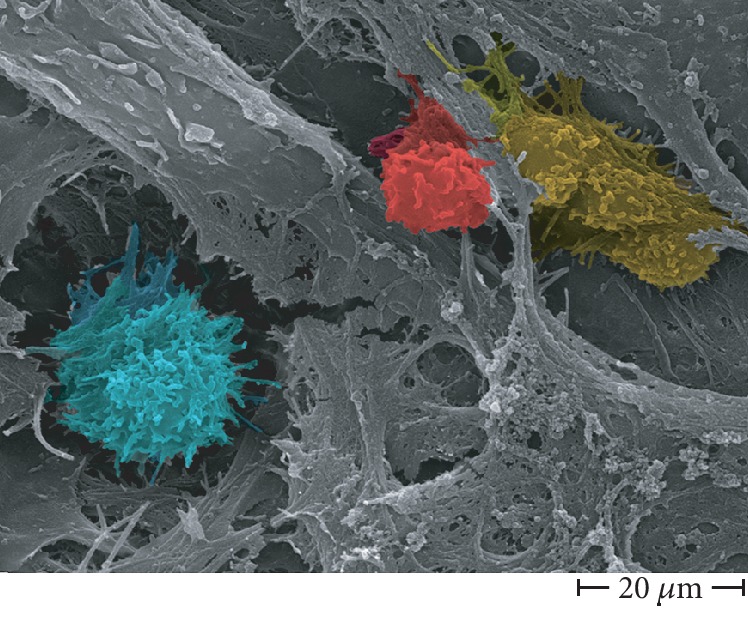
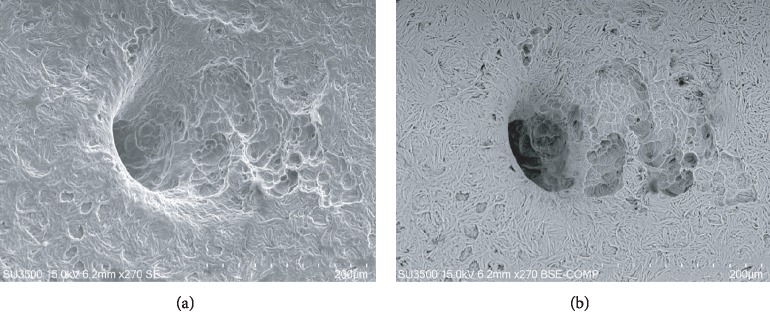
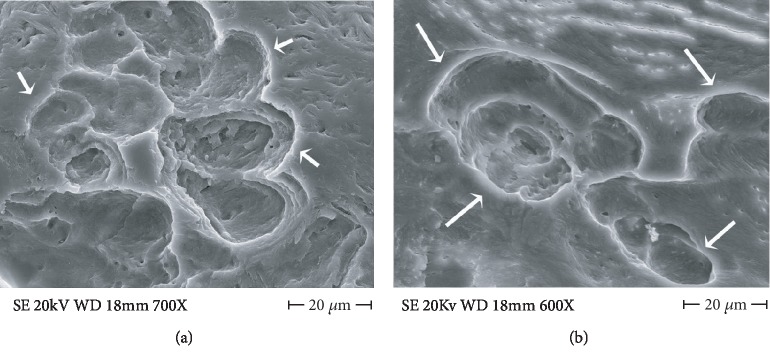
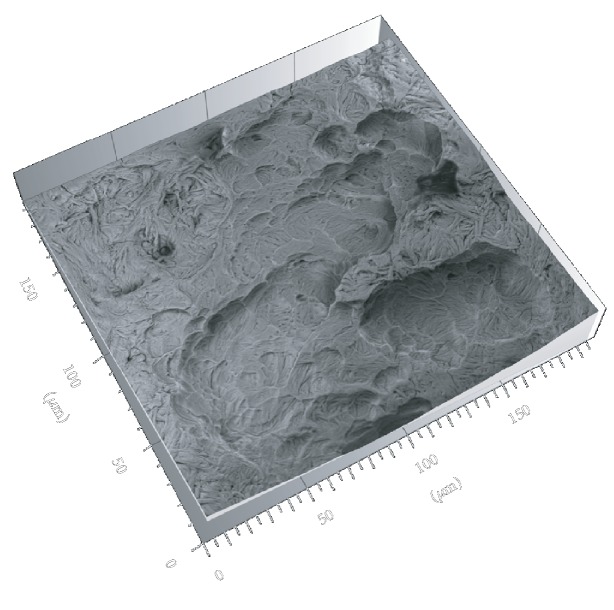
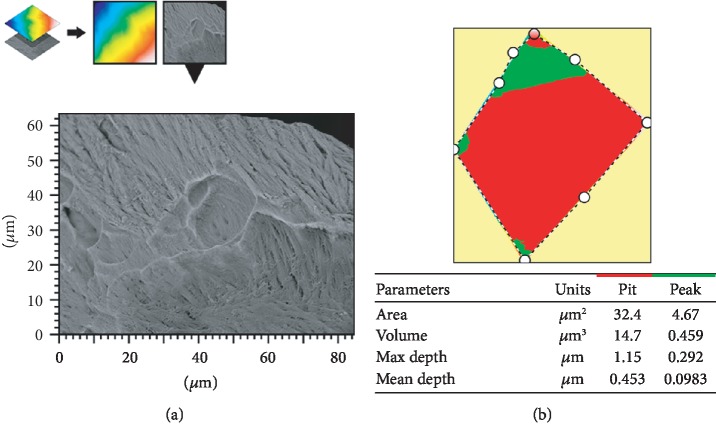
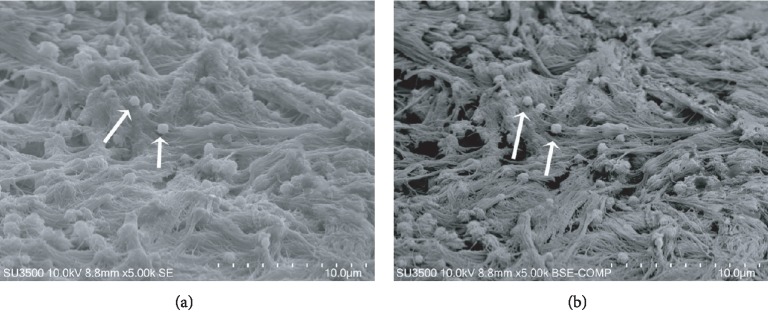
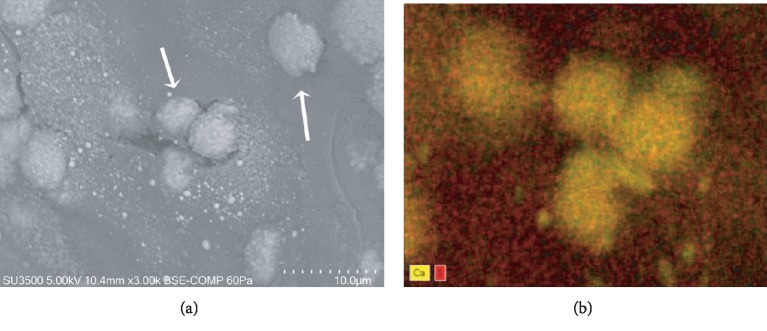
Bone erosion is considered a typical characteristic of advanced or complicated cholesteatoma (CHO), although it is still a matter of debate if bone erosion is due to osteoclast action, being the specific literature controversial. The purpose of this study was to apply a novel scanning characterization approach, the BSE 3D image analysis, to study the pathological erosion on the surface of human incus bone involved by CHO, in order to definitely assess the eventual osteoclastic resorptive action. To do this, a comparison of BSE 3D image of resorption lacunae (resorption pits) from osteoporotic human femur neck (indubitably of osteoclastic origin) with that of the incus was performed. Surface parameters (area, mean depth, and volume) were calculated by the software Hitachi MountainsMap© from BSE 3D-reconstructed images; results were then statistically analyzed by SPSS statistical software. Our findings showed that no significant differences exist between the two groups. This quantitative approach implements the morphological characterization, allowing us to state that surface erosion of the incus is due to osteoclast action. Moreover, our observation and processing image workflow are the first in the literature showing the presence not only of bone erosion but also of matrix vesicles releasing their content on collagen bundles and self-immuring osteocytes, all markers of new bone formation on incus bone surface. On the basis of recent literature, it has been hypothesized that inflammatory environment induced by CHO may trigger the osteoclast activity, eliciting bone erosion. The observed new bone formation probably takes place at a slower rate in respect to the normal bone turnover, and the process is uncoupled (as recently demonstrated for several inflammatory diseases that promote bone loss) thus resulting in an overall bone loss. Novel scanning characterization approaches used in this study allowed for the first time the 3D imaging of incus bone erosion and its quantitative measurement, opening a new era of quantitative SEM morphology.
骨质侵蚀被认为是高级或复杂胆脂瘤(CHO)的典型特征,尽管骨质侵蚀是否是由于破骨细胞的作用导致,仍然存在争议,具体文献存在争议。本研究旨在应用一种新的扫描特征化方法,即 BSE 3D 图像分析,来研究 CHO 累及的人砧骨表面的病理性侵蚀,以明确评估潜在的破骨细胞吸收作用。为此,对骨质疏松性人股骨颈的吸收陷窝(吸收坑)的 BSE 3D 图像(无疑是破骨细胞起源)与砧骨的 BSE 3D 图像进行了比较。通过 Hitachi MountainsMap©软件从 BSE 3D 重建图像中计算表面参数(面积、平均深度和体积);然后使用 SPSS 统计软件对结果进行统计学分析。我们的发现表明,两组之间没有显著差异。这种定量方法实现了形态特征化,使我们能够断言砧骨的表面侵蚀是由破骨细胞作用引起的。此外,我们的观察和图像处理工作流程是文献中首次显示不仅存在骨质侵蚀,还存在基质小泡释放其内容物到胶原束上并自我封闭成骨细胞,所有这些都是砧骨表面新骨形成的标志物。根据最近的文献,有人假设 CHO 引起的炎症环境可能会触发破骨细胞活性,引发骨质侵蚀。观察到的新骨形成可能以比正常骨转换更慢的速度发生,并且该过程是解偶联的(如最近在几种促骨丢失的炎症性疾病中所证明的),从而导致整体骨丢失。本研究中使用的新型扫描特征化方法首次允许对砧骨骨质侵蚀进行 3D 成像及其定量测量,开创了定量 SEM 形态学的新时代。