School of Biosciences, University of Birmingham, Edgbaston B15 2TT, U.K.
School of Computer Science, University of Birmingham, Edgbaston B15 2TT, U.K.
J Am Soc Mass Spectrom. 2020 Apr 1;31(4):873-879. doi: 10.1021/jasms.9b00122. Epub 2020 Mar 11.
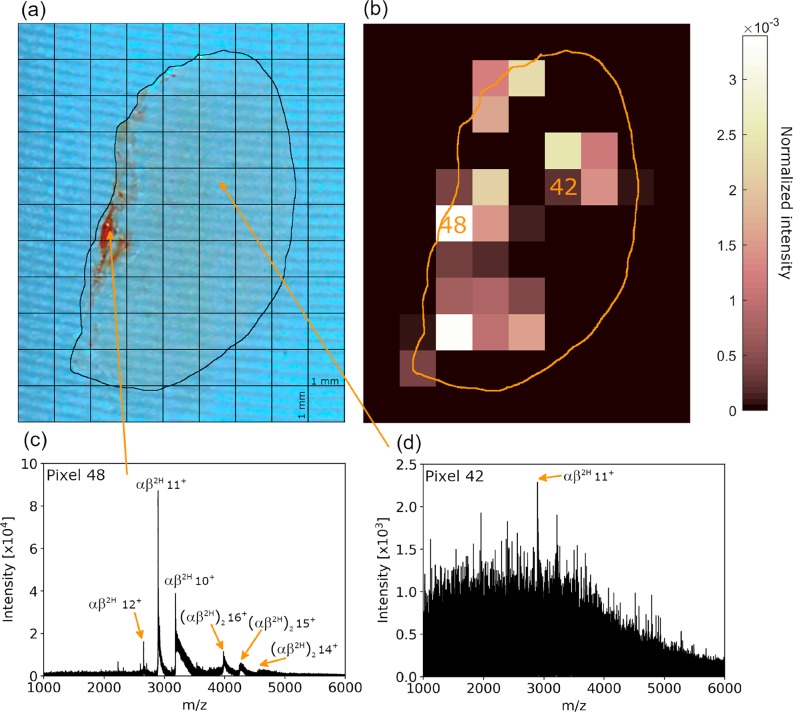
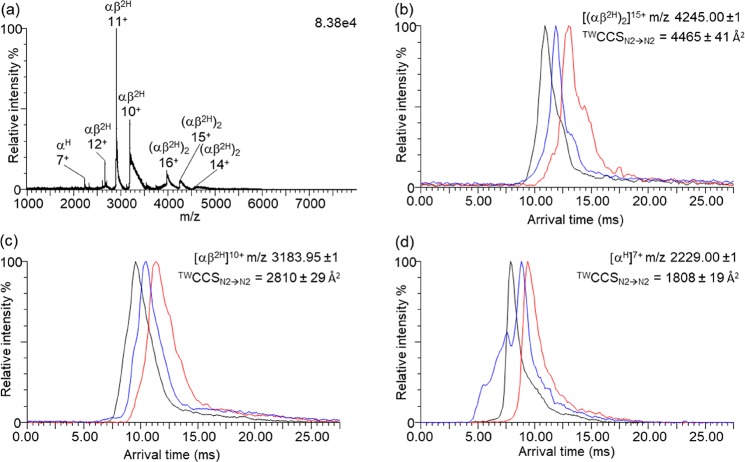
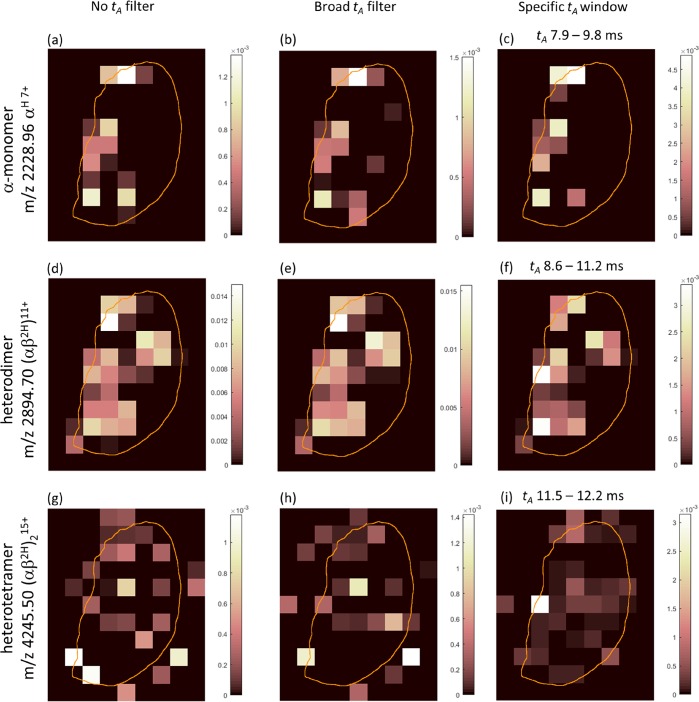
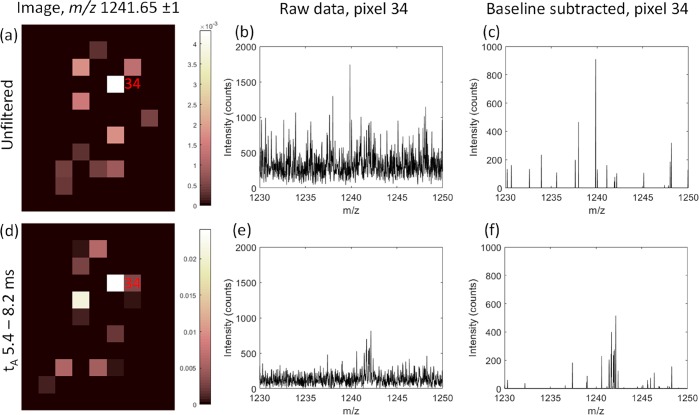
We have previously demonstrated native liquid extraction surface analysis (LESA) mass spectrometry imaging of small intact proteins in thin tissue sections. We also showed calculation of collision cross sections for specific proteins extracted from discrete locations in tissue by LESA traveling wave ion mobility spectrometry (TWIMS). Here, we demonstrate an integrated native LESA TWIMS mass spectrometry imaging (MSI) workflow, in which ion mobility separation is central to the imaging experiment and which provides spatial, conformational, and mass information on endogenous proteins in a single experiment. The approach was applied to MSI of a thin tissue section of mouse kidney. The results show that the benefits of integration of TWIMS include improved specificity of the ion images and the capacity to calculate collision cross sections for any protein or protein complex detected in any pixel (without knowledge of the presence of the protein).
我们之前已经展示了在薄组织切片中对完整的小蛋白质进行天然液相萃取表面分析(LESA)质谱成像的方法。我们还展示了通过 LESA 行波离子淌度谱(TWIMS)从组织中离散位置提取特定蛋白质的碰撞截面的计算。在这里,我们展示了一个集成的天然 LESA TWIMS 质谱成像(MSI)工作流程,其中离子淌度分离是成像实验的核心,它可以在单次实验中提供内源性蛋白质的空间、构象和质量信息。该方法应用于小鼠肾脏的薄组织切片的 MSI。结果表明,TWIMS 集成的优点包括改善了离子图像的特异性,以及计算任何像素中检测到的任何蛋白质或蛋白质复合物的碰撞截面的能力(无需了解蛋白质的存在)。